Full Body Home Workouts For Busy Women
You know that feeling when you’re juggling work deadlines, family responsibilities, meal prep, and everything else life throws at you—and your workout routine becomes the first thing to fall off the list? You’re not alone. As a busy woman, finding time to prioritize fitness feels impossible some days.
But here’s the truth: You don’t need hours at the gym or expensive equipment to transform your body. You need a smart, efficient approach that works with your schedule, not against it.
This guide delivers exactly that—proven full body workout routines designed specifically for women with packed calendars. We’re talking 20-30 minutes, 3-4 times per week, right in your living room.
No commute, no gym membership, no excuses. Just effective, science-backed exercises that sculpt your body and build real strength.
Ready to discover how full body training can revolutionize your fitness journey? Let’s get started.
Why Full Body Workouts Are Perfect For Your Busy Schedule

The Science Behind Full Body Training
Full body workouts engage multiple muscle groups in a single session, creating a powerful metabolic effect that keeps working long after you finish your last rep.
When you perform compound movements—exercises that work several muscles simultaneously—your body burns significantly more calories both during and after your workout. This phenomenon, called EPOC (Excess Post-Exercise Oxygen Consumption), means you’re torching calories while you’re showering, working, or even sleeping.
Research shows that full body training triggers a greater hormonal response than isolated exercises. Your body releases growth hormone and testosterone (yes, women need this too—in smaller amounts) which are essential for building lean muscle and burning fat.
More muscle means a higher resting metabolic rate, so you’re literally transforming your body into a more efficient calorie-burning machine.
Beyond the metabolic benefits, full-body workouts build functional strength that translates directly to your daily life. Picking up kids, carrying groceries, and moving furniture—these real-world activities require multiple muscle groups working together. When you train your body as an integrated system rather than isolated parts, you become stronger in ways that actually matter.
Time-Saving Benefits That Fit Your Life
Here’s where full body training becomes a game-changer for busy women: efficiency. You can complete an effective, results-driven workout in just 20-30 minutes. No more spending two hours at the gym or forcing yourself to work out six days a week.
With full body routines, you only need 3-4 sessions per week to see visible results. That’s it. Your muscles need recovery time to grow stronger, so those rest days aren’t laziness—they’re essential to your progress. This schedule gives you flexibility for those weeks when your kid gets sick, your boss schedules an emergency meeting, or you simply need a mental health day.
The time savings extend beyond the workout itself. You’re not commuting to a gym, circling for parking, waiting for equipment, or feeling intimidated by the weightlifting section. You roll out of bed, press play on your workout timer, and you’re done before your coffee gets cold. For busy women, this convenience removes the biggest barrier to consistency.
Why This Approach Works Better Than Split Routines
Traditional bodybuilding split routines—where you train chest on Monday, legs on Tuesday, back on Wednesday—require you to hit the gym 5-6 days per week to train everything. Miss a couple days and you’ve essentially skipped entire muscle groups for the week.
Full body training eliminates this problem. If life gets crazy and you only manage two workouts that week instead of four, you’ve still trained every major muscle group twice. Your progress continues. This resilience makes full body routines ideal for women with unpredictable schedules.
Whether you’re a complete beginner or you’ve been exercising for years, full body workouts adapt to your level. Beginners benefit from practicing fundamental movement patterns multiple times per week, accelerating their learning curve. Experienced exercisers can increase intensity, add weight, or incorporate advanced variations to keep challenging their bodies.
Essential Equipment (Or None At All!)

The No-Equipment Starter Option
You can build serious strength and transform your body using nothing but your bodyweight. This isn’t about “easy” workouts—bodyweight exercises deliver powerful results when performed with proper form and intensity.
Your body provides all the resistance you need. Push-ups build your chest, shoulders, and triceps. Squats sculpt your legs and glutes. Planks forge core strength. The beauty of bodyweight training lies in its simplicity and accessibility. You can work out anywhere, anytime, without spending a single dollar.
Get creative with household items to add variety and challenge. Fill water bottles or laundry detergent jugs for makeshift dumbbells. Use a sturdy chair for elevated push-ups, tricep dips, or step-ups. A towel on hardwood floors creates a slider for challenging core exercises. Your stairs become a cardio machine and leg sculptor. These simple modifications prove you don’t need fancy equipment to see results.
Never underestimate bodyweight training. Elite athletes, military personnel, and fitness professionals regularly incorporate bodyweight exercises because they build functional, real-world strength. When you master controlling your own body through space, you develop coordination, balance, and body awareness that translates to every other physical activity.
Budget-Friendly Equipment Worth Investing In
If you’re ready to invest a little money, these items offer maximum versatility for minimal cost:
Resistance bands ($15-25) might be the most underrated fitness tool. These portable, space-saving bands provide variable resistance that challenges your muscles throughout the entire range of motion. Use them for upper body, lower body, and core exercises. Throw them in your suitcase when traveling. They’re perfect for adding intensity without the joint stress of heavy weights.
Adjustable dumbbells ($50-150) transform your workout possibilities. Start with a set ranging from 5-15 pounds. As you get stronger, you’ll appreciate being able to increase weight progressively. Dumbbells allow for unilateral training (working one side at a time), which helps correct muscle imbalances and builds functional strength.
A quality yoga mat ($20-40) provides cushioning for floor exercises and prevents slipping during planks and mountain climbers. This small investment protects your knees, elbows, and spine while creating a designated workout space that signals to your brain: “It’s time to move.”
Optional additions that pack serious value: a stability ball ($15-30) for core work and balance training, or a kettlebell ($30-60) for dynamic, full-body movements like swings and goblet squats. But remember—these are bonuses, not requirements.
Creating Your Workout Space At Home
You need surprisingly little space—just a 6×6 foot area where you can lie down and extend your arms. That’s it. A corner of your bedroom, a section of your living room, or even your garage works perfectly.
Designate this as your workout zone. Your brain responds to environmental cues, so creating a consistent space helps trigger the mental shift into workout mode. If possible, add a mirror to check your form and watch your progress. Seeing yourself getting stronger provides powerful motivation.
Build your workout atmosphere with an energizing playlist. Music with 120-140 beats per minute naturally increases your intensity and makes challenging exercises feel more manageable. Create a dedicated workout playlist that pumps you up the moment it starts playing.
In small apartments or shared spaces, be strategic about timing. Early morning workouts before everyone wakes up, during nap times, or after bedtime give you uninterrupted focus. Communicate your workout schedule to family members—when they understand this is your dedicated self-care time, they’re more likely to respect it.
The Ultimate Full Body Workout Routine (3 Levels)

Beginner Level: Building Your Foundation (20 minutes)
Warm-up (3 minutes): March in place, arm circles, hip circles, leg swings, and gentle torso twists. Your warm-up prepares your muscles, joints, and nervous system for work.
Circuit Structure: Complete 3 rounds of the following exercises. Work for 30 seconds, rest for 30 seconds, then move to the next exercise. Rest 60-90 seconds between complete rounds.
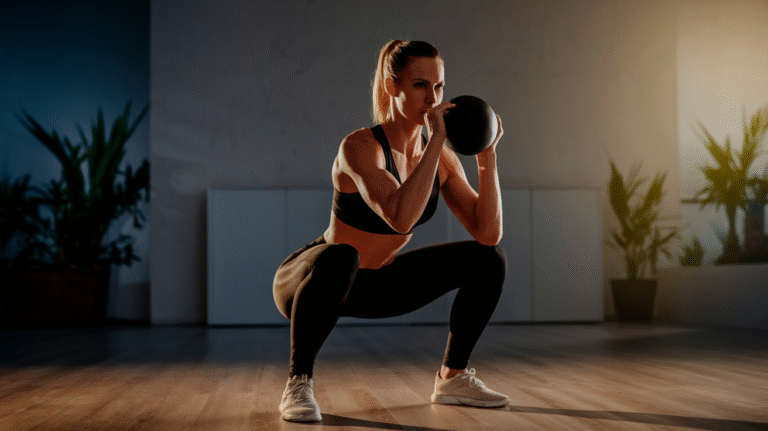
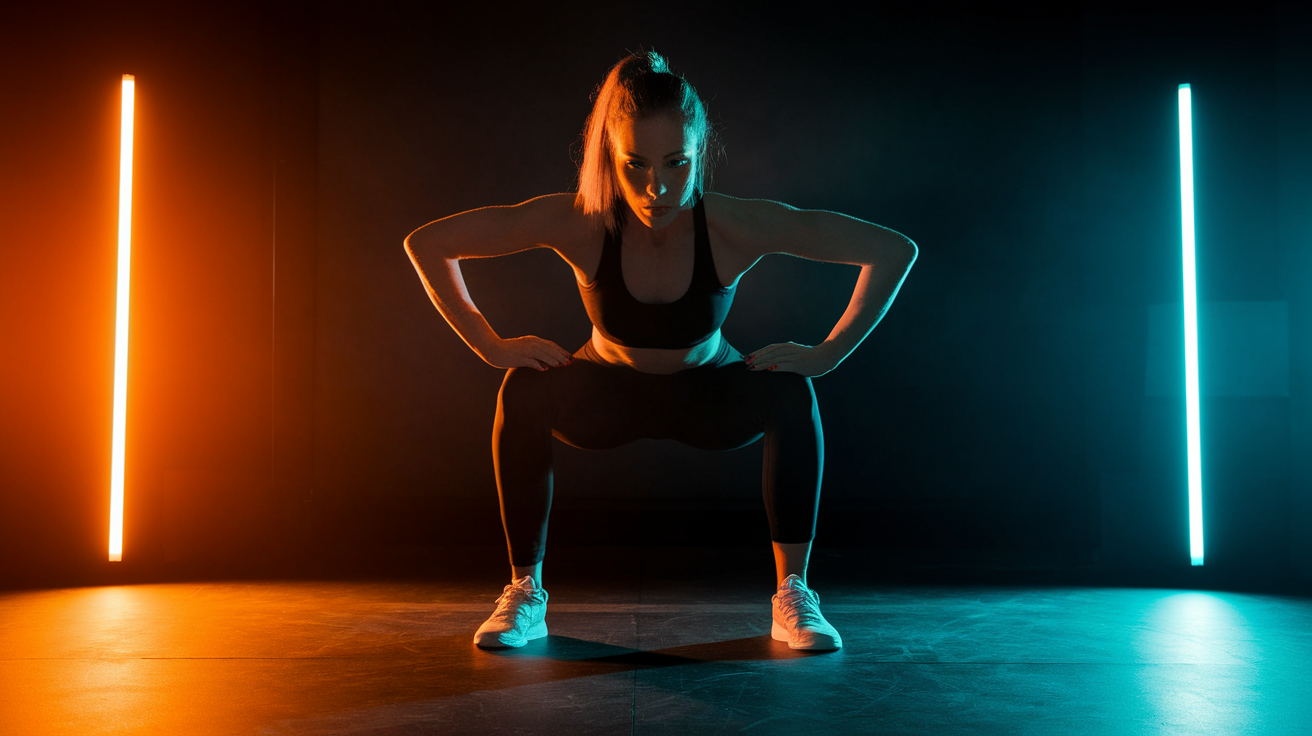
1. Bodyweight Squats – Stand with feet shoulder-width apart, toes slightly out. Push your hips back like sitting in a chair, keeping your chest up and knees tracking over your toes. Lower until thighs are parallel to the floor, then drive through your heels to stand. This movement sculpts your legs and glutes while building functional strength.
2. Modified Push-ups – Start on your knees with hands slightly wider than shoulders. Keep your body in a straight line from knees to head. Lower your chest toward the floor, elbows at 45 degrees, then push back up. This builds upper body strength while protecting your lower back.
3. Glute Bridges – Lie on your back, knees bent, feet flat on the floor hip-width apart. Squeeze your glutes and lift your hips until your body forms a straight line from shoulders to knees. Hold for a second at the top, then lower with control. This exercise targets your glutes, hamstrings, and lower back.
4. Plank Hold – Start on your forearms and toes, body in a straight line. Engage your core by pulling your belly button toward your spine. Don’t let your hips sag or pike up. Hold steady, breathing normally. This builds core strength essential for every other movement.
5. Standing Knee Raises – Stand tall, engage your core, and lift one knee toward your chest. Lower with control and repeat on the other side. Alternate for 30 seconds. This works your hip flexors and challenges your balance.
6. Wall Sit – Lean against a wall and slide down until your thighs are parallel to the floor, knees at 90 degrees. Hold this position, keeping your core engaged and breathing steadily. This isometric exercise builds serious leg endurance.
Cool-down (3 minutes): Stretch your quads, hamstrings, chest, shoulders, and hips. Hold each stretch for 20-30 seconds, breathing deeply.
Intermediate Level: Shred and Sculpt (25 minutes)
Warm-up (3 minutes): Dynamic movements including jumping jacks, high knees, butt kicks, arm swings, and bodyweight squats.
Circuit Structure: Complete 4 rounds. Work for 40 seconds, rest for 20 seconds between exercises. Rest 60 seconds between complete rounds.
1. Jump Squats – Perform a regular squat, then explode upward, leaving the ground. Land softly with bent knees and immediately lower into your next squat. This plyometric movement torches calories and builds explosive power.
2. Standard Push-ups – Toes and hands on the floor, body straight. Lower until your chest nearly touches the ground, then push back up powerfully. Keep your core tight throughout.
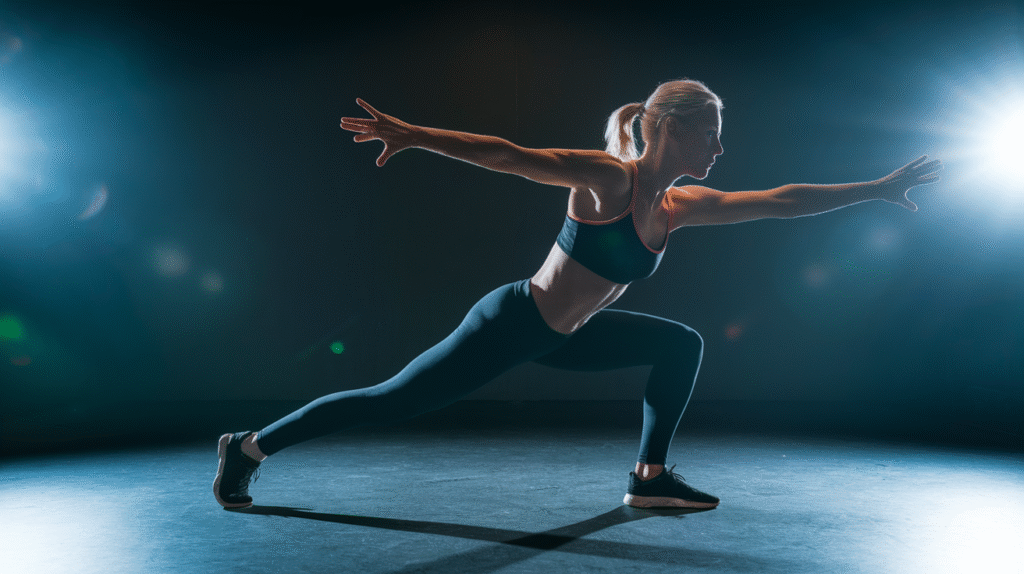
3. Walking Lunges – Step forward with your right foot, lowering until both knees form 90-degree angles. Push through your front heel to step your back foot forward into the next lunge. Alternate legs as you move forward. This exercise sculpts your legs while challenging your balance.
4. Mountain Climbers – Start in a push-up position. Drive one knee toward your chest, then quickly switch legs, like running in place horizontally. Keep your hips level and core engaged. This cardio-intensive move burns fat while strengthening your entire body.
5. Dumbbell Rows (or resistance band rows) – Hinge forward at your hips, back flat, core tight. Pull the weight to your ribcage, squeezing your shoulder blades together. Lower with control. This builds your back and improves posture.
6. Bicycle Crunches – Lie on your back, hands behind your head. Bring your right elbow toward your left knee while extending your right leg. Switch sides in a pedaling motion. This targets your entire core, especially your obliques.
7. Plank to Downward Dog – Start in a plank position. Push your hips up and back into an inverted V shape, pressing your heels toward the floor. Return to plank. This dynamic movement builds core strength and shoulder stability.
8. Burpees – Stand tall, drop into a squat, place your hands on the floor, jump your feet back to plank, perform a push-up, jump your feet back to your hands, and explode upward into a jump. This full-body exercise delivers maximum results in minimum time.
Cool-down (3 minutes): Focus on deep stretching for all major muscle groups.
Advanced Level: Maximum Results (30 minutes)
Warm-up (3 minutes): High-intensity dynamic movements including jumping jacks, high knees, inchworms, and dynamic lunges.
Circuit Structure: Complete 5 rounds. Work for 45 seconds, rest for 15 seconds between exercises. Rest 45-60 seconds between complete rounds.
1. Pistol Squats – Single-leg squats where you lower down on one leg while extending the other straight in front. Use a chair for assistance if needed. This advanced movement builds serious leg strength and balance.
2. Plyometric Push-ups – Perform a push-up with enough force to lift your hands off the ground. Land softly and immediately lower into your next rep. This explosive movement builds upper body power.
3. Bulgarian Split Squats – Place one foot behind you on a chair or bench. Lower into a lunge position on your front leg, then drive back up. Complete all reps on one side before switching. This unilateral exercise sculpts your legs and challenges your balance.
4. Plank Jacks – Hold a plank position and jump your feet wide, then back together, like horizontal jumping jacks. Keep your core tight and hips stable.
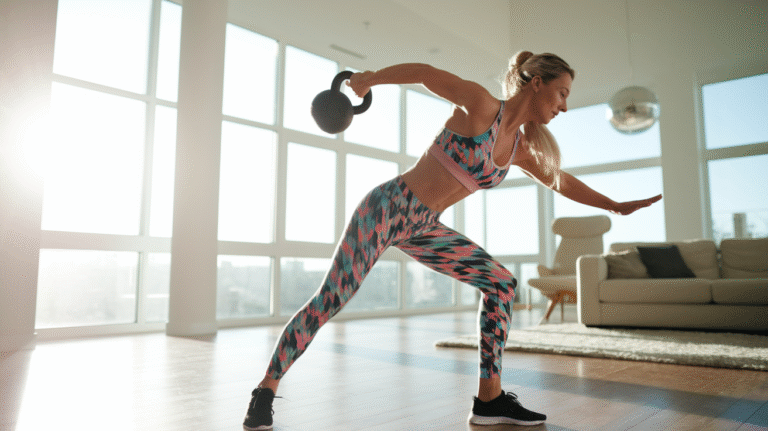
5. Single-Leg Deadlifts – Balance on one leg, hinge at your hip, and lower your torso while extending your back leg behind you. Keep your back flat. Return to standing and squeeze your glute. This builds posterior chain strength and balance.
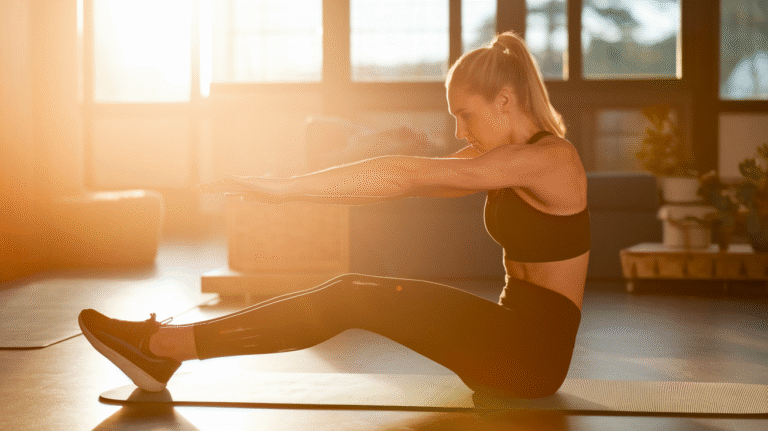
6. V-Ups – Lie flat on your back. Simultaneously lift your legs and upper body, reaching your hands toward your toes, forming a V shape. Lower with control. This intense core exercise targets your entire abdominal region.
7. Side Plank with Hip Dips – Hold a side plank on your forearm. Lower your hip toward the floor, then lift back up above parallel. Complete all reps on one side before switching.
8. Jump Lunges – Start in a lunge position. Explosively jump up and switch legs mid-air, landing in a lunge on the opposite leg. This plyometric exercise builds leg power while torching calories.
9. Commandos – Start in a plank on your forearms. Push up onto your right hand, then your left, ending in a high plank. Lower back down to your forearms one arm at a time. Alternate which arm leads. This challenges your entire core and upper body.
10. High Knees Sprint – Run in place, driving your knees as high as possible as fast as you can. Pump your arms. This cardio finisher maximizes calorie burn and builds explosive power.
Cool-down (3 minutes): Thorough stretching with emphasis on deep breathing and muscle recovery.
Weekly Schedule Template
3-Day Split:
- Monday: Full Body Workout
- Tuesday: Active Recovery (walking, yoga, stretching)
- Wednesday: Full Body Workout
- Thursday: Rest
- Friday: Full Body Workout
- Weekend: Active Recovery or Rest
4-Day Split:
- Monday: Full Body Workout
- Tuesday: Active Recovery
- Wednesday: Full Body Workout
- Thursday: Rest
- Friday: Full Body Workout
- Saturday: Full Body Workout
- Sunday: Rest
Listen to your body and adjust as needed. Some weeks you’ll feel strong and energized; others, you’ll need extra recovery. Both scenarios are normal. Consistency over time matters more than perfection in any single week.
Making It Work: Tips For Staying Consistent
Time Management Strategies For Busy Women
Early morning workouts offer unique advantages: your day hasn’t thrown curveballs yet, your willpower is strongest, and you start your day with an accomplishment that energizes everything else. Set your workout clothes out the night before. Place your alarm across the room so you have to get up to turn it off. Start your playlist immediately—music shifts your mindset from groggy to ready.
Lunch break sessions capitalize on your midday energy dip. Instead of scrolling social media, invest 20-30 minutes in movement. You’ll return to work more focused and productive. Keep workout clothes at your desk or in your car for spontaneous sessions.
Evening routines help you decompress from your day. Exercise releases endorphins and reduces stress hormones, helping you sleep better. Just finish your workout at least 90 minutes before bed so your body temperature and heart rate have time to normalize.
Embrace the “something is better than nothing” mindset. Can’t do 30 minutes? Do 15. Can’t do your full routine? Do half. Three exercises are infinitely better than zero. These shortened sessions maintain your habit and momentum, which matters more than any single workout.
Overcoming Common Obstacles
When kids are home, involve them or work strategically around their schedules. Young children often enjoy “working out” alongside you—they can do their version of squats and jumping jacks. Older kids can count your reps or time your intervals. Alternatively, wake up before they do, exercise during nap time, or recruit your partner to watch them for 30 minutes.
Low energy days require flexibility, not abandonment. Reduce your intensity but maintain your movement habit. Do the beginner routine instead of advanced. Cut your rounds from 4 to 2. Walk through your exercises at a slower pace. You’ll often find that starting builds momentum—but even if it doesn’t, you’ve honored your commitment to yourself.
Travel disrupts routines, but hotel rooms provide everything you need for bodyweight workouts. Pack resistance bands in your suitcase—they weigh nothing and expand your options dramatically. Maintain your schedule by treating workouts like business meetings: non-negotiable appointments with yourself.
Interruptions happen—doorbells ring, phones buzz, kids need you. Pause your timer, handle the situation, and resume where you left off. Perfect, uninterrupted workouts are ideal but not required. Progress comes from accumulating imperfect efforts over time.
Tracking Progress Beyond The Scale
The scale tells you one data point, but it doesn’t capture the complete story of your transformation. Take progress photos every 2-4 weeks in the same lighting, wearing the same clothes, from the same angles. Visual changes often appear before the scale moves, especially as you build muscle while losing fat.
Measurements provide concrete data: waist, hips, thighs, arms, chest. Track these monthly. You’ll notice inches disappearing even during weeks when your weight plateaus.
Strength gains reveal real progress. Can you do more push-ups than last month? Hold your plank longer? Complete your circuit with less rest? These improvements demonstrate that your body is transforming, becoming stronger and more capable.
Pay attention to how you feel. Are you sleeping better? Waking with more energy? Handling stress more effectively? Feeling more confident in your body? These non-scale victories often matter more than the number on your bathroom floor.
Notice how your clothes fit differently. That dress that was tight now zips easily. Your jeans fit better in the waist and thighs. You fill out the shoulders of your shirts with new muscle definition. These real-world changes confirm what your hard work is creating.
Staying Motivated Long-Term
Set realistic, achievable goals that excite you without overwhelming you. “Complete all 12 workouts this month” works better than “lose 20 pounds.” You control your actions, not always the outcomes. Focus on what you can control: showing up, giving effort, staying consistent.
Find your deeper “why” that transcends aesthetics. Maybe you want energy to play with your kids without getting winded. Perhaps you’re building strength to prevent osteoporosis as you age. Maybe you’re proving to yourself that you can commit to something challenging. This deeper motivation sustains you when surface-level goals lose their shine.
Build a support system that encourages your journey. Join online communities of women pursuing similar goals. Find a workout buddy who holds you accountable. Share your progress (when you’re comfortable) to inspire others and receive encouragement. Accountability transforms motivation from an internal struggle to a shared journey.
Reward yourself for consistency with non-food treats: new workout clothes, a massage, a book you’ve wanted to read, a solo coffee date. These rewards acknowledge your effort and reinforce the behavior you want to continue.
Your Journey Starts Now
You have everything you need to transform your fitness—no gym required, no expensive equipment necessary, no hours of free time demanded. These proven full body workouts deliver effective results in just 20-30 minutes, 3-4 times per week.
Your busy schedule isn’t a barrier to fitness; it’s simply your starting point. Thousands of women with calendars as packed as yours have built strong, confident bodies using these exact principles. The difference between them and someone still wishing for change? They started.
Begin with the beginner routine if you’re new to exercise or returning after time away. There’s zero shame in starting where you are—every fitness journey begins with a single workout. Progress is personal, not comparative. Your only competition is the woman you were yesterday.
Commit to showing up 3-4 times this week for 20-30 minutes. That’s it. Don’t worry about next month or next year. Just focus on this week. Then next week, do it again. Consistency beats perfection every single time.
Your health is worth prioritizing. You deserve to feel strong, energized, and confident in your body. You deserve to invest 90-120 minutes per week in yourself. That’s not selfish—it’s essential. When you take care of your body, you show up better for everything and everyone else in your life.
Choose your level right now. Set a timer for tomorrow morning. Lay out your workout clothes tonight. Put on your playlist. Complete your first workout. Then do it again in two days. And again two days after that.
Save this routine where you can easily reference it. Take your “before” photo today—you’ll want to remember where you started when you’re celebrating how far you’ve come.
Every rep brings you closer to the powerful, confident version of yourself. She’s not some distant fantasy—she’s the woman who shows up, does the work, and refuses to quit on herself.
That woman is you. Now go prove it.