10 Somatic Exercises to Reset Your Nervous System in 5 Minutes

You know that feeling when your shoulders are practically touching your ears, your jaw is clenched tight enough to crack walnuts, and you’re breathing like you just ran a sprint—except you’ve just been sitting at your desk answering emails? That’s your nervous system stuck in overdrive, and it’s wreaking havoc on your body.
Here’s what most people don’t realize: chronic stress isn’t just “in your head.” Your body physically holds onto tension, keeping you trapped in fight-or-flight mode long after the stressful event has passed.
You might hit the gym thinking a intense workout will help, but sometimes traditional exercise actually amplifies your stress response instead of calming it down. Your body interprets that high-intensity cardio as another threat to survive, not a way to recover.
That’s where somatic exercises come in—and they’re completely different from your regular fitness routine.
Somatic exercises focus on internal awareness and gentle movement to release stored tension directly from your nervous system. Instead of pushing harder and sweating more, you’re working smarter by helping your body remember what safety feels like.
The science backs this up: studies show that somatic practices reduce cortisol levels, improve sleep quality, and help you regulate emotions more effectively.
Here’s the best part: you can transform your stress response in just 5 minutes daily. No gym membership required. No special equipment. No hour-long commitment you don’t have time for.
This guide is for you if you’re a busy professional drowning in deadlines, an overwhelmed parent running on fumes, a fitness beginner who feels intimidated by traditional workouts, or anyone who feels simultaneously exhausted and wired. If you’ve ever described yourself as “tired but can’t relax,” you’re in the right place.
These 10 powerful exercises will give you practical tools to reset your nervous system anywhere, anytime. By the end of this article, you’ll understand exactly how to release tension you didn’t even know you were holding and build resilience that lasts.
Understanding Your Nervous System: Why You Feel Stuck in Fight-or-Flight

What Happens When Your Nervous System Gets Dysregulated
Think of your autonomic nervous system as having two pedals: the sympathetic nervous system is your gas pedal (fight-or-flight), and the parasympathetic nervous system is your brake pedal (rest-and-digest).
In a healthy, balanced state, you press the gas when you need energy and alertness, then press the brake when it’s time to recover.
But chronic stress keeps your foot jammed on the gas pedal with no relief. Your body stays in survival mode, flooding you with stress hormones even when you’re supposedly relaxing on the couch.
The signs are everywhere once you know what to look for. You might experience tension headaches that won’t quit, constant jaw clenching (especially at night), shallow chest breathing instead of deep belly breaths, digestive issues like bloating or IBS, racing thoughts that won’t shut off, or feeling exhausted but unable to actually rest. Sound familiar?
Here’s the frustrating part: your body holds onto stress even after the stressful event ends. That argument from three days ago? Your shoulders are still braced for impact. That work presentation from last week? Your nervous system is still on high alert. This isn’t weakness—it’s biology. Your body is trying to protect you, but it’s forgotten how to turn off the alarm.
The Proven Power of Somatic Movement

Somatic exercises work differently than traditional workouts because they prioritize internal awareness over external results. You’re not trying to burn calories, build muscle, or hit a target heart rate. Instead, you’re using gentle, mindful movement to communicate directly with your nervous system, telling it: “We’re safe now. You can relax.”
This mind-body connection is incredibly powerful. Research shows that somatic practices activate your vagus nerve—the main highway of your parasympathetic nervous system—which signals your body to shift from fight-or-flight into rest-and-digest mode. When you move with awareness and focus on sensation rather than performance, you release stored tension and even trauma that’s been locked in your tissues.
The science-backed benefits are impressive: reduced cortisol levels, improved sleep quality, better emotional regulation, decreased chronic pain, and enhanced body awareness. One study found that participants who practiced somatic exercises for just 15 minutes daily showed significant reductions in anxiety and improvements in overall well-being within two weeks.
This approach is perfect for people who feel intimidated by gyms or don’t have time for hour-long workouts. You don’t need to be flexible, fit, or coordinated. You just need to be willing to pay attention to what you’re feeling.
Why 5 Minutes Is All You Need
You might be skeptical that 5 minutes can make a real difference, but the science of “micro-practices” proves otherwise. Small, consistent actions create cumulative effects that transform your nervous system over time. It’s not about the length of each session—it’s about the regularity of the practice.
Think of it like compound interest for your nervous system. Each 5-minute session deposits a little more regulation, a little more resilience, a little more capacity to handle stress. These deposits add up fast.
Research shows that brief, frequent practices are often more effective than occasional longer sessions because they’re sustainable. You’ll actually do 5 minutes every day, but you’ll skip that hour-long commitment when life gets busy. Consistency beats duration every single time when you’re resetting your nervous system.
These effective exercises fit into the busiest schedules because they require no equipment, no gym, and no special space. You can do them at your desk, in your car, in bed, or while waiting for your coffee to brew. That’s the power of making nervous system regulation accessible and practical.
The 10 Powerful Somatic Exercises That Transform Your Stress Response
Exercise 1: The Grounding Breath (60 seconds)
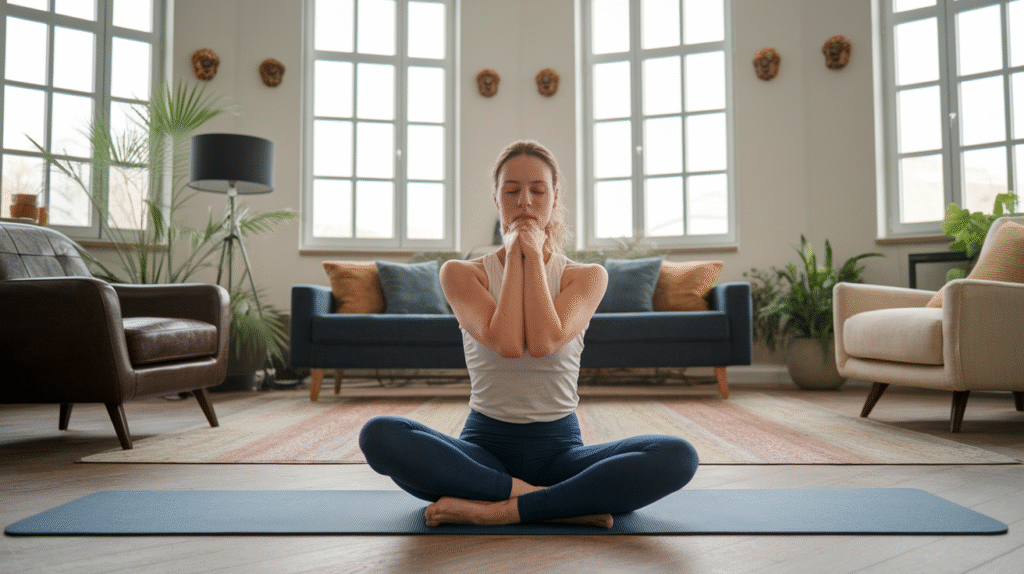
Start by sitting comfortably or standing with your feet hip-width apart. Place one hand on your belly, just below your navel. This simple touch helps you focus on breathing deeply into your diaphragm instead of shallowly into your chest.
Use the 4-7-8 breathing pattern: inhale through your nose for 4 counts, hold for 7 counts, then exhale slowly through your mouth for 8 counts. The extended exhale is key—it activates your parasympathetic nervous system and signals safety to your body.
What you’ll feel is an immediate shift from that tight, shallow chest breathing to deep, nourishing diaphragmatic breathing. Your shoulders might drop. Your jaw might unclench. You might even sigh involuntarily—that’s your body releasing tension.
Use this exercise before stressful meetings, immediately after difficult phone calls, or at bedtime when your mind won’t stop racing. It’s your fastest reset tool.
Exercise 2: Shoulder Rolls with Awareness (30 seconds)
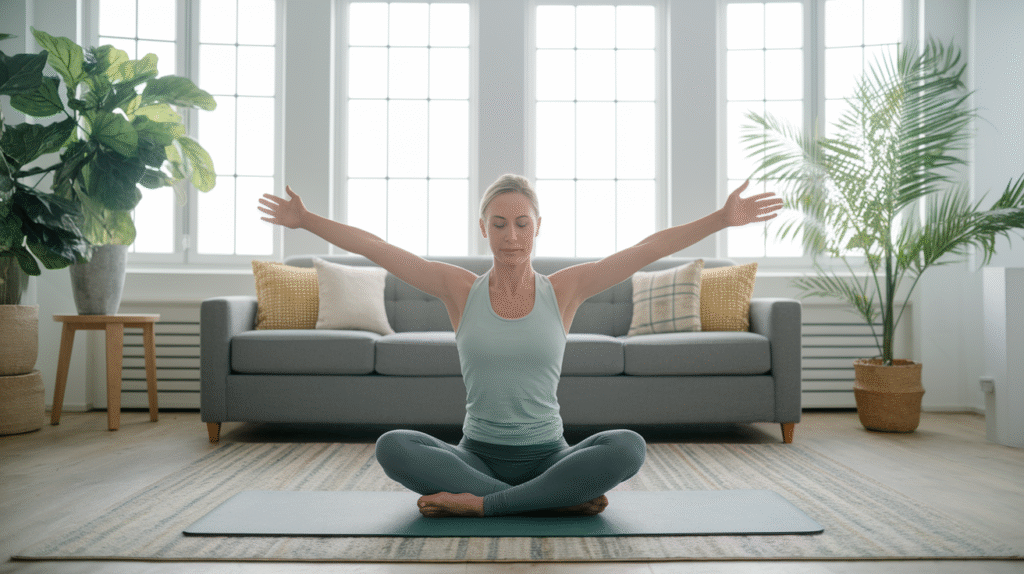
This isn’t your typical quick shoulder roll. Move slowly and deliberately, making large circles with your shoulders—forward for 15 seconds, then backward for 15 seconds. The key is focusing on sensation rather than speed.
As you roll, notice where you feel tightness, clicking, or restriction. That’s where desk work, phone scrolling, and stress have created tension. Don’t try to force through it—just acknowledge it with curiosity.
Here’s a pro tip that makes this exercise even more effective: pause at the tightest point in the movement and breathe directly into that spot. Imagine your breath softening the tension with each exhale. This conscious attention accelerates the release.
Exercise 3: Spinal Waves (45 seconds)
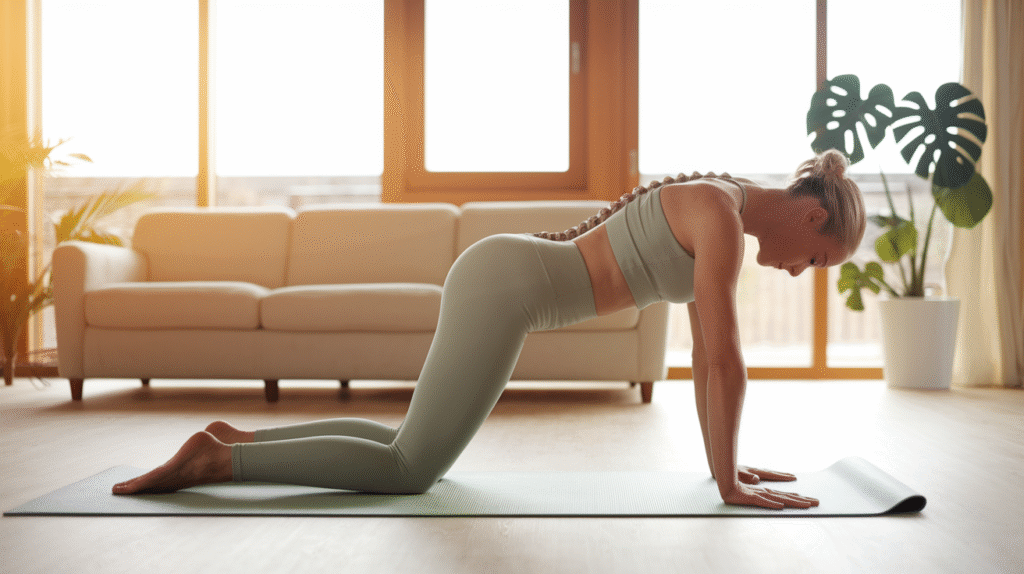
You can do this seated in a chair or standing. Start with a neutral spine, then create a gentle wave-like motion: tuck your pelvis under as you round your back (like a scared cat), then arch your lower back as you lift your chest (like a stretching cow). Move slowly, letting each vertebra participate in the wave.
This movement mobilizes your vagus nerve, which runs along your spine and serves as your body’s built-in calm-down system. When you move your spine with awareness, you’re literally massaging this crucial nerve.
This exercise is perfect for breaking up long work sessions or addressing morning stiffness. Just 45 seconds can shift your entire energy and release back tension you’ve been carrying for hours.
Exercise 4: Jaw Release and Yawn (30 seconds)

Place your fingertips on your jaw joints (right in front of your ears) and make small circles, massaging gently. Then intentionally yawn—even if it’s fake at first. Real yawns often follow fake ones, and yawning is one of your body’s natural stress-release mechanisms.
Let your tongue relax completely in your mouth. Most people don’t realize they’re holding tension here, pressing their tongue against the roof of their mouth or their teeth.
The hidden connection: jaw clenching signals danger to your brain. When you release your jaw, you’re telling your nervous system that there’s no threat to fight against. This simple exercise helps with TMJ, tension headaches, and neck pain as a powerful bonus.
Exercise 5: Grounding Foot Press (45 seconds)
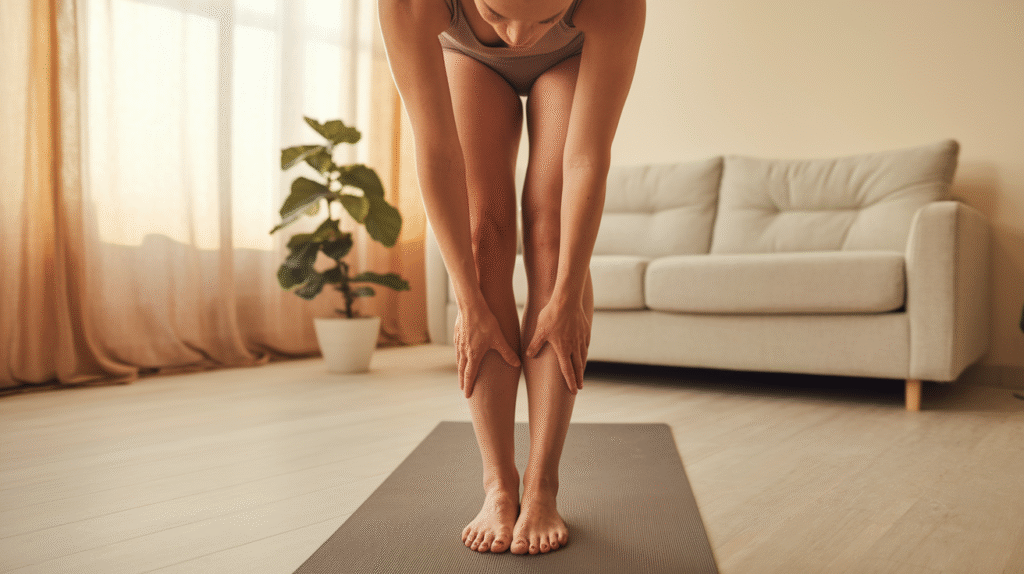
Whether you’re standing or seated, press your feet firmly into the ground. Notice the sensation of contact—the texture of the floor, the pressure against your soles, the stability beneath you.
This activates proprioception, your body’s sense of where it is in space. When you consciously connect with the ground, you signal safety to your nervous system. Feeling grounded isn’t just a metaphor—it’s a physiological state.
The beauty of this exercise is that you can do it anywhere: under your desk during a stressful work call, while standing in line at the grocery store, or while cooking dinner. It’s invisible to others but incredibly effective for you.
Exercise 6: Gentle Twist and Hold (30 seconds each side)
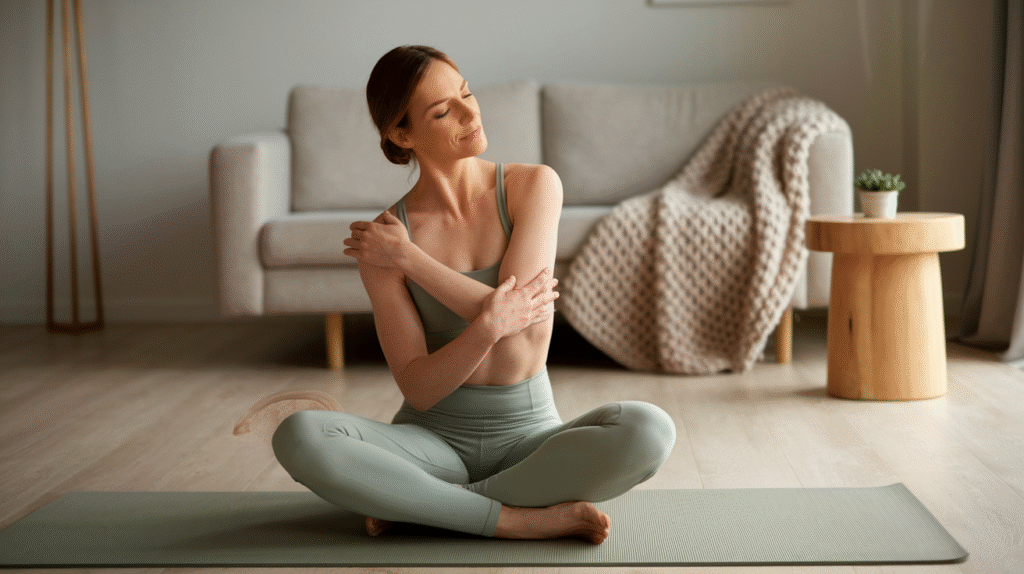
Sit or stand with your spine tall. Slowly rotate your torso to the right, using your breath to ease deeper into the twist. Don’t force it—find the edge of resistance and breathe there for 30 seconds. Then repeat on the left side.
Focus on where you feel restriction. That’s where tension lives. As you breathe, imagine creating space in those tight areas.
This movement wrings out tension like squeezing water from a towel, stimulates digestion (which often shuts down during stress), and releases tightness through your back and shoulders. Both the seated and standing versions are equally effective, so choose whatever works for your current situation.
Exercise 7: Pendulum Sway (45 seconds)
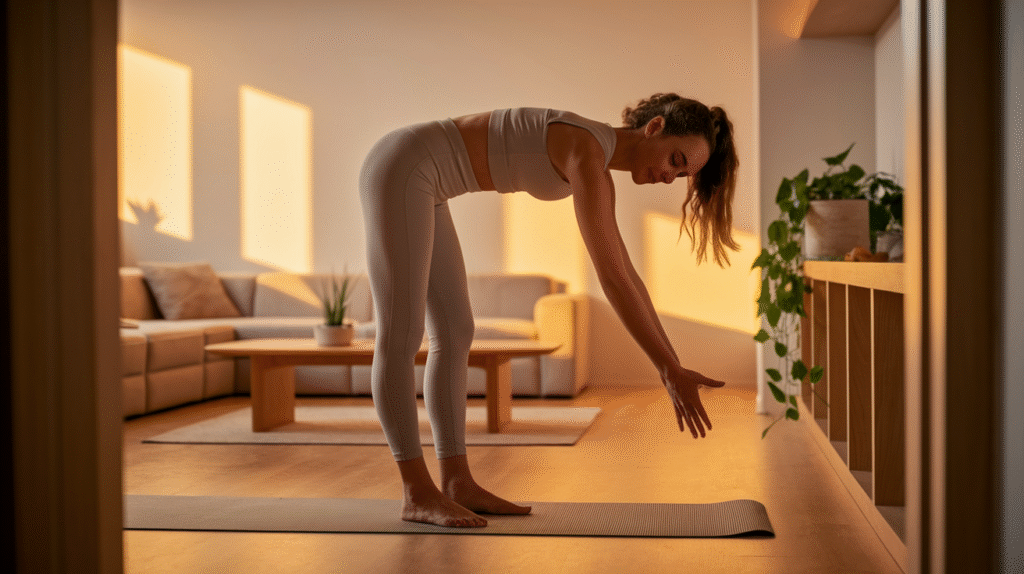
Stand with feet hip-width apart and gently sway side to side or front to back, like a pendulum or a tree in the breeze. Keep the movement small and slow—this isn’t exercise, it’s rhythm and regulation.
Children do this naturally when they’re overwhelmed or tired because it’s instinctive nervous system regulation. We’re born knowing how to soothe ourselves, but we forget as adults. This exercise reconnects you with that innate wisdom.
The rhythmic motion mimics the calming effect of being rocked, which is why it’s so deeply soothing. It activates your vestibular system and signals to your primitive brain that you’re safe enough to move gently and freely.
Exercise 8: Shoulder Shrug and Drop (30 seconds)

Lift your shoulders up toward your ears in an exaggerated shrug. Hold them there for 3 seconds, squeezing tight. Then suddenly release and drop them, letting gravity do the work.
Repeat this cycle for 30 seconds. Each time you drop, exhale fully and notice the sensation of letting go.
This is a “letting go” practice where physical release creates mental release. You’re practicing the feeling of releasing control, releasing tension, releasing what you’ve been holding. It’s especially helpful after difficult conversations or before sleep when you need to literally drop the weight you’ve been carrying.
Exercise 9: Body Scan with Tension Release (60 seconds)
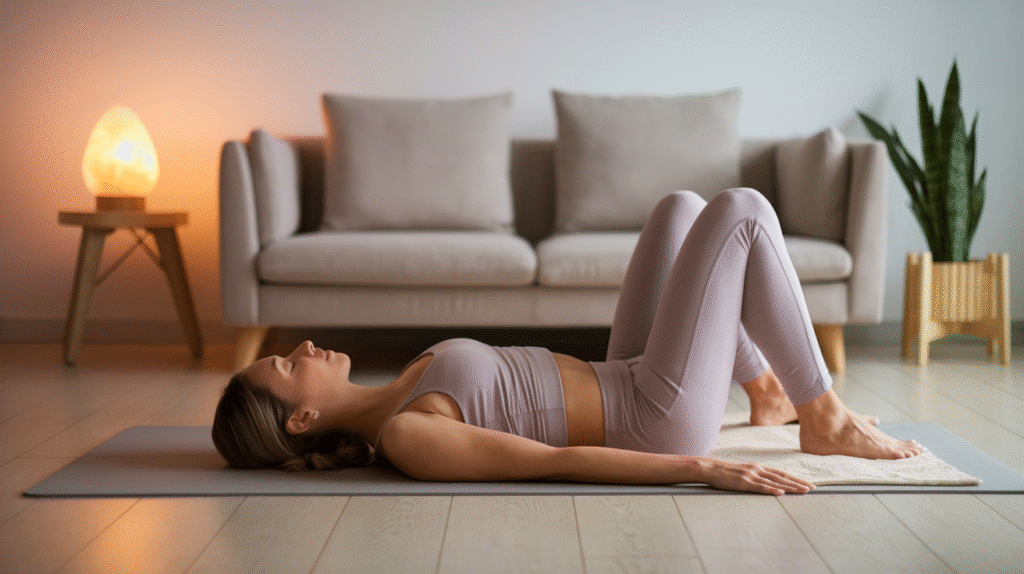
Close your eyes if you’re comfortable doing so. Mentally scan from the top of your head down to your toes, spending a few seconds on each area: forehead, jaw, neck, shoulders, chest, belly, hips, legs, feet.
At each stop, ask yourself: “Am I holding tension here?” If the answer is yes, consciously relax that area. You might be surprised by hidden tension you didn’t know you were holding—clenched toes, a tight belly, or a furrowed brow.
This practice is used by elite athletes, therapists, and trauma specialists because it builds body awareness and gives you conscious control over unconscious tension patterns. The more you practice, the faster you’ll identify and release stress.
Exercise 10: Grounding Hug (30 seconds)
Wrap your arms around yourself in a gentle self-embrace. Apply light to moderate pressure—enough to feel held and contained, but not restrictive. Breathe slowly and deeply while you hold yourself.
This activates pressure receptors throughout your body that calm the nervous system. It’s the same reason weighted blankets work or why a firm hug feels so comforting.
The science shows this practice stimulates oxytocin release, the “bonding hormone” that creates feelings of safety and connection. You’re literally giving yourself the physiological experience of being cared for, which is incredibly powerful when you’re stressed and alone.
How to Build Your 5-Minute Daily Reset Routine
Creating Your Personalized Sequence
You don’t have to do all 10 exercises every time—that’s the beauty of having options. Build sequences that match your needs and schedule.
For a morning routine that energizes while keeping you grounded, try this combo: Grounding Breath (60 seconds), Spinal Waves (45 seconds), Shoulder Rolls (30 seconds), Grounding Foot Press (45 seconds), and Pendulum Sway (45 seconds). This 3.5-minute sequence prepares your nervous system for the day ahead without overwhelming it.
For a midday reset perfect for desk breaks, use: Jaw Release (30 seconds), Shoulder Shrug and Drop (30 seconds), Gentle Twist (60 seconds total), Grounding Foot Press (45 seconds), and Grounding Breath (60 seconds). This 3.5-minute practice counteracts hours of sitting and screen time.
For an evening wind-down that promotes better sleep, try: Body Scan (60 seconds), Spinal Waves (45 seconds), Shoulder Rolls (30 seconds), Grounding Hug (30 seconds), and Grounding Breath (60 seconds). This 3.5-minute sequence tells your body it’s safe to rest.
Making It Stick: Tips for Consistency
The most effective workout is the one you actually do, so let’s make this sustainable. Anchor your practice to existing habits—do it right after your morning coffee, before you start your lunch, or as part of your bedtime routine. Habit stacking works because you’re attaching a new behavior to an established one.
If 10 exercises feel overwhelming, start with just 3. Progress matters more than perfection. You can always add more as the practice becomes natural.
Use phone reminders or calendar blocks to build the habit. Set an alarm labeled “Nervous System Reset” for the same time each day. After about two weeks, it’ll start feeling automatic rather than forced.
Track how you feel before and after each session. Notice the effective changes in your body and mood. This awareness reinforces the practice and shows you the tangible benefits, which motivates consistency.
Troubleshooting Common Challenges
“I feel silly doing this.” Self-consciousness is completely normal, especially at first. Remember that no one is watching you, and even if they were, taking care of your nervous system is nothing to be embarrassed about. The silliness fades as you feel the results.
“I don’t feel anything.” This usually means you’re disconnected from your body sensations, which is common when you’ve been stressed for a long time. Keep practicing anyway. Awareness develops with repetition. Start by simply noticing your breath, then gradually you’ll sense more subtle sensations.
“I’m too stressed to even start.” This is the paradox of stress—when you need these tools most, they feel hardest to access. Start with just one deep breath. That’s it. One breath is better than no breaths. Lower the bar until it’s achievable, then build from there.
When you’re ready to do more, scale up gradually. Add an extra minute to your practice, or do your 5-minute routine twice daily instead of once. Let your capacity expand naturally without forcing it.
Beyond the 5 Minutes: Maximizing Your Nervous System Health
Lifestyle Factors That Support Your Practice
Your 5-minute somatic practice becomes even more effective when supported by nervous system-friendly lifestyle choices. Sleep hygiene is foundational—aim for consistent bed and wake times, keep your bedroom cool and dark, and avoid screens for at least 30 minutes before bed. Quality sleep tones your parasympathetic nervous system, making it easier to stay regulated during the day.
Nutrition plays a role too, though you don’t need restrictive diets. Focus on eating regular meals to stabilize blood sugar (which directly affects stress levels), include protein at each meal to support neurotransmitter production, and add magnesium-rich foods like leafy greens, nuts, and seeds that help your muscles relax.
Hydration matters more than most people realize. Even mild dehydration increases cortisol and makes your body interpret normal situations as more stressful. Drink water consistently throughout the day—your nervous system function depends on it.
Consider reducing caffeine, especially if you’re feeling wired and anxious. Caffeine activates your sympathetic nervous system, which might amplify your stress response. If you’re doing somatic work to calm down while drinking three cups of coffee to amp up, you’re working against yourself. Try cutting back gradually and notice if your results improve.
Combining Somatic Work with Other Fitness Goals
These exercises complement other fitness goals beautifully. If you’re focused on weight loss, somatic work reduces stress-eating by helping you distinguish between emotional hunger and physical hunger. When your nervous system is regulated, you’re less likely to reach for food as a coping mechanism.
For muscle builders, this is a powerful combination. Use somatic exercises as warm-ups before strength training to prepare your nervous system for the work ahead, or as cool-downs to shift from sympathetic activation back to parasympathetic recovery. You’ll build muscle more effectively when your body feels safe enough to repair and grow.
If you’re a beginner to fitness, start here. Nervous system regulation builds better fitness foundations than jumping straight into intense workouts. When your body feels safe and regulated, you’ll have more energy, better form, and greater enjoyment in your other exercise.
For home workout enthusiasts, integrate these practices seamlessly. Do spinal waves between strength sets, use grounding breath before starting your workout, or end your session with a body scan. This approach transforms your home workouts from just physical training into holistic nervous system care.
When to Seek Additional Support
These 5-minute exercises are powerful tools, but they’re not a replacement for professional support when you need it. Suppose you’re experiencing symptoms like panic attacks, severe insomnia, chronic pain that won’t resolve, flashbacks or intrusive thoughts, or depression that interferes with daily life. In that case, your nervous system needs more than brief daily resets.
Somatic therapy differs from somatic exercises. A trained somatic therapist can guide you through deeper work, help you process trauma that’s stored in your body, and provide personalized support for complex nervous system issues. These exercises are self-care; therapy is professional care. Both have value.
Look for qualified practitioners through professional organizations like the United States Association for Body Psychotherapy (USABP) or the International Somatic Movement Education and Therapy Association (ISMETA). Credentials matter when you’re working with trauma and nervous system regulation.
Here’s the empowering truth: even if you need professional support, you still have tools to help yourself right now. These exercises give you agency over your own nervous system. You’re not helpless while waiting for your therapy appointment. You can practice these techniques and feel some relief today.
Conclusion
Your Nervous System Reset Starts Now
You’ve learned the proven power of just 5 minutes daily to transform your stress response. These 10 somatic exercises give you practical, science-backed tools to release tension, shift out of fight-or-flight mode, and build the resilience you need for life’s challenges.
Let’s be realistic: you won’t be perfect at this. Some days you’ll forget. Other days you’ll feel too stressed to even try. That’s completely normal and totally okay. This isn’t about perfection—it’s about progress. Every time you return to the practice, you’re strengthening your nervous system’s capacity to regulate.
Here’s your immediate action step: choose 3 exercises from this guide to try today, right after you finish reading. Don’t wait until tomorrow or next Monday. Close this article, take 3 minutes, and do Grounding Breath, Shoulder Rolls, and Grounding Hug. Notice how you feel afterward.
The bigger picture extends beyond stress relief. These simple practices build resilience that serves you in every area of life. When your nervous system is regulated, you make better decisions, communicate more clearly, sleep more deeply, and show up more fully for the people you love. You’re not just managing stress—you’re cultivating a fundamentally different relationship with your body and your life.
Your Next Steps
Bookmark this guide and return to it whenever you need a reminder of the techniques. Keep it accessible on your phone or computer so you can reference it during stressful moments.
Share this with someone who’s stressed—because we all know that person, and they probably need these tools as much as you do. Nervous system regulation isn’t selfish; it’s essential.
Commit to 7 days of practice and notice the results. Track your sleep quality, stress levels, and overall mood. The changes might be subtle at first, but they compound quickly.
Remember this fundamental truth: the most effective workout is the one you actually do. These 5-minute somatic exercises work because they’re accessible, practical, and sustainable. You don’t need to be more flexible, more disciplined, or less busy. You just need to start.
Your nervous system has been working overtime to protect you. These exercises are how you finally give it permission to rest. That reset begins now, with just one conscious breath.