8 Easy Home Workouts for Beginners: No Gym Needed!
Discover 8 easy home workouts for beginners. Build strength with no-equipment exercises and quick fitness tips—start today!”
Ready to start your fitness journey from the comfort of your living room? You’re in exactly the right place! If you’ve been putting off working out because you don’t have a gym membership or fancy equipment, I’ve got amazing news for you: you don’t need any of that to get in great shape.
Working out at home offers incredible flexibility, saves you time and money, and lets you exercise in complete privacy while you build your confidence.
Whether you’re juggling a busy schedule, prefer the comfort of your own space, or you’re just starting your fitness journey, home workouts are the perfect solution.
In this comprehensive guide, you’ll discover 8 essential steps to building a successful home workout routine designed specifically for beginners.
Each section builds on the last, taking you from your first workout through creating a sustainable, enjoyable fitness lifestyle. By the end of this post, you’ll have everything you need to start transforming your health today—no excuses needed!
1. Start Strong: Essential Moves for Home Workout Beginners
Starting your fitness journey can feel overwhelming, but it doesn’t have to be! The key to success is mastering a few foundational movements that work multiple muscle groups and build total-body strength. Let’s break down the essential moves every beginner should know.
Bodyweight Basics: Squats, Push-ups & Planks
These three exercises are the cornerstone of any effective beginner workout program. They’re simple, require zero equipment, and deliver incredible results when performed consistently.
Squats: The King of Lower Body Exercises
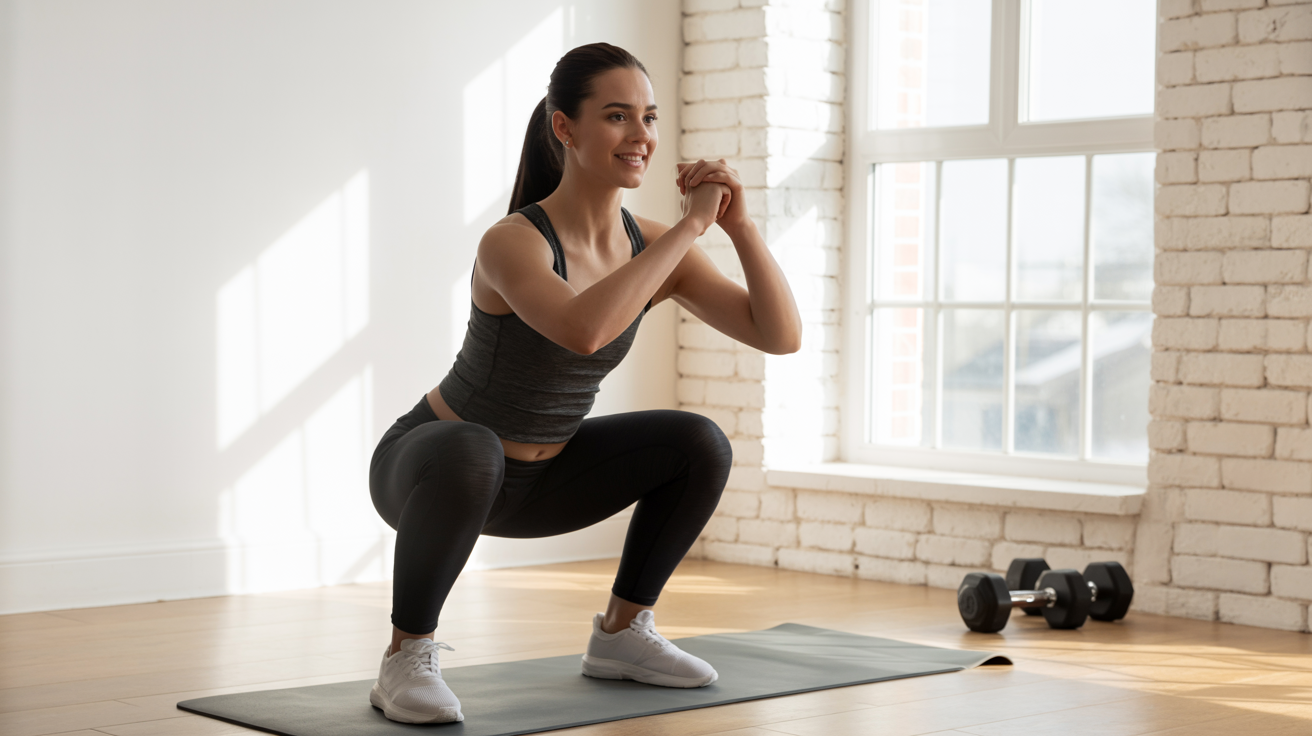
Squats work your glutes, quadriceps, hamstrings, and core all at once. To perform a proper bodyweight squat, stand with your feet shoulder-width apart, toes pointing slightly outward.
Lower your hips back and down as if sitting in an invisible chair, keeping your chest lifted and weight in your heels. Your knees should track over your toes without extending past them.
Lower until your thighs are parallel to the ground (or as low as comfortable), then push through your heels to stand back up.
Start with 10-12 repetitions, focusing on smooth, controlled movements. As you get stronger, you can increase to 15-20 reps or add variations like pulse squats or jump squats.
Push-ups: Upper Body Strength Builder
Push-ups strengthen your chest, shoulders, triceps, and core. The beauty of push-ups is that they’re infinitely scalable to your fitness level.
Beginners should start with wall push-ups: stand arm’s length from a wall, place your hands flat against it at shoulder height, and perform push-ups by bending your elbows and bringing your chest toward the wall.
Once wall push-ups feel easy, progress to incline push-ups using a sturdy chair or couch. Eventually, you’ll work your way down to knee push-ups on the floor, and finally, full push-ups from your toes.
This progression might take weeks or months—that’s completely normal! Start with 8-10 repetitions at whatever level feels challenging but achievable.
Planks: Core Stability Essential
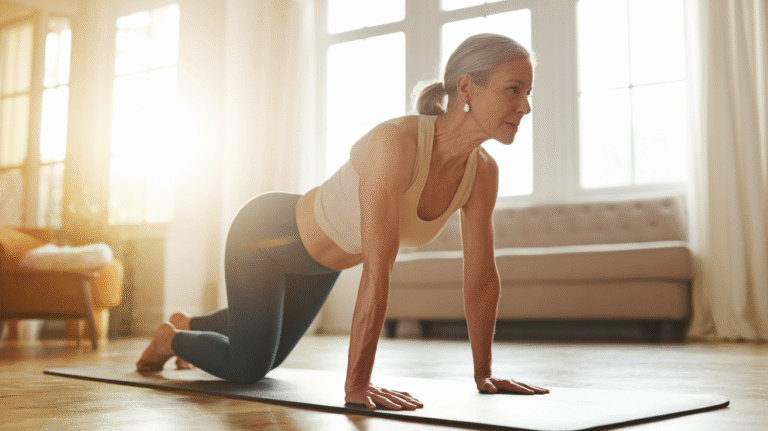
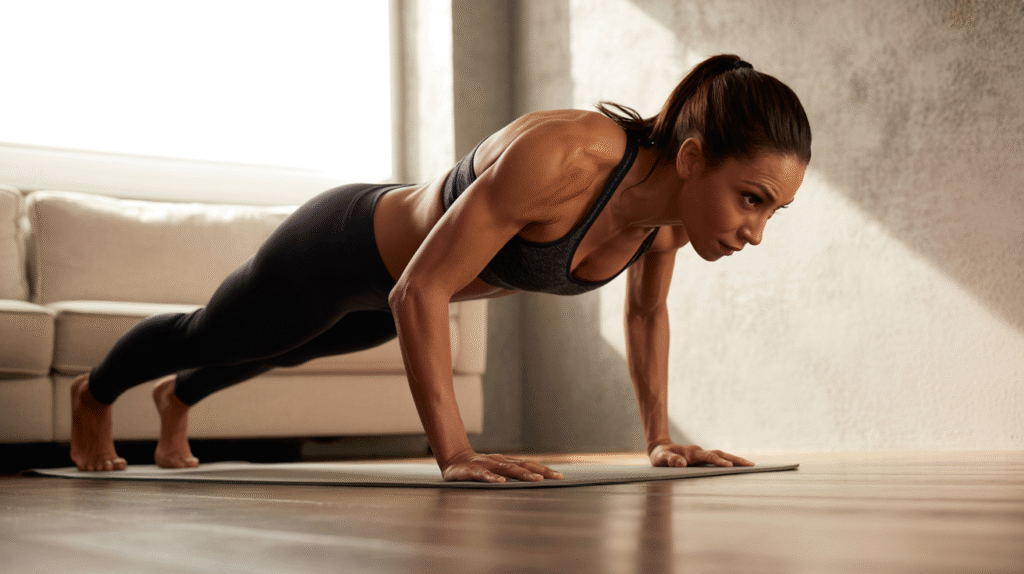
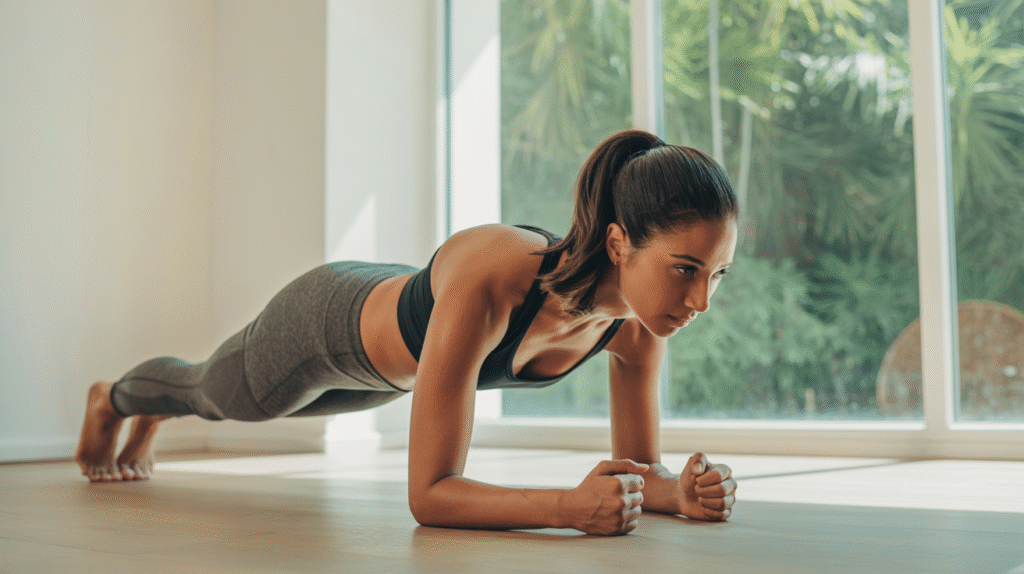
The plank is the ultimate core-strengthening exercise that also engages your shoulders, back, and legs. To perform a plank, start on your hands and knees, then step your feet back so your body forms a straight line from head to heels. Keep your core tight, don’t let your hips sag, and avoid hiking your butt up in the air.
Beginners should aim to hold a plank for 10-20 seconds, gradually building up to 30 seconds, then a full minute. You can modify by dropping to your forearms instead of keeping your arms straight, or by doing the plank from your knees.
Warm-Up and Cool-Down Tips
Never skip your warm-up and cool-down—these bookends to your workout are crucial for preventing injury and maximizing results!
The Perfect Warm-Up (5 Minutes)
Your warm-up should gently elevate your heart rate and increase blood flow to your muscles. Start with light cardio like marching in place or easy jogging on the spot for 2-3 minutes.
Then add dynamic stretches: arm circles (forward and backward), leg swings (front to back and side to side), torso twists, and hip circles. These movements prepare your joints and muscles for the work ahead.
Cool-Down That Counts (5 Minutes)
After your workout, don’t just stop abruptly! Gradually bring your heart rate down with 2-3 minutes of walking in place or slow marching. Follow this with static stretching, holding each stretch for 20-30 seconds.
Focus on the major muscle groups you worked: quadriceps, hamstrings, chest, shoulders, and back. This helps reduce muscle soreness and improves flexibility over time.
Safety and Proper Form
Quality always beats quantity when it comes to exercise! Here’s what you need to know to stay safe:
Form Fundamentals:
- Keep your core engaged throughout every exercise—imagine pulling your belly button toward your spine
- Breathe steadily; never hold your breath (exhale during exertion, inhale during the easier phase)
- Move with control; avoid jerky or rushed movements
- If something causes sharp pain (beyond normal muscle fatigue), stop immediately
Listen to Your Body: There’s a difference between the discomfort of challenging your muscles and actual pain. Muscle fatigue and a burning sensation are normal during exercise.
Sharp, stabbing, or joint pain is not—that’s your body telling you to stop and reassess your form or choose a different exercise.
Start Conservatively: It’s better to start too easy than too hard. You can always add more reps, sets, or intensity next time. Overdoing it on day one leads to excessive soreness, discouragement, and potential injury. Remember: this is a marathon, not a sprint!
2. Building Consistency: Your Daily Home Workout Plan
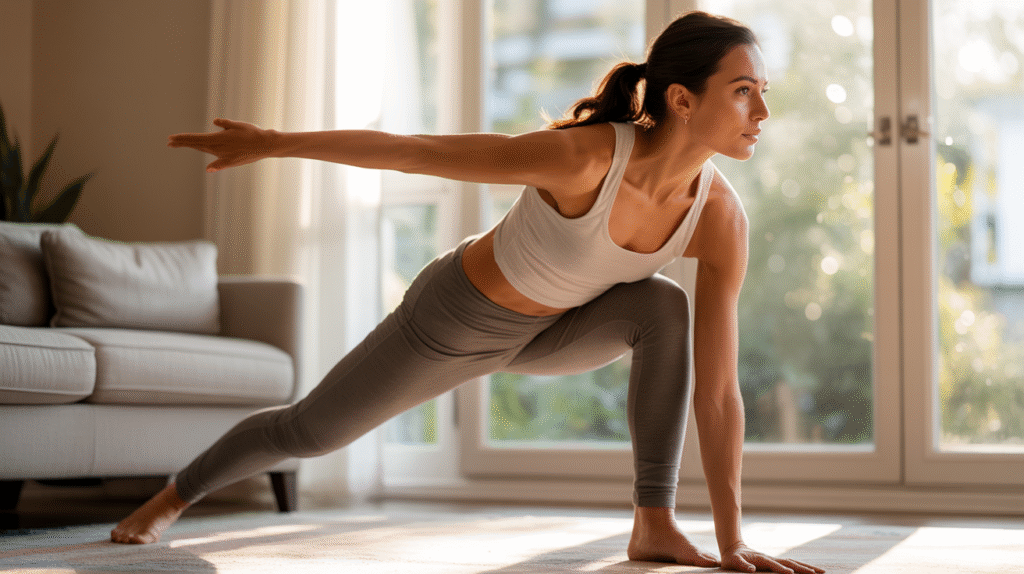
Consistency is the absolute secret to seeing real, lasting results! A daily workout plan doesn’t mean you need to exercise intensely every single day—it means creating a sustainable, realistic routine that fits seamlessly into your lifestyle and keeps you moving forward.
Sample Weekly Routine for Beginners
Here’s a balanced weekly plan that gives your body what it needs: strength training, cardiovascular exercise, flexibility work, and crucial recovery time.
Monday: Upper Body Strength (20 minutes) Focus on push-ups (any variation), tricep dips using a chair, arm circles, and plank holds. This builds strength in your chest, shoulders, arms, and core.
Tuesday: Low-Impact Cardio (15-20 minutes) Go for a brisk walk (outside or in place), try beginner-friendly dance cardio, or do marching exercises with arm movements. Keep your heart rate elevated but still be able to hold a conversation.
Wednesday: Lower Body Strength (20 minutes) Concentrate on squats, lunges, glute bridges, and standing leg lifts. These exercises sculpt and strengthen your entire lower body while improving balance.
Thursday: Active Recovery & Flexibility (15-20 minutes) This is not a rest day, but a recovery day! Try gentle yoga, full-body stretching, or an easy walk. This helps your muscles recover while maintaining your workout momentum.
Friday: Full-Body Circuit (20-25 minutes) Combine upper body, lower body, and cardio moves in one efficient workout. Rotate through exercises like squats, push-ups, jumping jacks (or marching), planks, and lunges.
Saturday: Fun Cardio or Activity (15-30 minutes) Choose something you genuinely enjoy! Dance to your favorite music, go for a bike ride, play with your kids at the park, or follow along with a beginner aerobics video. When exercise feels like fun, you’ll stick with it.
Sunday: Complete Rest or Gentle Stretching (0-15 minutes) Your body needs at least one full rest day per week to repair and grow stronger. If you feel restless, some light stretching is fine, but give yourself permission to truly rest guilt-free.
How to Progress Safely and Effectively
Progressive overload—gradually increasing the challenge of your workouts—is how you continue seeing results without plateauing. But as a beginner, you need to progress thoughtfully to avoid burnout or injury.
Week 1-2: Master the Movements Focus purely on learning proper form and establishing the habit. Don’t worry about pushing yourself to exhaustion. If the routine calls for 12 reps and you can only do 6 with good form, do 6!
Week 3-4: Build Consistency By now, the movements should feel more familiar. Try to complete the suggested reps and sets, but still prioritize form over quantity.
Week 5-6: Gradually Increase Intensity Add 2-3 more reps to each exercise, hold your planks 5-10 seconds longer, or add an extra set. These small increases create big results over time.
Week 7-8: Challenge Yourself Try harder variations of familiar exercises (wall push-ups become incline push-ups, bodyweight squats become squat jumps), increase your cardio pace slightly, or reduce rest time between sets.
Track Your Progress: Keep a simple workout journal or use your phone’s notes app. Write down what you did each day, how you felt, and any improvements you notice. Seeing your progress in writing is incredibly motivating!
Modifying Workouts to Fit Your Energy Levels
Life happens! Some days you’ll feel energized and ready to crush your workout. Other days you’ll be tired, stressed, or dealing with life’s challenges. Your workout plan should be flexible enough to adapt.
High Energy Days: Add extra sets, include more challenging exercise variations, increase your pace, or extend your workout by 5-10 minutes. Ride that wave of energy!
Medium Energy Days: Stick to your planned routine as written. You’ll still get a great workout and maintain your progress.
Low Energy Days: Do a shortened version—even 10 minutes counts! Choose the exercises you enjoy most, skip the hardest variations, or do an extra rest day if you’re truly exhausted. Some movement is always better than no movement, but rest is also productive.
Remember: Missing one workout doesn’t derail your progress, but it’s the habit of showing up (even imperfectly) that creates lasting transformation.
3. Master the Fundamentals: Easy Exercises to Build Strength
Let’s dive deeper into the foundational exercises that will form the building blocks of your home workout routine. When you master these movements, you’ll have a toolkit of effective exercises you can use anywhere, anytime.
Squats, Lunges & Arm Circles Explained
Squats: A Deeper Look
Beyond the basic bodyweight squat, understanding variations helps you target muscles differently and prevent boredom.
- Wide-Stance Squats: Position your feet wider than shoulder-width with toes pointed outward. This variation emphasizes your inner thighs and glutes more than regular squats.
- Pulse Squats: Lower into a squat position, then pulse up and down about 2-3 inches for 10-20 pulses. This creates an intense burning sensation and builds endurance.
- Single-Leg Squats (Advanced): Using a chair for support, lift one leg off the ground and squat with the standing leg. This dramatically increases difficulty and improves balance.
Lunges: Step-by-Step Mastery
Lunges are phenomenal for building leg strength, improving balance, and creating functional fitness that translates to everyday activities.
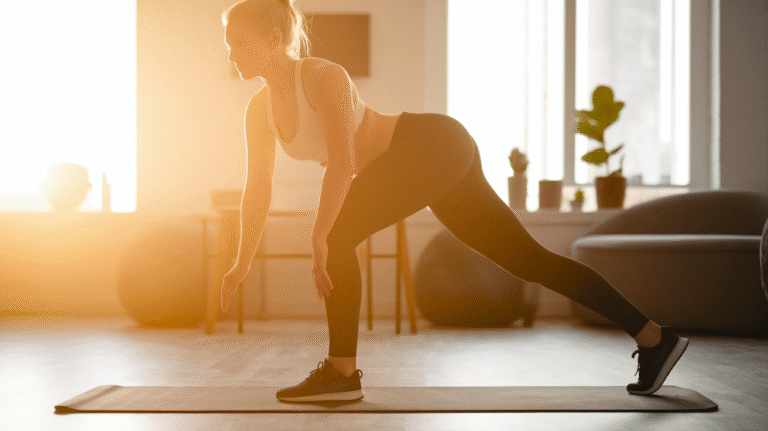
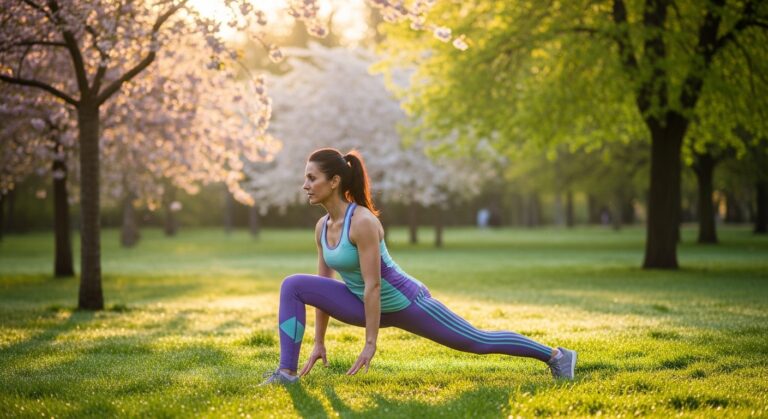
To perform a proper forward lunge: Stand tall, step forward with your right foot (about 2-3 feet), and lower your body until both knees are bent at approximately 90 degrees.
Your back knee should hover just above the ground. Push through your front heel to return to standing, then repeat on the other side.
Lunge Variations:
- Reverse Lunges: Instead of stepping forward, step backward. This is often easier on the knees and great for beginners.
- Walking Lunges: Perform lunges while moving forward across your space, alternating legs with each step.
- Stationary Lunges: Stay in a split stance and pulse up and down without stepping. This builds serious leg strength!
Arm Circles: More Than Just a Warm-Up
Don’t underestimate the power of arm circles! While they’re excellent for warming up shoulders, they also build shoulder endurance and improve mobility.
Stand with feet hip-width apart, extend your arms straight out to the sides at shoulder height. Make small circles forward for 15-20 seconds, then reverse direction.
Gradually increase the size of your circles. For an extra challenge, hold light water bottles or cans while doing arm circles.
Modifications for All Fitness Levels
The beauty of home workouts is that every exercise can be scaled to match your current abilities. Here’s how to modify the fundamental movements:
If You’re Brand New to Exercise:
- Do squats by sitting down and standing up from a chair
- Perform push-ups against a wall
- Hold planks for just 5-10 seconds
- Do lunges holding onto a counter or wall for balance
- March in place instead of jogging
If You Have Some Fitness Base:
- Perform standard versions of all exercises
- Aim for 10-15 reps of each movement
- Hold planks for 20-30 seconds
- Try incline push-ups from a couch or chair
If You’re Ready for More Challenge:
- Add jump squats and jump lunges
- Progress to full push-ups from your toes
- Hold planks for 45+ seconds
- Perform single-leg variations of exercises
- Reduce rest time between sets
Listen and Adapt: Your fitness level isn’t static—it changes day by day based on sleep, stress, nutrition, and recovery. Choose modifications that feel appropriately challenging on that particular day.
How to Track Your Improvement
Tracking progress keeps you motivated and helps you see how far you’ve come, even when day-to-day changes feel minimal.
Numbers-Based Tracking:
- Reps completed per exercise
- Total workout duration
- Plank hold time
- Rest time needed between sets
- Number of workouts completed per week
Feeling-Based Tracking:
- Energy levels during and after workouts
- Muscle soreness (should decrease over time)
- Exercises that felt easier this week than last
- Overall mood and confidence improvements
Physical Changes:
- How your clothes fit
- Progress photos (monthly, not daily!)
- Measurements of chest, waist, hips, arms, thighs
- Physical capabilities (can you now do 10 push-ups where you could only do 3?)
Celebrate Non-Scale Victories: Fitness isn’t just about weight! Celebrate when you complete a full week of workouts, when you no longer get winded going up stairs, when you sleep better, or when you feel more confident in your body. These victories matter just as much—if not more—than numbers on a scale.
4. Create Purposeful Workouts: Structuring Beginner Routines
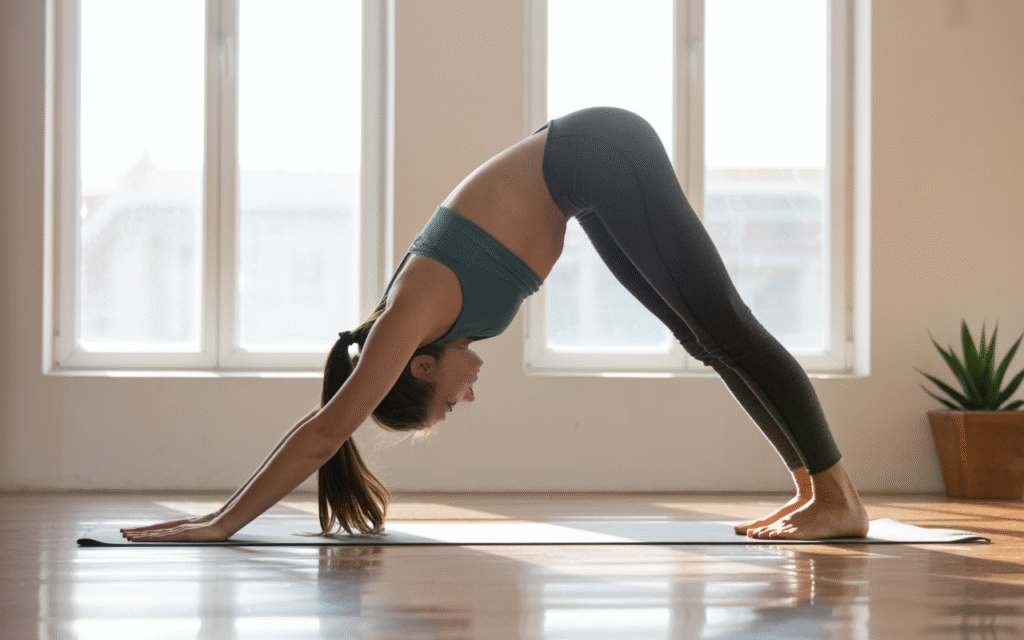
Random exercise is better than no exercise, but structured workouts deliver faster, more consistent results. Understanding how to organize your workouts transforms scattered effort into purposeful progress.
Sets, Reps & Rest: What You Need to Know
These three variables form the foundation of every strength workout. Let’s break down what they mean and how to use them effectively.
Reps (Repetitions): One complete movement of an exercise. For example, lowering into a squat and standing back up equals one rep. Beginners should generally aim for 8-15 reps per exercise, which builds both strength and muscular endurance.
Sets: A group of consecutive repetitions. After completing your target reps, you rest, then perform another set. Beginners should start with 2-3 sets of each exercise. As you get stronger, you can add more sets or more reps per set.
Rest Periods: The break between sets allows your muscles to recover enough to maintain good form in the next set. Beginners should rest 45-90 seconds between sets of strength exercises. For cardio intervals, keep rest periods shorter (15-30 seconds) to maintain an elevated heart rate.
Putting It All Together: A workout notation of “3×12 squats” means: perform 12 squats, rest, perform 12 more squats, rest, perform 12 final squats. That’s 3 sets of 12 repetitions.
Sample Cardio + Strength Circuit
Circuits are incredibly efficient because they keep your heart rate elevated while building strength. Here’s a beginner-friendly circuit that works your entire body in just 20-25 minutes.
The Complete Beginner Circuit: Perform each exercise for the prescribed time or reps, then move immediately to the next. Rest 1-2 minutes after completing all exercises, then repeat the entire circuit 2-3 times.
- March in Place – 1 minute Get your blood flowing and heart rate up with this simple but effective warm-up cardio.
- Bodyweight Squats – 12 reps Focus on depth and control. Feel your glutes and thighs working.
- Wall or Incline Push-ups – 8-10 reps Build upper body strength at a level that’s appropriate for you.
- Alternating Reverse Lunges – 10 reps per leg (20 total) Step back, lower down, push through your front heel to return to standing.
- Plank Hold – 15-30 seconds Keep your core tight and body in a straight line. Modify on knees if needed.
- High Knees or Marching – 30 seconds Quick cardio burst to keep your heart rate elevated.
- Glute Bridges – 15 reps Lie on your back, lift your hips, squeeze your glutes at the top.
- Standing Side Bends – 10 per side Reach one arm overhead and bend to the opposite side, stretching your obliques.
Circuit Variations: Once this circuit feels comfortable, increase the challenge by:
- Adding 2-3 more reps to each exercise
- Holding planks for 5-10 seconds longer
- Performing 4 rounds instead of 3
- Reducing rest time between circuits
Tips for Staying Motivated
Motivation ebbs and flows naturally, but these strategies help you stay consistent even when motivation is low.
Create Non-Negotiable Workout Times: Schedule your workouts like important appointments. Morning workouts often have the highest completion rate because fewer distractions arise early in the day.
Use the “Just 5 Minutes” Rule: On days when you really don’t feel like working out, commit to just 5 minutes. Often, once you start moving, you’ll want to continue. But even if you only do 5 minutes, you’ve maintained your habit!
Visual Progress Tracking: Put a calendar on your wall and mark an X for each completed workout. Watching that chain of X’s grow creates powerful motivation not to break the streak.
Reward Milestones: Set milestone rewards for yourself: after 2 weeks of consistency, buy yourself new workout clothes; after 1 month, treat yourself to a massage; after 3 months, celebrate with something meaningful to you.
Find Your “Why”: Connect your workouts to a deeper purpose beyond appearance. Maybe you want to have energy to play with your kids, reduce anxiety, improve sleep, or feel strong and capable. Revisit this “why” when motivation wanes.
Join Online Communities: Follow beginner fitness accounts on social media, join Facebook workout groups, or participate in Reddit fitness communities. Surrounding yourself with others on similar journeys provides inspiration and accountability.
5. Setting Yourself Up for Success: Home Workout Mindset

Success in fitness is 80% mindset and 20% mechanics. You can have the perfect workout plan, but without the right mental approach, consistency becomes nearly impossible. Let’s build a foundation for lasting success.
Motivation Techniques That Work
Motivation is a fickle friend—it’s high at the beginning and often disappears when things get tough. That’s why building systems and habits matters more than relying on motivation alone.
Habit Stacking: Attach your workout to an existing habit. For example: “After I make my morning coffee, I do my workout” or “As soon as I change out of work clothes, I exercise for 15 minutes.” This creates an automatic trigger.
Identity-Based Goals: Instead of saying “I want to work out regularly,” say “I am someone who prioritizes health and fitness.” This subtle shift in identity makes decisions easier. Someone who identifies as active naturally chooses to work out, even when it’s difficult.
The 2-Day Rule: Never miss two days in a row. Missing one workout is life; missing two starts creating a new pattern of inactivity. If you skip Monday, make Tuesday non-negotiable.
Accountability Partners: Text a friend or family member when you complete your workout, post your progress on social media, or find a virtual workout buddy. External accountability significantly increases follow-through.
Reframe Negative Self-Talk: Replace “I have to work out” with “I get to move my body today.” Replace “This is so hard” with “This is making me stronger.” Your internal dialogue shapes your experience.
Creating Your Workout Space
You don’t need a home gym to have an effective workout space! Even in the smallest apartment, you can carve out a dedicated area that signals “it’s time to exercise.”
Designate Your Spot: Choose a specific area—even just a 6×6 foot section—that becomes your workout zone. Your brain will start associating this space with exercise, making it easier to get into workout mode.
Clear the Clutter: Remove unnecessary items from your workout space. A clean, uncluttered area helps you focus and move freely without distractions or obstacles.
Essential Equipment (Optional but Helpful):
- Yoga mat or towel: Provides cushioning and defines your workout space ($10-25)
- Resistance bands: Add versatility to your workouts as you progress ($10-20)
- Water bottle: Stay hydrated and take it as a visual cue that it’s workout time
- Phone or tablet: For workout videos, music, or timer apps
Ambiance Matters: Create an environment that energizes you. Open windows for fresh air, turn on bright lights, queue up your favorite upbeat playlist, or light a energizing essential oil diffuser. Small touches make workouts more enjoyable.
Eliminate Barriers: Keep your workout clothes laid out the night before, have your yoga mat already rolled out, and remove any steps between you and starting your workout. The easier you make it to begin, the more likely you’ll follow through.
Goal-Setting for Lasting Results
Vague goals create vague results. Specific, achievable goals create sustainable progress.
Use SMART Goals:
- Specific: “Complete 3 full-body workouts per week” beats “exercise more”
- Measurable: Track completed workouts, reps, or duration
- Achievable: Start where you are, not where you think you should be
- Relevant: Align goals with your personal values and lifestyle
- Time-bound: Set a timeframe like “for the next 4 weeks”
Layer Your Goals: Have short-term (this week), medium-term (this month), and long-term (this quarter) goals. Short-term wins build momentum for bigger achievements.
Process Goals vs. Outcome Goals: Focus more on process goals (things you control) than outcome goals (things you don’t fully control).
- Process goal: “Work out 4 times this week” ✓
- Outcome goal: “Lose 10 pounds this month” (harder to control)
Celebrate Every Win: Finished a workout when you didn’t feel like it? WIN. Did one more rep than last week? WIN. Felt stronger during your squats? WIN. Acknowledging small victories compounds into major transformation.
Adjust as You Go: Goals aren’t set in stone. If a goal feels consistently too hard or too easy, adjust it! Flexibility and self-compassion lead to better long-term results than rigid perfectionism.
6. Quick Yet Effective: Simple Workouts for Busy Schedules
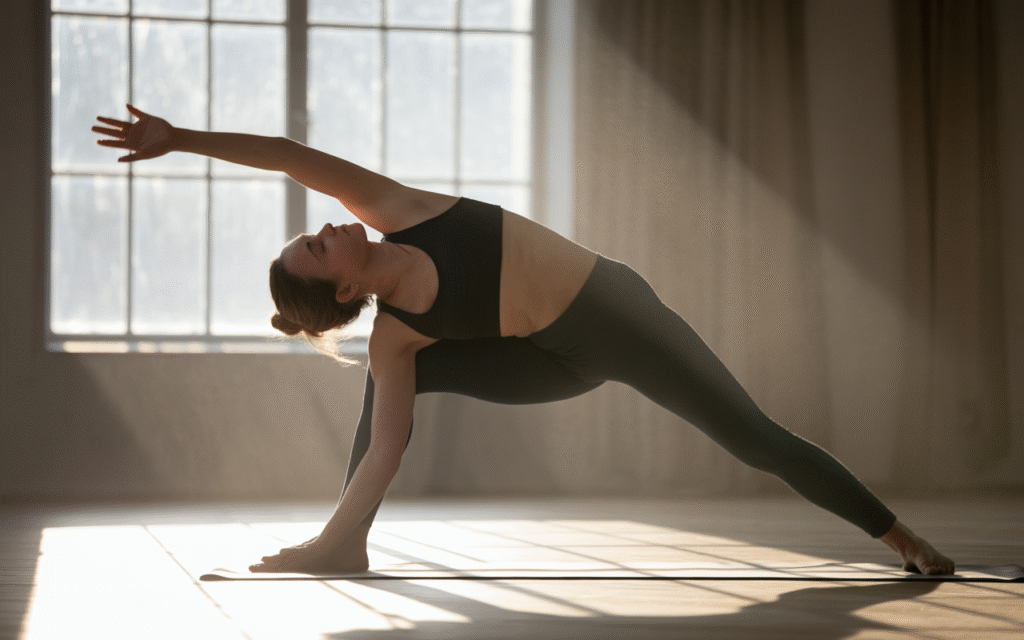
“I don’t have time” is the most common excuse for skipping workouts. Let’s demolish that excuse by showing you how powerful short workouts can be!
10-Minute Morning Energizer Routine
This quick sequence jumpstarts your metabolism, boosts energy levels, and sets a positive tone for your entire day. Do this right after waking up—before your brain has time to talk you out of it!
The Routine:
- Minutes 1-2: Gentle Wake-Up March in place, roll your shoulders, do arm circles, and gently twist your torso side to side. Wake up your body gradually.
- Minutes 3-4: Lower Body Focus Perform bodyweight squats for 30 seconds, rest for 15 seconds, repeat. Feel your legs waking up and blood flowing.
- Minutes 5-6: Upper Body Work Do wall or incline push-ups for 30 seconds, rest for 15 seconds, repeat. Build strength while your mind clears.
- Minutes 7-8: Core Engagement Hold a plank for 20 seconds, rest for 10 seconds, repeat 3 times. Your core stabilizes your entire body.
- Minutes 9-10: Energizing Cardio + Stretch High knees or marching for 45 seconds, followed by 75 seconds of full-body stretching. End feeling accomplished and energized!
Benefits Beyond Fitness: Morning workouts increase alertness, improve mood through endorphin release, boost metabolism for hours afterward, and create a sense of accomplishment that carries through your day.
15-Minute Full-Body Blast Circuit
When you have just 15 minutes, this circuit delivers maximum results by combining strength and cardio moves that target every major muscle group.
How It Works: Perform each exercise for 45 seconds, followed by 15 seconds of rest to transition to the next move. Complete the entire circuit twice for a full 15-minute workout.
Round 1 & 2:
- Bodyweight Squats (45 sec) – Deep, controlled movements
- Rest (15 sec)
- Modified Push-ups (45 sec) – Choose your appropriate variation
- Rest (15 sec)
- Alternating Lunges (45 sec) – Step back, alternate legs
- Rest (15 sec)
- Plank Hold (45 sec) – Keep that core tight!
- Rest (15 sec)
- Glute Bridges (45 sec) – Squeeze at the top
- Rest (15 sec)
- High Knees or March (45 sec) – Get that heart pumping
- Rest (15 sec)
- Standing Side Bends (45 sec) – Stretch those obliques
- Rest (15 sec)
After completing both rounds, take 1-2 minutes to cool down with gentle stretching.
Why Short Workouts Can Be Powerful
There’s a persistent myth that workouts must be long to be effective. Science disagrees! Research consistently shows that short, intense workouts provide significant benefits.
The Science Behind Short Workouts:
- Studies show that even 10 minutes of exercise reduces blood pressure, improves insulin sensitivity, and enhances mood
- Brief, regular workouts often lead to better adherence than long, sporadic sessions
- High-intensity intervals (even short ones) can boost metabolism for hours post-workout
- Consistency with short workouts beats inconsistency with long ones every single time
Psychological Advantages: Short workouts feel less intimidating, making it easier to start. They fit into any schedule—before work, during lunch, before dinner.
There’s no excuse that holds up against “I don’t have 10 minutes.” This removes mental barriers and builds the habit of daily movement.
Time Efficiency: In the modern world, time is precious. Short workouts respect your schedule while still delivering results. They prove that fitness doesn’t require hours at the gym—just consistent effort and smart exercise selection.
Building Blocks: Think of short workouts as building blocks. Three 10-minute sessions throughout the day equal 30 minutes of exercise! Break them up if needed: 10 minutes in the morning, 10 at lunch, 10 in the evening.
7. Tailored Fitness: At-Home Workouts Designed for Women
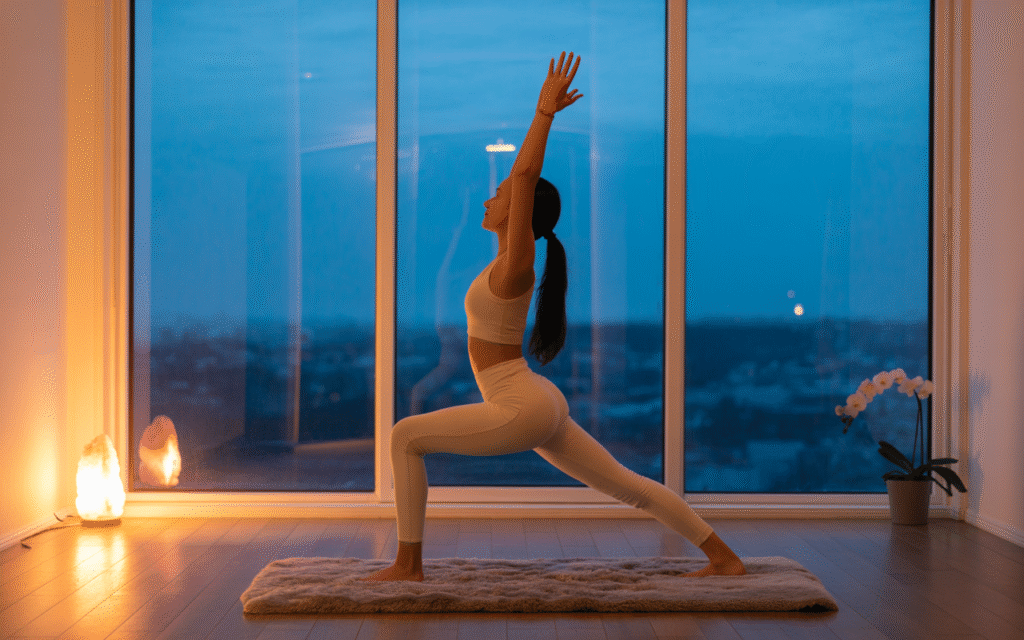
Ladies, this section speaks directly to you! While the fundamentals of fitness apply universally, women often have specific goals, concerns, and considerations when starting a workout routine. Let’s address them head-on with empowerment and education.
Strength Moves for Toning and Confidence
First, let’s bust the biggest myth: strength training will NOT make you “bulky.” Women have significantly less testosterone than men, making it physiologically difficult to build large muscles without years of dedicated heavy lifting and specific nutrition. What strength training DOES do is create that toned, defined, strong look that most women desire.
Upper Body Toning:
- Push-ups (all variations): Sculpt your chest, shoulders, and arms while building functional strength
- Tricep Dips: Use a sturdy chair to target the back of your arms (that area many women want to tone)
- Arm Circles with Light Weights: Grab water bottles or light dumbbells to define shoulders
Lower Body Sculpting:
- Squats and Variations: Build and lift your glutes while strengthening your entire lower body
- Lunges (forward, reverse, and side): Create definition in your legs and improve the shape of your glutes
- Glute Bridges: Specifically target your backside for lift and strength
- Donkey Kicks: Fire up those glutes with this isolated movement
Core Definition:
- Planks: Build deep core strength that translates to better posture and a flatter stomach
- Bird Dogs: Improve core stability while protecting your back
- Standing Core Work: Engage your abs throughout the day with standing oblique exercises
The Toning Truth: “Toning” is actually a combination of building muscle and reducing body fat to reveal that muscle. Strength training builds the muscle; proper nutrition and cardio help reduce the fat layer. Both components matter!
Addressing Common Fitness Concerns
Let’s tackle the questions and worries that many women have when starting their fitness journey:
“I don’t want to get too muscular” As mentioned, this is extremely unlikely without significant effort. Strength training creates lean, defined muscles—not bulk. The strong, fit women you admire? They achieved those bodies through strength training!
“I’m not flexible enough to work out” Flexibility improves with practice! Start exactly where you are. Modified exercises accommodate all flexibility levels, and consistent movement gradually increases your range of motion. You don’t need to be flexible to start—you start to become flexible.
“I’m worried about exercising during my menstrual cycle” Exercise often helps with period symptoms! Gentle movement can reduce cramps, improve mood, and decrease bloating.
Listen to your body—if you need to take it easier during menstruation, do lighter workouts or focus on walking and stretching. Some women feel stronger during their cycle; others need more rest. Honor what your body needs.
“What about post-pregnancy fitness?” First, get medical clearance from your doctor (typically around 6 weeks postpartum for vaginal births, longer for C-sections).
Start with pelvic floor exercises, gentle walking, and modified movements. Rebuild core strength gradually, avoiding heavy abdominal exercises until your doctor approves. Be patient—your body performed a miracle and needs time to recover.
“I’m worried about proper form when working out alone” Use mirrors to check your form, film yourself occasionally to review technique, start with easier exercise variations, and watch quality instructional videos. When in doubt, slow down and focus on control. Quality movement beats rushed repetitions every time.
Empowerment Through Consistent Workouts
Fitness is about so much more than appearance. Regular exercise transforms how you feel in your body and move through the world.
Physical Empowerment: Feel the strength you didn’t know you had. Carry groceries effortlessly. Play with your children without getting winded. Open jars and move furniture independently. Physical strength translates to life capabilities.
Mental Empowerment: Exercise reduces anxiety and depression symptoms, improves self-esteem, creates achievement feelings, and proves you can do hard things. Every completed workout is evidence of your discipline and commitment.
Emotional Benefits: Endorphins from exercise create natural mood boosts. Working out provides healthy stress relief and creates time that’s just for you—increasingly rare in women’s busy, caregiving-heavy lives.
Building Body Trust: Many women have adversarial relationships with their bodies, viewing them as things to be fixed. Exercise shifts this paradigm. You start appreciating what your body CAN DO rather than just how it looks. You build trust with yourself through kept commitments and consistent effort.
The Confidence Ripple Effect: Fitness confidence spills into other life areas. Women who exercise regularly often report feeling more confident at work, in relationships, and in pursuing personal goals. Physical strength builds mental fortitude.
8. Keep It Fresh: Easy Workouts to Mix Up Your Week
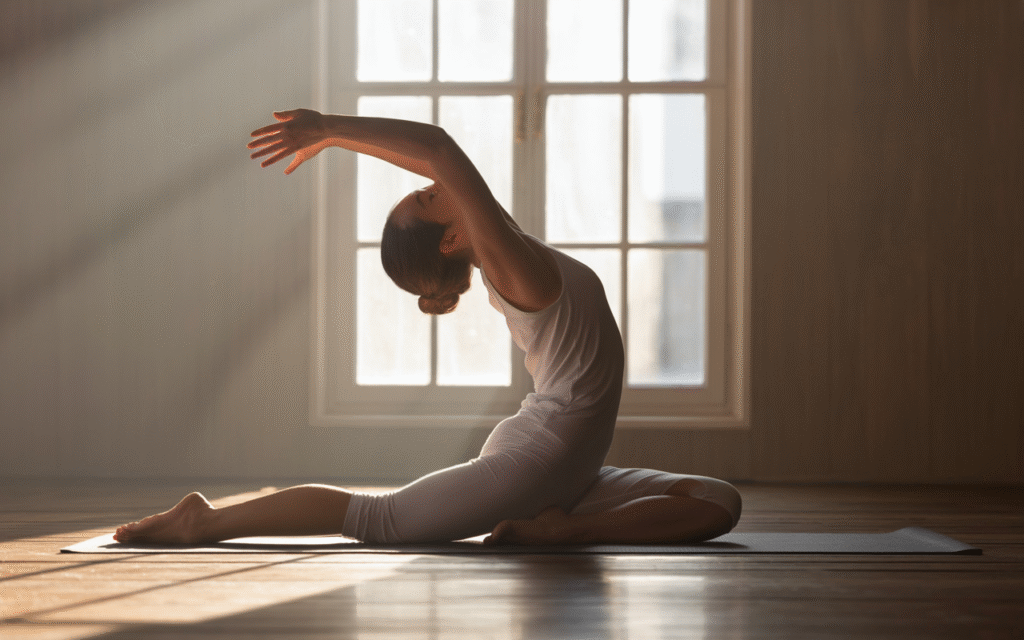
Variety prevents boredom, challenges your body in different ways, and keeps your fitness journey sustainable and fun. Here’s how to structure a diverse weekly routine that works everything from strength to flexibility.
Strength, Cardio & Flexibility Days Explained
Different types of exercise provide different benefits. Understanding each helps you create a balanced routine that develops total fitness.
Strength Training Days: These workouts focus on building muscle through resistance exercises like squats, push-ups, lunges, and planks. Strength training increases metabolism (muscle burns more calories at rest), improves bone density, creates definition and tone, and builds functional fitness for daily activities.
Beginners should include 2-3 strength sessions per week, working different muscle groups. Allow at least one day between working the same muscles to give them recovery time.
Cardio Days: Cardiovascular exercise elevates your heart rate and improves the health of your heart and lungs. Home cardio doesn’t require running! Options include brisk walking, marching in place, dancing, jumping jacks (if your space allows), shadow boxing, or following along with cardio videos.
Benefits include improved heart health, increased endurance, calorie burning for weight management, stress relief, and better sleep. Aim for 2-4 cardio sessions weekly, anywhere from 15-30 minutes.
Flexibility and Mobility Days: These sessions focus on stretching, yoga, and movements that increase range of motion. Many beginners overlook this component, but it’s crucial! Flexibility training reduces injury risk, decreases muscle soreness, improves posture, relieves tension and stress, and enhances performance in other workouts.
Include at least 1-2 dedicated flexibility sessions per week, plus stretching after every workout.
Active Recovery Days: Not quite rest, not quite workout—active recovery involves gentle movement that promotes blood flow without stressing your body. Think leisurely walks, gentle stretching, easy yoga, or even light housework. These days help muscles recover while maintaining your movement habit.
Complete Rest Days: True rest days involve minimal physical activity. Your body needs these to repair, rebuild, and grow stronger. Rest isn’t laziness—it’s a crucial part of your fitness plan! Aim for 1-2 complete rest days weekly.
How to Beat Workout Boredom
Boredom kills consistency faster than almost anything else. Keep your workouts fresh and engaging with these strategies.
Rotate Exercise Variations: Instead of always doing regular squats, rotate through jump squats, pulse squats, wide-stance squats, and single-leg squats. The same applies to all exercises—variety keeps things interesting.
Create Themed Workout Days: Monday could be “Leg Day,” Wednesday “Upper Body Blast,” Friday “Cardio Dance Party.” Themes add structure and anticipation.
Follow Different Workout Videos: YouTube offers endless free workout content! Try different instructors, styles, and formats. One day follow a yoga video, another try a HIIT workout, another do a dance cardio session.
Change Your Music: Create multiple workout playlists with different vibes. Upbeat pop for cardio, powerful rock for strength, calming music for yoga. Fresh music makes workouts feel new.
Try the Deck of Cards Workout: Assign an exercise to each suit (hearts = squats, diamonds = push-ups, clubs = lunges, spades = planks). Flip cards and do the number of reps shown. Face cards = 10 reps, Aces = 11 reps. It’s random and fun!
Set Mini-Challenges: “Can I hold a plank for 10 seconds longer this week?” “Can I complete 50 squats in one session?” “Can I work out 5 days this week?” Small challenges create engagement.
Workout with Others (Virtually): Video call a friend and work out together, join online workout classes, or participate in fitness challenges on social media. Community makes everything more enjoyable.
The Importance of Rest and Recovery
Here’s the truth that surprises beginners: rest days aren’t optional extras—they’re when your body actually gets stronger!
What Happens During Rest: When you work out, you create tiny tears in your muscle fibers (this is normal and good!). During rest, your body repairs these tears, making the muscles slightly stronger than before. Without adequate rest, you don’t get stronger—you just keep breaking down tissue without rebuilding it.
Signs You Need More Rest:
- Persistent fatigue and low energy
- Decreased performance (workouts feel harder than usual)
- Increased resting heart rate
- Trouble sleeping despite being tired
- Persistent muscle soreness that doesn’t improve
- Increased injuries or constant minor aches
- Mood changes, irritability, or depression
- Loss of motivation for workouts you usually enjoy
Optimizing Recovery:
- Sleep: Aim for 7-9 hours nightly—this is when most recovery happens
- Hydration: Drink water consistently throughout the day
- Nutrition: Eat adequate protein to repair muscles, plus plenty of fruits and vegetables
- Gentle Movement: Light walks and stretching promote blood flow without stress
- Stress Management: High stress impairs recovery—practice relaxation techniques
The Mental Rest Component: Rest days also provide mental recovery from the discipline required for consistent workouts. Taking guilt-free rest prevents burnout and makes you actually excited to work out again.
Trust the Process: Beginners often fear that taking rest days will erase their progress. The opposite is true! Strategic rest accelerates progress. Trust that rest is productive, not lazy. You’re not losing fitness on your rest day—you’re building it.
Conclusion: Your Journey Starts Right Now!
Congratulations! You’ve just absorbed a comprehensive guide to starting and maintaining a successful home workout routine as a complete beginner. You now understand the essential movements, how to structure effective workouts, strategies for staying consistent, and how to create variety that keeps fitness fun.
Here’s your simple action plan to get started today:
- Choose ONE workout from this guide that feels achievable and exciting to you
- Schedule it in your calendar for tomorrow morning (specific time!)
- Prepare tonight: Lay out workout clothes, clear your workout space, queue up any videos or music
- Complete that first workout—even if it’s just 10 minutes, even if you modify every exercise
- Celebrate your win! Completing your first workout is a HUGE achievement
Remember these key takeaways:
- You don’t need expensive equipment or a gym membership to get fit
- Short, consistent workouts beat long, sporadic ones
- Progress happens gradually—be patient and trust the process
- Rest and recovery are just as important as the workouts themselves
- Fitness is a journey, not a destination—enjoy the process!
Every single fitness expert, influencer, and athlete started exactly where you are now—at the very beginning. The only difference between them and people who never reach their goals? They started, and they stayed consistent. You have everything you need to succeed!
Which workout section are you most excited to try first? Drop a comment below and let me know! I’d absolutely love to hear about your fitness journey, celebrate your wins with you, and support you through any challenges.