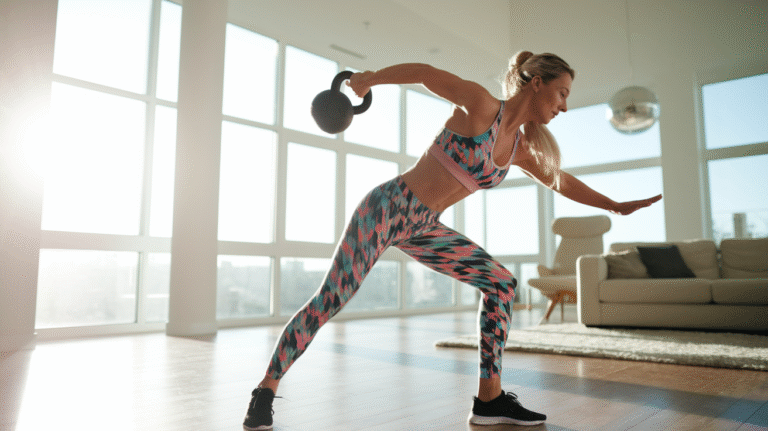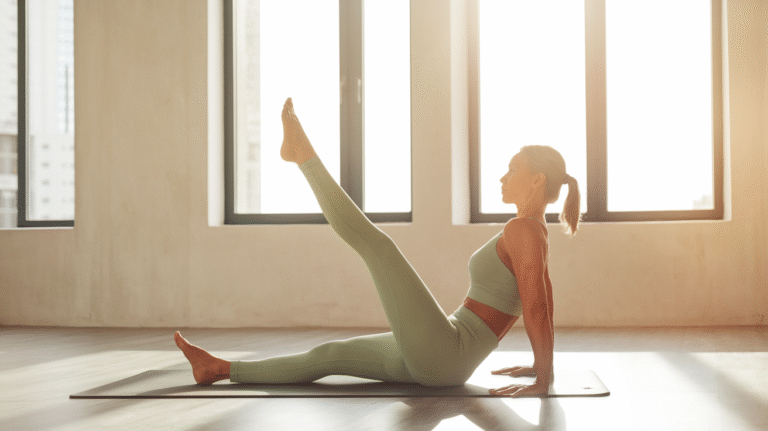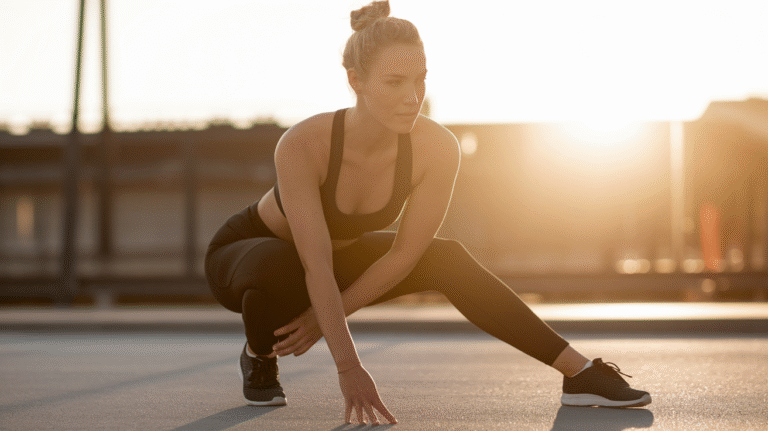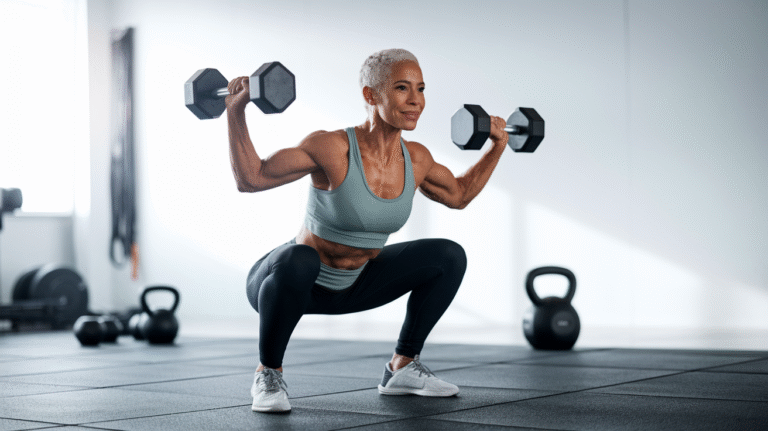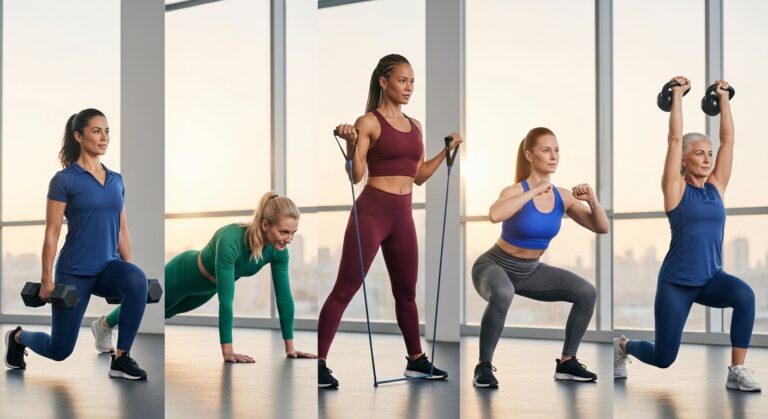
7 Standing Ab Exercises for Busy Women Over 40
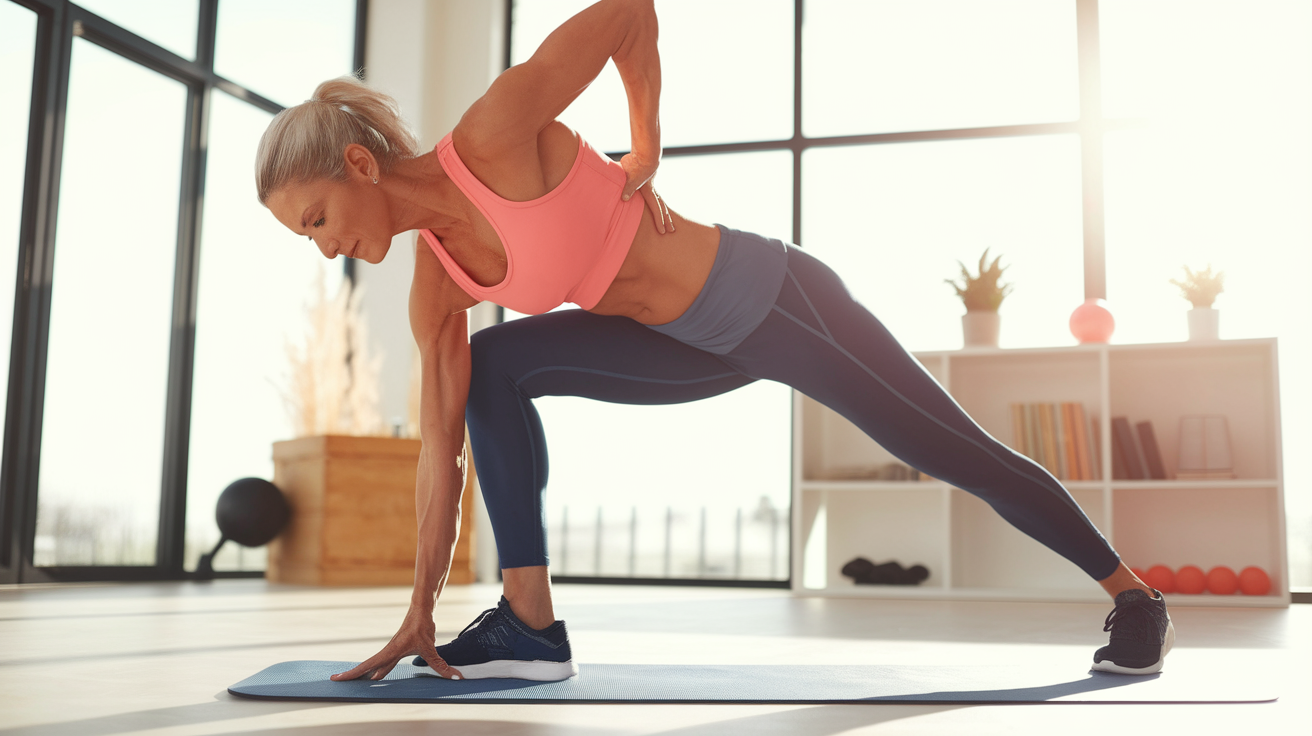
You know the drill. You’ve been meaning to work on your abs for months now, but the thought of getting down on the floor for endless crunches makes you cringe. Between work deadlines, family obligations, and that never-ending to-do list, who has time to roll out a yoga mat?
Here’s the truth: traditional ab exercises weren’t designed for your life or your body at this stage. You’re dealing with hormonal shifts that make losing belly fat harder than it was in your twenties.
Your metabolism has slowed down. And frankly, you need exercises that fit into your actual schedule, not some fitness influencer’s fantasy routine.
That’s exactly why standing ab exercises are a game-changer for women over 40. No equipment required. No floor work. Just seven minutes of targeted movements you can do while your morning coffee brews or during your favorite Netflix show.
In this guide, you’ll discover seven proven standing ab exercises specifically designed for your body’s needs after 40. These movements strengthen your core, improve your balance, reduce back pain, and yes—they actually work for flattening your stomach. The best part? You can complete the entire routine in less time than it takes to scroll through social media.
Ready to transform your core strength without transforming your entire schedule? Let’s dive in.
Why Standing Ab Exercises Are Essential for Women Over 40
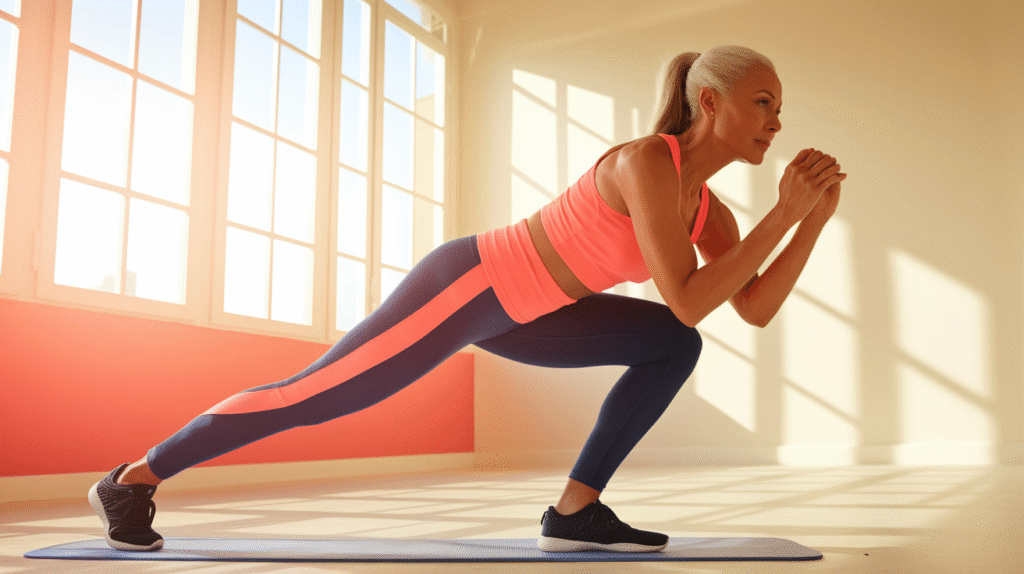
The Amazing Benefits Beyond a Flat Stomach
Standing ab exercises deliver results that go far beyond fitting into your favorite jeans. When you engage your core while standing, you’re training your body for real life—not just for looking good in photos.
Balance and stability become increasingly important as we age. Research shows that women over 40 experience gradual changes in proprioception (your body’s ability to sense its position in space). Standing ab exercises challenge your balance while strengthening your core, creating a powerful combination that helps prevent falls and maintains your independence for decades to come.
Your posture transforms when you consistently work your core muscles while standing. Instead of hunching over a computer all day, you’ll naturally stand taller and move with more confidence. Better posture means less strain on your neck and shoulders, which translates to fewer headaches and that nagging upper back tension you’ve been dealing with.
Here’s something most people don’t realize: standing ab exercises burn significantly more calories than traditional floor crunches. Why? Because you’re engaging multiple muscle groups simultaneously—your legs for stability, your arms for balance, and your entire core for the actual movement. This full-body engagement creates an efficient, calorie-torching workout that fits perfectly into a busy schedule.
Why Your Core Needs Change After 40
Your body isn’t the same as it was at 25, and that’s not a bad thing—it just means you need a smarter approach. Hormonal shifts during perimenopause and menopause directly impact your muscle mass and where your body stores fat. Estrogen levels decline, which often leads to increased abdominal fat storage and decreased muscle tone.
Your metabolism naturally slows by about 5% per decade after age 40. This metabolic shift makes targeted, effective exercises more crucial than ever. You can’t rely on the same workout routine that worked in your thirties and expect the same results. Your body needs exercises that maximize efficiency and deliver measurable outcomes in minimal time.
Joint health becomes a priority, not an afterthought. Standing ab exercises eliminate the stress that floor exercises place on your spine, hips, and neck. You’re not compressing your vertebrae or straining your hip flexors—you’re working with your body’s natural movement patterns.
The connection between core strength and overall health intensifies after 40. A strong core supports healthy digestion, improves breathing, stabilizes blood sugar levels, and even helps manage stress hormones. When you strengthen your core, you’re investing in your entire body’s wellbeing.
The Ultimate Time-Saving Solution
Zero equipment means zero excuses. You don’t need a gym membership, fancy machines, or even workout clothes. Standing ab exercises happen in your kitchen, your office, or your living room—wherever you have seven minutes and enough space to extend your arms.
The elimination of getting up and down from the floor saves both time and energy. You can transition smoothly from one exercise to the next without those awkward moments of struggling to stand up or feeling dizzy from position changes. This seamless flow makes your workout feel faster and more enjoyable.
Integration into your daily routine becomes effortless. Do standing oblique crunches while waiting for your lunch to heat up. Practice standing bicycle crunches during commercial breaks. Squeeze in standing woodchops while supervising homework. These exercises adapt to your life instead of demanding you rearrange everything around them.
Seven minutes delivers real results when you’re consistent. You don’t need hour-long workout sessions to see and feel a difference. This science-backed routine, performed daily or five times per week, creates measurable improvements in core strength, posture, and abdominal definition within just two to three weeks.
The Complete 7-Minute Standing Ab Workout Routine
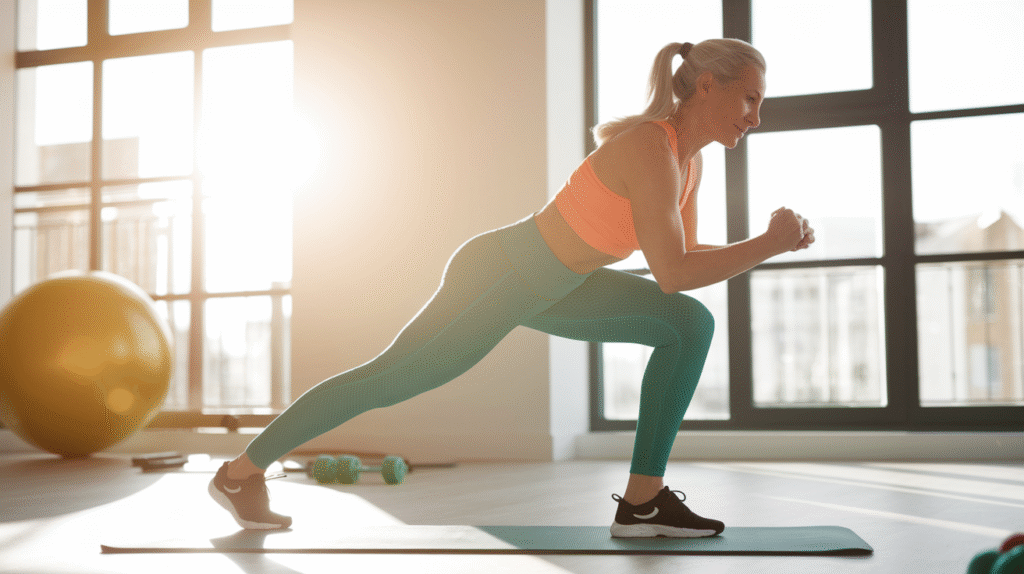
Exercise 1: Standing Oblique Crunches
Stand with your feet hip-width apart and place your hands behind your head, elbows pointing out to the sides. Shift your weight onto your left leg and lift your right knee up and out to the side while simultaneously crunching your right elbow down to meet it. Focus on contracting your right oblique (the muscles along the side of your waist) as you bring elbow and knee together.
You’re targeting your obliques—those crucial side abdominal muscles that create that coveted defined waistline and support your spine during twisting movements. Strong obliques improve your golf swing, your ability to reach for items on high shelves, and even your breathing capacity.
The most common mistake is using momentum instead of muscle control. Don’t just swing your leg up—lift it deliberately while actively crunching your torso. Another error is pulling on your neck with your hands. Your hands simply support your head; they don’t do the work. Keep your neck neutral and relaxed.
If you’re just starting out, try this modification: instead of lifting your knee high, simply tap your toe out to the side while performing the crunch motion. You’ll still engage your obliques without the balance challenge. As you build strength over the next two weeks, gradually increase your knee height.
Exercise 2: Standing Knee to Elbow Twists
Begin in the same starting position as oblique crunches—feet hip-width apart, hands behind your head. This time, bring your left knee up toward your right elbow while rotating your torso to the left. Think about creating a diagonal line as your knee and opposite elbow meet in the center of your body. Alternate sides with each repetition, creating a rhythmic, controlled movement.
This dynamic exercise is perfect for burning belly fat because it combines core rotation with leg lifting, which elevates your heart rate while targeting your entire abdominal wall. You’re working your rectus abdominis (the “six-pack” muscles), your obliques, and your transverse abdominis (your deepest core muscles) all at once.
To engage your entire core effectively, exhale forcefully as you bring knee and elbow together. This breathing pattern activates your deep core muscles and maximizes the exercise’s effectiveness. Keep your standing leg slightly bent for better stability and to protect your knee joint.
Ready for an advanced variation? Add a pause at the top of each repetition, holding for two seconds while balancing on one leg. This intensifies the core engagement and challenges your balance, creating faster strength gains. You’ll know you’re ready for this progression when you can complete 20 alternating repetitions without losing your balance.
Exercise 3: Standing Side Bends
Stand tall with your feet shoulder-width apart. Place your right hand behind your head and let your left arm hang naturally at your side. Engage your core and slowly bend directly to your left side, sliding your left hand down your leg as far as comfortable. Your right elbow points toward the ceiling throughout the movement. Return to the starting position with control, feeling your right oblique muscles contract to pull you back up.
This exercise strengthens your obliques through a different movement pattern than crunches, creating balanced core development. You’re also stretching the opposite side of your body, which improves flexibility and reduces the tightness many women experience in their torso from sitting at desks all day.
Breathing makes a significant difference in this exercise’s effectiveness. Inhale as you bend to the side, allowing your ribcage to expand. Exhale as you return to center, using that breath to engage your core muscles more deeply. This breathing pattern also helps prevent you from holding your breath, which can spike your blood pressure.
You should feel a contraction along the side of your waist and a gentle stretch on the opposite side. What you shouldn’t feel is any pinching in your lower back or strain in your neck. If you do, you’re bending too far or your form needs adjustment. Start with smaller movements and gradually increase your range of motion as your flexibility and strength improve.
Exercise 4: Standing Bicycle Crunches
Stand with feet hip-width apart and hands behind your head. Lift your right knee toward your chest while simultaneously rotating your torso to bring your left elbow toward that knee. As you lower your right leg, immediately lift your left knee and rotate to bring your right elbow toward it. Continue this alternating pattern, creating a smooth, bicycle-pedaling motion while standing.
Balance is key for this dynamic exercise. If you feel wobbly, slow down your movement speed and focus on controlled transitions. It’s better to perform fewer repetitions with excellent form than to rush through the exercise while struggling to stay upright. Keep your gaze forward rather than looking down at your feet—this helps maintain your balance.
To increase intensity gradually, try these progressions: First, increase your repetition speed while maintaining control. Second, add a one-second pause at the top of each knee lift. Third, extend your non-working leg straight out behind you as you lift the working knee, creating a standing mountain climber variation.
The benefits extend beyond core strength. This exercise improves coordination between your upper and lower body, enhances your cardiovascular fitness, and trains the rotational movement patterns you use in everyday activities like putting away groceries or playing with grandchildren.
Exercise 5: Standing Woodchops
Stand with feet slightly wider than shoulder-width apart. Clasp your hands together and extend your arms. Start with your hands up near your right shoulder, then sweep them down and across your body toward your left hip in a diagonal chopping motion. Pivot on your right foot as you rotate, engaging your entire core to control the movement. Return to the starting position and complete all repetitions on one side before switching.
This proven motion targets multiple ab muscles simultaneously—your obliques, rectus abdominis, and transverse abdominis—while also engaging your shoulders, back, and legs. It’s one of the most functional core exercises you can do because it mimics real-world movements like lifting grocery bags from your car or picking up a toddler.
To protect your back while performing woodchops, keep your core engaged throughout the entire movement. Don’t let your lower back arch as you lift your arms up, and avoid rounding your spine as you chop down. The rotation should come from your torso, not from your arms swinging independently.
As you get stronger over the coming weeks, add resistance by holding a water bottle, a light dumbbell, or even a bag of rice. Start with just one or two pounds and focus on maintaining perfect form. The added weight dramatically increases the exercise’s effectiveness without requiring you to perform more repetitions.
Real-world movements this exercise improves include shoveling snow, raking leaves, vacuuming, and any activity that requires you to twist and lift simultaneously. You’ll notice these daily tasks become easier within just a few weeks of consistent practice.
Exercise 6: Standing Leg Lifts with Twist
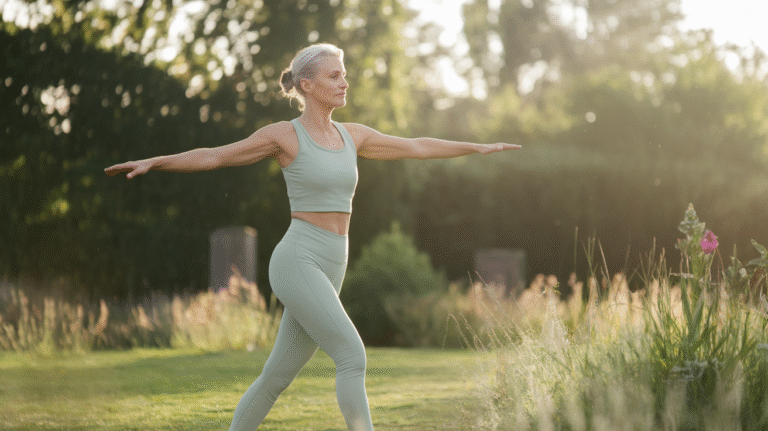
Stand tall with feet together and arms extended straight out to your sides at shoulder height. Lift your right leg straight out in front of you while simultaneously rotating your torso to the right, bringing your left hand toward your right foot. Lower your leg with control and return to the starting position. Alternate sides or complete all repetitions on one side before switching.
This challenging move requires significant core engagement to maintain your balance while rotating and lifting. If you’re struggling with balance, start by practicing the leg lift without the twist, then add the rotation once you’ve built more stability.
Modifications make this exercise accessible regardless of your current fitness level. Instead of lifting your leg straight, bend your knee and lift it to hip height. Rather than reaching for your foot, simply rotate your torso while keeping your arms at shoulder height. As your strength and balance improve, gradually straighten your leg and increase your reach.
The balance improvements from this exercise are remarkable. You’re training your body to stabilize on one leg while moving your upper body—exactly the kind of functional strength that prevents falls and maintains your independence as you age.
To maintain proper posture throughout the movement, imagine a string pulling the top of your head toward the ceiling. Keep your shoulders down and back, your chest lifted, and your core engaged. Don’t lean back as you lift your leg—your torso should remain upright or slightly forward.
Exercise 7: Standing Torso Rotations
Stand with feet shoulder-width apart and knees slightly bent. Place your hands on your hips or extend your arms straight out in front of you at shoulder height. Keeping your hips facing forward and your lower body stable, rotate your torso to the right as far as comfortable, then rotate to the left. Move with control, not momentum.
This simple movement delivers amazing results because it targets your deep core muscles—specifically the transverse abdominis and the internal obliques—that stabilize your spine and create that flat, toned appearance. These muscles don’t respond well to traditional crunches but activate beautifully during rotation exercises.
To engage your deep core muscles effectively, think about pulling your belly button toward your spine before you begin rotating. Maintain this engagement throughout the exercise. Your hips should remain still—all the movement comes from your torso rotating around your stable lower body.
As a finishing move for your routine, torso rotations are perfect because they’re lower intensity than the previous exercises, allowing your heart rate to gradually decrease while still working your core. This creates an effective cool-down that maintains muscle engagement.
The stretching benefits for your spine are substantial. Many women over 40 experience stiffness in their thoracic spine (mid-back) from prolonged sitting. These rotations gently mobilize that area, improving your range of motion and reducing the tight, restricted feeling you might experience after a long day at your desk.
Creating Your Perfect Weekly Routine
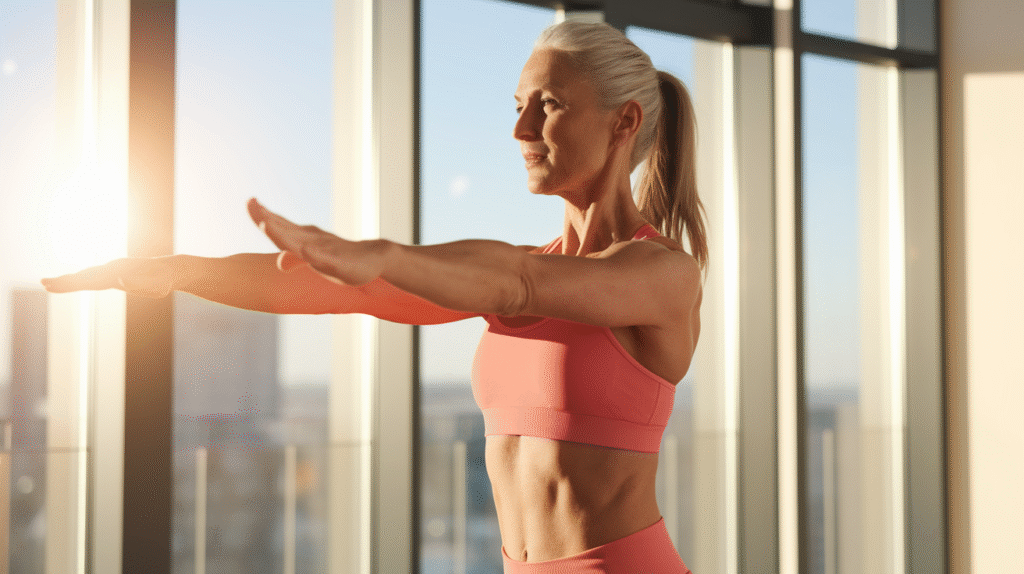
The Quick Daily Approach
Structure your seven-minute workout by performing each exercise for 45 seconds with 15 seconds of rest in between. This work-to-rest ratio has been proven to deliver optimal results for core strengthening while remaining sustainable for busy schedules. You’ll complete approximately 12-15 repetitions of each exercise during those 45 seconds, depending on your movement speed.
The best times of day for standing ab exercises are whenever you’ll actually do them consistently. That said, many women find that morning workouts—even just seven minutes—energize them for the entire day and eliminate the risk of evening excuses. Others prefer a midday session to break up long periods of sitting or an evening routine to decompress from work stress.
Your workout structure looks like this: Standing Oblique Crunches (45 seconds), rest (15 seconds), Standing Knee to Elbow Twists (45 seconds), rest (15 seconds), and so on through all seven exercises. The total time, including rest periods, equals exactly seven minutes. Set a timer on your phone to keep yourself on track.
Consistency tips for busy schedules include linking your workout to an existing habit. Do your standing ab routine right after brushing your teeth in the morning, immediately before your shower, or as soon as you finish your lunch. This habit-stacking technique dramatically increases your likelihood of maintaining the routine long-term.
Progressive Intensity for Proven Results
During weeks one and two, focus on learning proper form and building your foundation. Perform each exercise at a moderate pace, prioritizing control over speed. Complete the seven-minute routine four to five times per week, allowing rest days for recovery. Don’t worry about how many repetitions you complete—focus on feeling the correct muscles working.
In weeks three and four, increase your repetitions by moving slightly faster while maintaining excellent form. If an exercise called for 12 repetitions in week one, aim for 15-16 repetitions by week four. You can also increase hold times—for example, pausing for two seconds at the peak of each standing oblique crunch rather than moving continuously.
Beyond one month, add variations and combinations to continue challenging your core. Perform two rounds of the seven-minute circuit for a 14-minute workout. Mix exercises together—try a standing oblique crunch on the right side, immediately followed by a standing knee to elbow twist on the right side, then repeat on the left. Create your own combinations based on which exercises you feel most effectively.
You’ll know you’re ready to level up when the current routine feels noticeably easier than it did two weeks prior. If you’re no longer breathing hard by the end of the seven minutes, or if you can easily complete the maximum repetitions with perfect form, it’s time for the next progression. Trust your body’s signals—they’re remarkably accurate.
Combining with Other Activities
Pairing your standing ab routine with cardio creates maximum fat-burning results. Try this powerful combination: perform 20-30 minutes of walking, jogging, or cycling, then immediately follow with your seven-minute standing ab workout. The cardio session burns calories and elevates your metabolism, while the ab work targets and tones your midsection.
Adding standing ab exercises to your existing workout routine is simple. If you’re already doing strength training, perform this seven-minute circuit at the end of your session. If you take fitness classes, add these exercises on your off days to maintain core engagement throughout the week. The beauty of standing ab work is that it complements every other form of exercise without creating excessive fatigue.
Sneak in extra core work throughout your day with these simple strategies: Do standing torso rotations while waiting in line at the grocery store. Practice standing side bends while talking on the phone. Perform standing oblique crunches during TV commercials. These bonus sessions aren’t necessary for results, but they accelerate your progress and help you develop a more active lifestyle overall.
Rest days play an essential role in your results. Your muscles don’t grow stronger during workouts—they grow stronger during recovery. Plan for at least two rest days per week where you skip your standing ab routine entirely. On these days, gentle activities like walking or stretching are perfect, but give your core muscles a break from targeted exercise.
Essential Tips for Maximum Results After 40
Nutrition Strategies That Support Your Goals
You can’t out-exercise a poor diet, especially after 40 when your metabolism is less forgiving than it was in your twenties. This doesn’t mean you need a restrictive diet—it means you need a strategic approach. Focus on whole foods that nourish your body: lean proteins, colorful vegetables, healthy fats, and complex carbohydrates. These foods provide the nutrients your muscles need to recover and grow stronger after each workout.
Protein becomes increasingly important for maintaining muscle mass as you age. Aim for 20-30 grams of protein at each meal, which might look like three eggs, a palm-sized chicken breast, or a cup of Greek yogurt with nuts. Protein supports muscle recovery after your standing ab workouts and helps keep you feeling full longer, naturally reducing overall calorie intake.
Hydration has an amazing impact on your core workouts that most people overlook. Even mild dehydration reduces muscle strength and endurance by up to 10%. Drink at least eight glasses of water daily, and add an extra glass before your workout. Proper hydration also reduces bloating, making your abdominal definition more visible as you build strength.
Certain foods help reduce menopause belly bloat by supporting hormonal balance and reducing inflammation. Include foods rich in omega-3 fatty acids (salmon, walnuts, flaxseeds), fiber-rich vegetables (broccoli, Brussels sprouts, leafy greens), and probiotic foods (yogurt, kefir, sauerkraut). Limit processed foods, excessive salt, and alcohol, which contribute to water retention and inflammation around your midsection.
Lifestyle Factors That Make a Difference
The proven connection between sleep and belly fat is stronger than most people realize. When you don’t get adequate sleep (seven to nine hours for most women), your body produces more cortisol—a stress hormone that promotes fat storage specifically in your abdominal area. Prioritize sleep as seriously as you prioritize your workout routine. Better sleep equals faster results.
Stress management directly affects hormonal balance, which influences where your body stores fat. Chronic stress keeps cortisol levels elevated, making it nearly impossible to lose belly fat regardless of how many ab exercises you do. Incorporate stress-reduction practices into your daily routine: deep breathing, meditation, time in nature, or activities you genuinely enjoy. Even five minutes of intentional relaxation daily makes a measurable difference.
Walking supports your ab workout routine in multiple ways. It burns additional calories, improves circulation to your core muscles (speeding recovery), reduces stress, and helps regulate blood sugar levels. Aim for 7,000-10,000 steps daily. Break this into manageable chunks—a 10-minute walk after each meal is an excellent strategy that also improves digestion.
Setting realistic expectations protects your motivation and mental health. You won’t see dramatic changes overnight, and that’s okay. Realistic progress for women over 40 looks like this: noticeable improvements in posture and how your clothes fit within two weeks, visible abdominal definition within six to eight weeks, and significant core strength gains within three months. Celebrate every small victory—they compound into transformative results.
Staying Motivated and Consistent
Track your progress beyond the scale because weight doesn’t tell the whole story. Take measurements of your waist, hips, and the area just below your belly button every two weeks. Notice how your clothes fit—that’s often the most accurate indicator of body composition changes. Track your workout performance too: how many repetitions you complete, how stable your balance feels, how much easier the exercises become.
Quick wins to celebrate in the first two weeks include completing your first full seven-minute routine without stopping, noticing improved posture when you catch your reflection, feeling your core muscles engage during everyday activities, and experiencing less lower back pain. These non-scale victories are powerful motivators that remind you why you started.
Finding your workout buddy or accountability partner dramatically increases your success rate. Research shows that people who exercise with a partner are 95% more likely to stick with their routine. Text a friend your workout completion each day, join an online fitness community for women over 40, or recruit your partner to do the standing ab routine alongside you.
Common obstacles busy women face include unexpected schedule changes, fatigue, self-doubt, and competing priorities. Overcome these by treating your seven-minute workout as a non-negotiable appointment with yourself. Keep your workout clothes visible as a reminder. Remember that seven minutes of imperfect exercise beats zero minutes of perfect exercise every single time. On your most challenging days, commit to just three exercises—you’ll usually find the motivation to complete all seven once you start.
Your Action Plan Starts Today
Standing ab exercises aren’t just another fitness trend—they’re the perfect solution for women over 40 who need real results without unrealistic time commitments. You’ve learned seven proven exercises that strengthen your core, improve your balance, reduce back pain, and yes, flatten your stomach. More importantly, you’ve discovered a sustainable approach that fits into your actual life.
Here’s the simple truth: seven minutes a day can transform your core strength. Not seven hours at the gym. Not complicated equipment or expensive programs. Just seven minutes of focused, intentional movement that your body will thank you for with improved posture, reduced pain, and increased confidence.
Your easy first step is this: choose three exercises from this guide and try them tomorrow morning. Don’t wait for the perfect moment or the perfect mood. Set your alarm seven minutes earlier, stand in your kitchen or bedroom, and complete just three of these exercises. That’s it. That’s your starting point.
You deserve those seven minutes for yourself every day. Not because you need to earn them or because you’ve checked off every other item on your to-do list, but simply because investing in your health and strength is one of the most valuable things you can do for yourself and everyone who depends on you.
The best time to start was 10 years ago. The second-best time is right now. Your stronger, more confident future self is waiting for you—and she’s just seven minutes away.
Key Takeaways: – Standing ab exercises are effective, efficient, and joint-friendly for women over 40 – Consistency beats intensity—showing up daily delivers better results than occasional intense workouts – Your core strength affects everything from posture to confidence to overall health – Seven minutes is enough time to create real, measurable changes in your body – You don’t need equipment, a gym, or hours of free time—just commitment to yourself
Ready to transform your core? Start your first seven-minute standing ab workout tomorrow morning. Your future self will thank you.