7 Spring Outdoor Workouts for Women Over 40
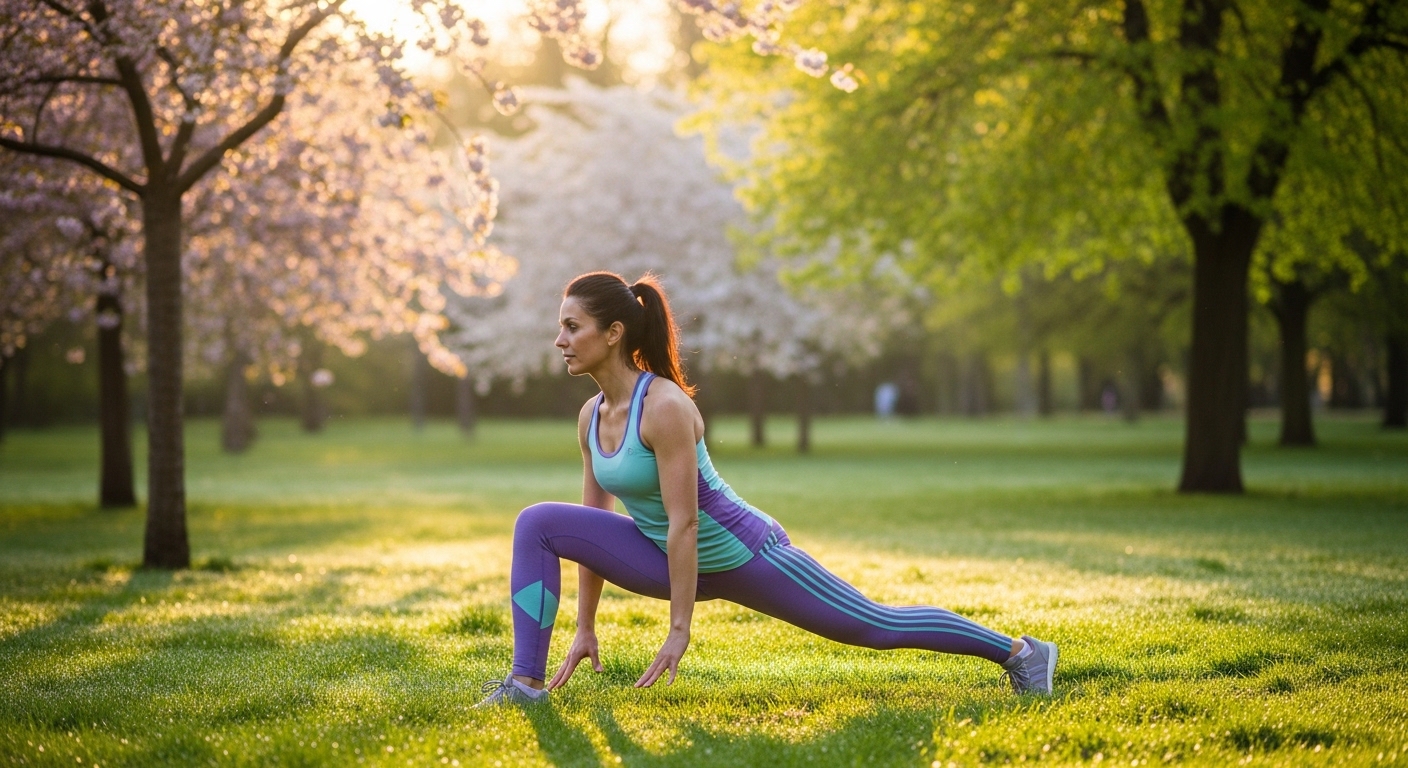
Spring is calling, and your body is ready to answer—even if you haven’t exercised outdoors in years. If you’re a woman over 40, this season offers the perfect opportunity to reconnect with movement in ways that actually feel good. No more dreading the gym or forcing yourself through workouts that leave your joints aching.
Here’s what makes outdoor spring workouts different: they work *with* your body’s changing needs, not against them. You’ll get natural vitamin D that supports bone density and hormone balance—something we desperately need as estrogen levels shift.
The moderate spring temperatures mean you won’t overheat or freeze, and that sunshine? It’s a proven mood-booster that beats any antidepressant when combined with movement.
These seven workouts respect where your body is right now. They build strength without destroying your knees. They boost cardiovascular health without requiring you to run marathons. And they’re actually enjoyable, which means you’ll stick with them long after the flowers bloom.
What you’re about to discover are proven, easy-to-follow exercises designed specifically for women navigating perimenopause, menopause, and beyond.
Each workout addresses the reality of joint sensitivity, metabolism changes, and the need for both strength and flexibility. You don’t need expensive equipment or a gym membership—just the willingness to step outside and move.
The Ultimate Benefits of Taking Your Workout Outside This Spring
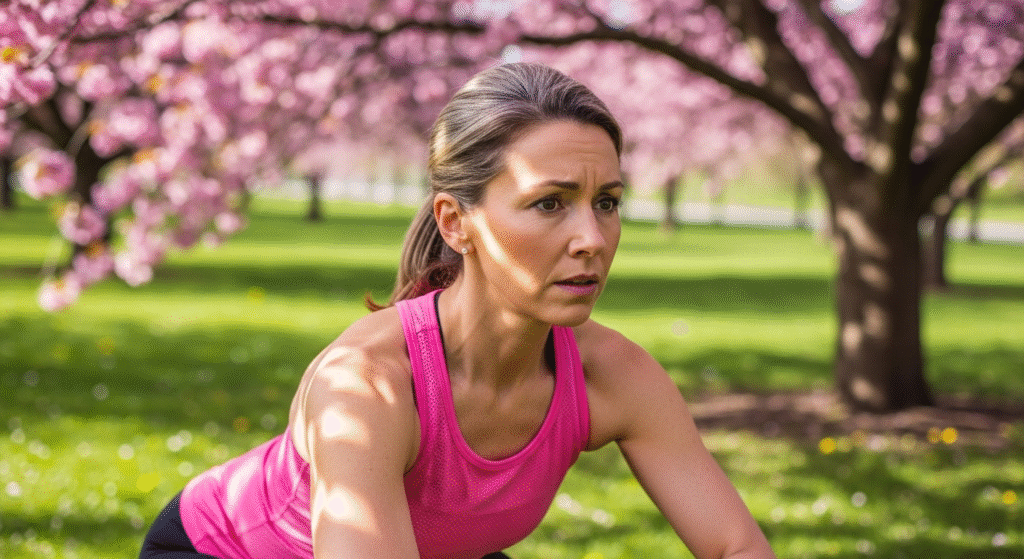
Why Outdoor Exercise is a Game-Changer After 40
Your body processes sunlight differently than it did in your twenties, and that’s actually good news for outdoor workouts. Natural vitamin D absorption happens most efficiently through skin exposure during exercise, supporting bone health when you need it most.
Research shows that women over 40 who exercise outdoors have better bone density markers than those who stick to indoor gyms exclusively.
But the benefits go beyond bones. Nature exposure during exercise reduces cortisol levels by up to 20% compared to indoor workouts.
That matters because chronic stress after 40 contributes to weight gain around your midsection, disrupts sleep, and accelerates aging. When you walk through a park instead of on a treadmill, your nervous system literally calms down.
The motivation factor is real, too. Indoor gyms feel like obligations. Outdoor workouts feel like adventures. You’ll notice seasonal changes, discover new trails, and experience weather variations that keep things interesting. This variety prevents the mental burnout that makes you quit fitness routines three weeks in.
Simple Ways Outdoor Workouts Support Your Changing Body
Uneven terrain is your secret weapon for balance training. When you walk on grass, trails, or gravel instead of flat gym floors, your stabilizer muscles engage constantly. These small muscle groups protect you from falls—a crucial benefit as balance naturally declines after 40.
The impact factor deserves attention. Many outdoor workouts naturally reduce joint stress while still delivering results. Swimming, cycling, and even trail walking provide resistance without the pounding that aggravates knees and hips. You’re building strength through variety of movement patterns rather than repetitive gym exercises.
Fresh air environments actually increase calorie burn. Your body works slightly harder to regulate temperature outdoors, and the varied terrain requires more energy than flat, climate-controlled spaces. You’re getting more metabolic benefit from the same time investment.
Quick Mental Health Wins from Spring Outdoor Exercise
Depression and anxiety spike during perimenopause and menopause, but outdoor exercise provides immediate relief. Studies show that just 20 minutes of outdoor movement reduces anxiety symptoms as effectively as a low-dose anti-anxiety medication. The combination of physical activity, natural light, and green space creates a triple-threat against mood disorders.
Sleep quality improves when you exercise outdoors during daylight hours. Natural light exposure helps reset your circadian rhythm, which often gets disrupted by hormonal changes after 40. Women who walk outside in the morning report falling asleep faster and staying asleep longer than those who exercise indoors or in the evening.
Social connection opportunities multiply outdoors. You’ll encounter other walkers, join hiking groups, or simply chat with neighbors during your workout. This social element keeps you accountable and makes exercise feel less like a chore. Loneliness is a genuine health risk after 40, and outdoor workouts naturally combat isolation.
The Complete Guide to 7 Spring Outdoor Workouts
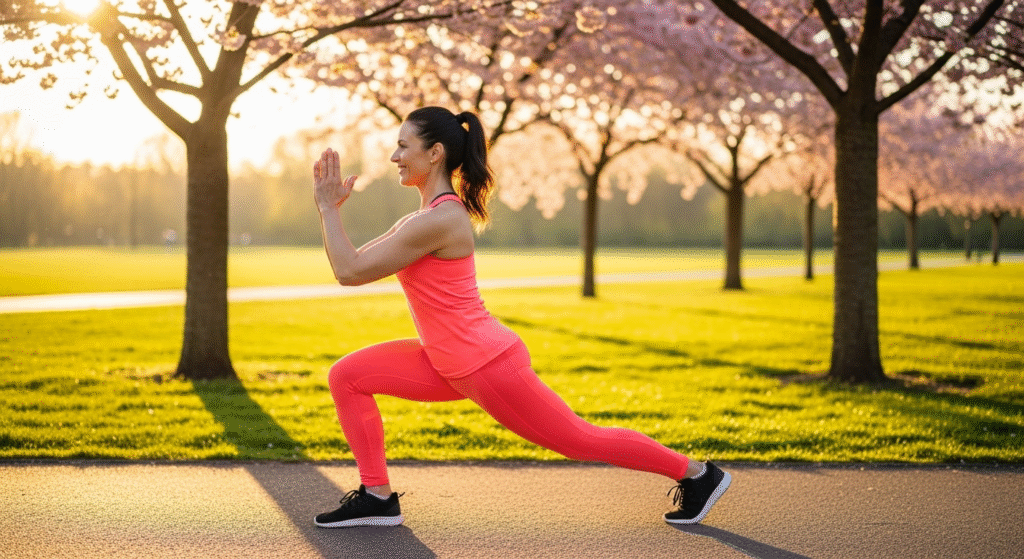
Workout #1: Power Walking with Intervals
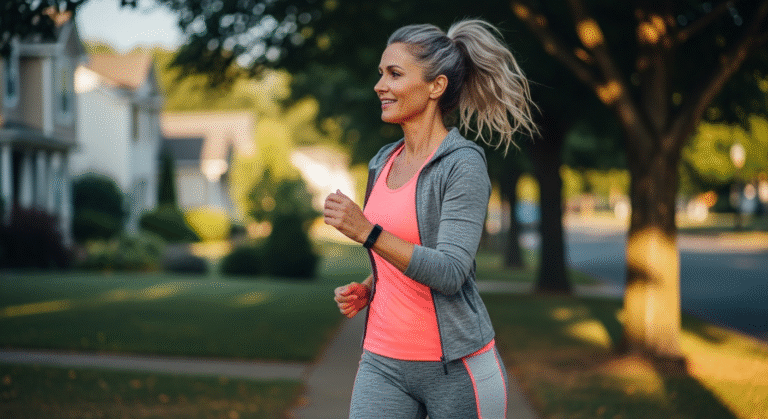
Power walking is the most underrated workout for women over 40. It delivers cardiovascular benefits without the joint destruction of running, and you can adjust intensity instantly based on how you feel that day.
Start with a comfortable pace for five minutes to warm up. Then alternate between two minutes of brisk walking (where you can still talk but feel slightly breathless) and one minute of moderate pace. Repeat this pattern for 20-30 minutes. The interval approach burns more calories than steady-state walking and improves cardiovascular fitness faster.
Form matters more than speed. Keep your shoulders back, engage your core, and let your arms swing naturally. Your heel should strike first, then roll through to your toes. This rolling motion protects your knees and activates your glutes properly.
Add inclines whenever possible. Hills build leg strength and boost calorie burn without requiring faster speeds. If you live in a flat area, find parking garages or stadium stairs to incorporate elevation changes.
Workout #2: Park Bench Strength Training
Every park bench is a complete gym if you know how to use it. This workout builds upper body and leg strength using just your bodyweight and a sturdy bench.
Start with step-ups: place one foot on the bench, push through your heel, and step up fully. Step down with control. Do 12 reps per leg. This exercise strengthens quads, glutes, and improves balance without stressing your knees like squats can.
Tricep dips come next: sit on the bench edge, place hands beside your hips, slide forward, and lower your body by bending your elbows. Push back up. Start with 8-10 reps. This targets the back of your arms where many women notice changes after 40.
Elevated push-ups make upper body work accessible. Place hands on the bench (higher than traditional push-ups), walk feet back until your body forms a straight line, and perform push-ups. The elevation reduces intensity while still building chest and arm strength.
Incline planks round out the circuit: place forearms on the bench, extend legs behind you, and hold for 30-45 seconds. This core work protects your lower back and improves posture.
Complete three rounds of this circuit with one-minute rest between rounds. You’ll finish in 20 minutes with a full-body strength session.
Workout #3: Outdoor Yoga Flow
Yoga outdoors connects you to your body and environment simultaneously. The uneven ground challenges your balance more than a studio floor, and fresh air deepens your breathing naturally.
Begin with a simple sun salutation sequence: mountain pose, reach arms overhead, fold forward, step back to plank, lower to the ground, cobra or upward dog, downward dog, step forward, fold, and return to standing. Repeat this flow five times to warm up your entire body.
Focus on poses that address common trouble spots for women over 40. Pigeon pose opens tight hips—sit on the ground, bring one shin forward parallel to the mat, extend the other leg behind you, and fold forward. Hold for two minutes per side. This releases tension from sitting and improves hip mobility.
Warrior II builds leg strength while opening hips and chest. Stand with feet wide, turn one foot out, bend that knee, and extend arms parallel to the ground. Hold for one minute per side. This pose improves balance and strengthens legs without impact.
Bridge pose strengthens your back and glutes: lie on your back, bend knees, place feet hip-width apart, and lift hips toward the sky. Hold for 30 seconds, lower, and repeat five times. This counteracts the forward-slouching posture many women develop.
End with a five-minute savasana lying on the grass. Let the ground support your body completely and focus on deep breathing.
Workout #4: Trail Hiking for Cardio and Strength
Hiking builds cardiovascular endurance and leg strength simultaneously while protecting your joints better than pavement pounding. The uneven terrain forces your muscles to work in multiple directions, creating functional strength that translates to daily activities.
Start with easy trails rated for beginners. Look for paths that are 2-3 miles with minimal elevation gain. As your fitness improves, gradually add distance or choose trails with more hills.
Use trekking poles even on flat terrain. They reduce stress on knees by up to 25% and engage your upper body, turning hiking into a full-body workout. Plant poles slightly ahead of you and push off as you walk forward.
Increase intensity without adding mileage by focusing on pace. Walk briskly for five minutes, then slow to moderate pace for three minutes. This interval approach on trails challenges your cardiovascular system while the varied terrain works different muscle groups.
Invest in proper footwear. Trail shoes with good ankle support and grip prevent injuries and make hiking more comfortable. Blisters and twisted ankles end workout routines faster than anything else.
Bring water and snacks for hikes longer than an hour. Dehydration affects women over 40 more quickly, and low blood sugar can make you feel weak or dizzy.
Workout #5: Bodyweight HIIT in Your Backyard
High-intensity interval training boosts metabolism and builds strength, but traditional HIIT can be too hard on joints. This modified version delivers results without the impact.
Warm up with three minutes of marching in place, arm circles, and gentle twists. Then complete this 15-minute circuit, doing each exercise for 40 seconds with 20 seconds rest:
Modified jumping jacks: step one foot out while raising arms, then step together. This eliminates the jump while maintaining the cardio benefit.
Squats: stand with feet hip-width apart, sit back like you’re sitting in a chair, and stand up. Keep weight in your heels to protect knees.
Push-ups: use the modified version on knees or against a wall if needed. Focus on full range of motion rather than quantity.
Alternating reverse lunges: step one foot back, lower your back knee toward the ground, and return to standing. This variation is easier on knees than forward lunges.
Plank hold: hold for 20-40 seconds depending on your strength level. Keep core tight and hips level.
Mountain climbers (modified): from plank position, step one foot forward, then switch. No jumping required, but you’ll still feel your heart rate climb.
Repeat this circuit three times. You’ll burn calories for hours after finishing due to the metabolic effect of interval training.
Workout #6: Cycling or Biking Adventures
Cycling provides amazing cardiovascular benefits without the joint impact of running or jumping. It’s perfect for women over 40 who want to build leg strength and endurance while protecting their knees.
Start with bike fit. Your seat should be high enough that your leg extends almost fully at the bottom of the pedal stroke with a slight bend in your knee. Handlebars should be positioned so you’re leaning slightly forward but not straining your back or neck. Poor bike fit causes pain and prevents you from enjoying rides.
Begin with flat, paved routes for 20-30 minutes. Focus on finding a comfortable cadence (pedal rotation speed) rather than pushing hard gears. A moderate pace where you can still carry on a conversation builds endurance without exhausting you.
Add hills gradually. Climbing builds incredible leg strength and cardiovascular fitness. Shift to easier gears and maintain a steady cadence rather than grinding up in hard gears that stress your knees.
Explore bike paths and rail trails in your area. These car-free routes let you focus on enjoying the ride rather than worrying about traffic. Many communities have extensive trail systems perfect for recreational cycling.
Consider joining a local cycling group. Many bike shops organize beginner-friendly rides that provide social connection and route ideas. The group accountability helps you stay consistent.
Workout #7: Outdoor Swimming or Water Walking
Water exercise is the ultimate low-impact, full-body workout. Buoyancy reduces stress on joints by up to 90% while water resistance builds strength in every direction you move.
Swimming laps provides complete cardiovascular training. Start with whatever stroke feels comfortable—freestyle, breaststroke, or backstroke. Swim for five minutes, rest for one minute, and repeat. As fitness improves, increase swimming time and decrease rest periods.
Water walking works if you’re not a confident swimmer. Walk forward and backward in waist-to-chest-deep water. The resistance builds leg strength while the buoyancy protects your joints. Add arm movements like pushing water forward and pulling it back to engage your upper body.
Try these pool exercises: water leg lifts (hold the pool edge and lift legs forward, to the side, and behind you), water jumping jacks (the same motion as land jumping jacks but without impact), and water jogging (run in place in deep water wearing a flotation belt).
Outdoor pools or natural swimming areas add the benefit of sunshine and fresh air to your water workout. Many communities have outdoor pools that open in spring, and lakes or beaches provide natural swimming opportunities.
Wear water shoes for better traction and protection. They prevent slipping on pool decks and protect your feet from rough surfaces in natural swimming areas.
Essential Safety Tips and Modifications for Women Over 40
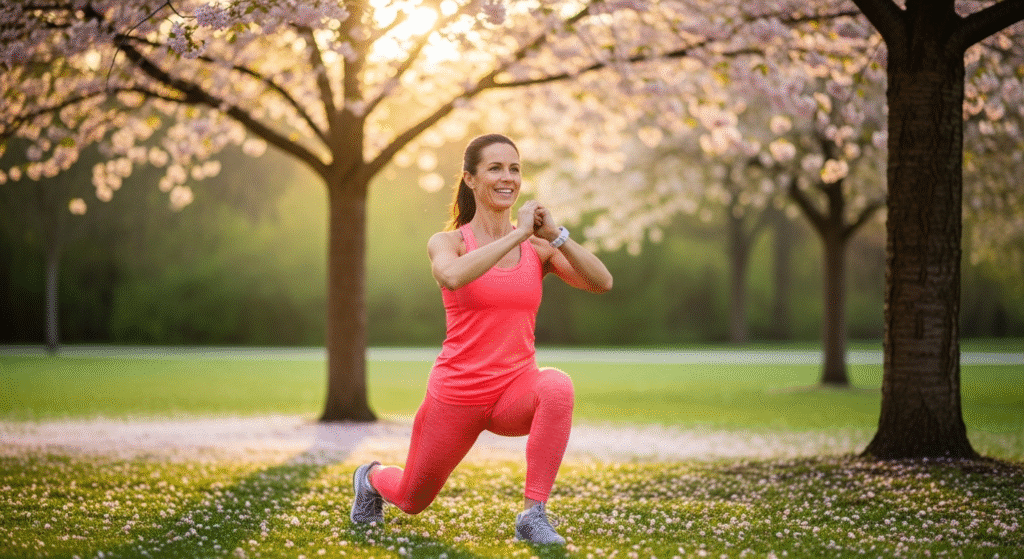
Warm-Up and Cool-Down Strategies That Prevent Injury
Your body needs more preparation time after 40. Cold muscles and stiff joints are more prone to strains and tears, making warm-ups non-negotiable rather than optional.
Spend five minutes on dynamic stretches before outdoor workouts. Leg swings (forward/back and side to side), arm circles, hip circles, and gentle twists prepare your body for movement. Dynamic stretching increases blood flow and joint fluid, reducing injury risk significantly.
Include movement-specific warm-ups. If you’re going hiking, start with five minutes of easy walking. Before cycling, pedal in easy gears for several minutes. This gradual intensity increase lets your cardiovascular system adjust safely.
Cool-downs are equally important. Finish workouts with five minutes of slower movement—easy walking after power walking, gentle stretching after strength training. This gradual decrease helps your heart rate return to normal and reduces next-day soreness.
Static stretching belongs in cool-downs, not warm-ups. Hold stretches for 30 seconds each, focusing on the muscles you just worked. This improves flexibility and reduces muscle tightness that can pull your joints out of alignment.
Smart Modifications to Protect Your Joints and Prevent Overtraining
Listen to your body’s signals without ignoring them. Sharp pain means stop immediately. Dull aches that disappear with movement are usually fine. Persistent pain that worsens during or after workouts requires rest and possibly medical evaluation.
Apply the 80/20 rule: 80% of your workouts should feel moderate (you could maintain the pace for a while), and only 20% should feel truly hard. This prevents overtraining and allows proper recovery between intense sessions.
Modify exercises for sensitive joints. Knee issues? Skip lunges and do wall sits instead. Shoulder problems? Reduce push-up range of motion or eliminate them temporarily. Every exercise has modifications that deliver similar benefits without pain.
Rest days are training days. Your body builds strength during recovery, not during workouts. Schedule at least two complete rest days weekly, and consider active recovery (gentle walking or easy yoga) on other days between harder workouts.
Vary your workouts to prevent repetitive stress injuries. Don’t power walk seven days a week—mix in cycling, swimming, and strength training. This variation works different muscle groups and gives others time to recover.
Weather Considerations and Seasonal Safety
Spring weather changes rapidly. Check forecasts before heading out and dress in layers you can remove as you warm up. A light jacket over a moisture-wicking shirt works for most spring mornings.
Hydrate before you feel thirsty. Dehydration happens faster after 40, and thirst signals become less reliable. Drink 8-16 ounces of water before outdoor workouts and bring water for sessions longer than 30 minutes.
Protect your skin even on cloudy days. UV rays penetrate clouds, and sun damage accumulates over time. Apply broad-spectrum sunscreen with SPF 30 or higher to exposed skin 15 minutes before going outside.
Early morning or late afternoon workouts avoid the hottest parts of the day. Even in spring, midday temperatures can be uncomfortable and increase heat stress risk. Morning workouts also boost energy for the entire day.
Watch for spring allergies that affect breathing. If pollen counts are high, consider indoor alternatives or take allergy medication before outdoor workouts. Struggling to breathe ruins any workout’s benefits.
Creating Your Perfect Spring Outdoor Workout Schedule
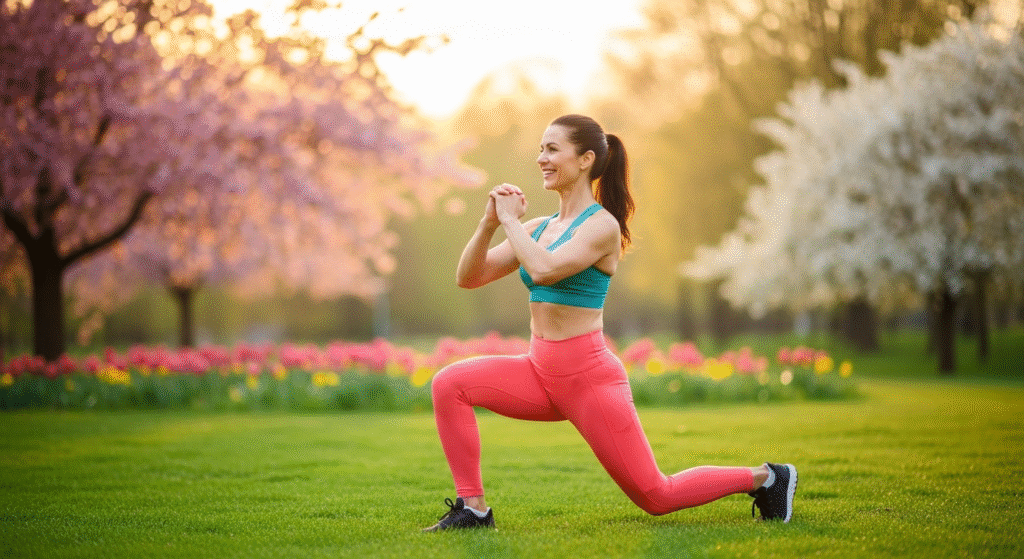
How to Mix and Match These 7 Workouts for Maximum Results
Variety prevents boredom and delivers better results than doing the same workout repeatedly. Your body adapts to repeated movements, so mixing cardio, strength, and flexibility keeps progress happening.
Try this sample weekly schedule: Monday—power walking with intervals (30 minutes), Tuesday—park bench strength training (20 minutes), Wednesday—outdoor yoga (30 minutes), Thursday—trail hiking (45 minutes), Friday—rest or gentle stretching, Saturday—cycling (45 minutes), Sunday—water walking or swimming (30 minutes).
This schedule balances cardio and strength while including flexibility work and adequate rest. Adjust based on your fitness level—beginners might start with three workouts weekly and build up gradually.
Progress over 4-6 weeks by increasing duration, intensity, or both. Add five minutes to your walks, increase hiking distance by half a mile, or add an extra round to your strength circuit. Small, consistent increases prevent injury while building fitness.
Listen to your energy levels. Some weeks you’ll feel strong and can push harder. Other weeks (especially around your menstrual cycle if you’re still having periods), you’ll need to dial back intensity. Both approaches are valid and necessary.
Quick Tips for Staying Consistent This Spring
Set realistic goals based on where you are now, not where you think you should be. Committing to three 20-minute workouts weekly is better than planning seven hour-long sessions you’ll never complete.
Find workout buddies or join outdoor fitness groups. Social accountability dramatically increases consistency. You’re less likely to skip when someone expects you to show up. Check local community centers, running stores, or Facebook groups for outdoor fitness meetups.
Use spring events as motivation milestones. Sign up for a charity 5K walk, a local hiking challenge, or a community bike ride. Having a date on the calendar gives your training purpose and creates excitement.
Prepare the night before. Lay out workout clothes, charge fitness trackers, and plan your route. Morning decision-making is harder, so eliminate obstacles ahead of time.
Track your workouts in a simple journal or app. Seeing your consistency builds momentum. Note how you felt during and after each workout—this data helps you identify patterns and adjust your routine.
Tracking Your Progress Without Obsessing
The scale doesn’t tell the whole story, especially for women over 40 dealing with hormonal fluctuations. Weight can vary by several pounds daily based on water retention, digestion, and muscle inflammation from workouts.
Focus on non-scale victories that matter more: increased energy throughout the day, better sleep quality, improved mood, clothes fitting better, climbing stairs without breathlessness, or completing workouts that felt impossible weeks ago.
Take monthly progress photos in the same outfit and lighting. Visual changes happen gradually and you won’t notice day-to-day, but monthly comparisons reveal real progress.
Measure strength improvements by tracking workout performance. Can you do more push-ups? Walk farther without stopping? Hold plank longer? These functional improvements matter more than numbers on a scale.
Pay attention to how you feel. Reduced joint pain, better digestion, decreased anxiety, and improved confidence are all valid progress markers. Health is about feeling good in your body, not achieving arbitrary numbers.
Spring Into Action: Your Outdoor Fitness Journey Starts Now
These seven spring outdoor workouts give you everything you need to build strength, improve cardiovascular health, and boost your mood—all while respecting your body’s changing needs after 40. You don’t need expensive equipment, complicated routines, or hours of free time. You just need to step outside and move.
The proven benefits are waiting: stronger bones from vitamin D exposure, better balance from uneven terrain, improved mental health from nature connection, and increased strength without joint destruction. Spring’s moderate temperatures and beautiful scenery make this the perfect season to establish habits that will carry you through the entire year.
Remember that starting is more important than being perfect. You won’t nail every workout, and some days you’ll feel stronger than others. That’s normal. What matters is showing up consistently and listening to your body’s signals.
Your action step for this week is simple: choose one workout from this list and schedule it for a specific day and time. Put it in your calendar like any other important appointment. Start with just 20 minutes. That’s it. One workout, one step toward feeling stronger and more energized.
It’s never too late to start or restart your fitness journey. Your body is capable of amazing things at any age, and spring is calling you outside to discover what you can do. The fresh air, sunshine, and movement are waiting—all you have to do is take that first step.