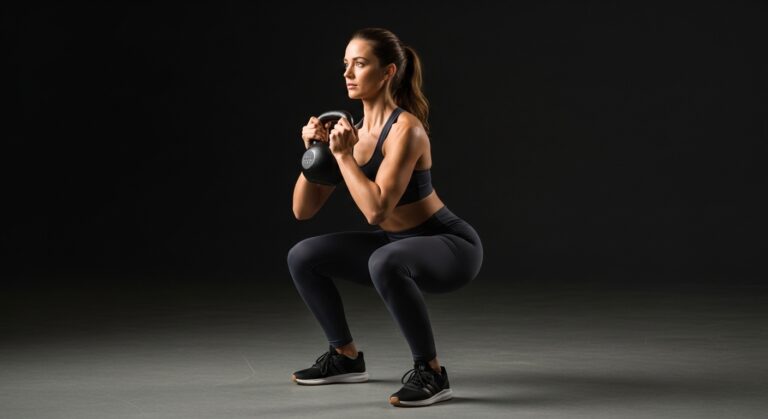
7 Reasons Women Over 40 Should Start Weightlifting Today
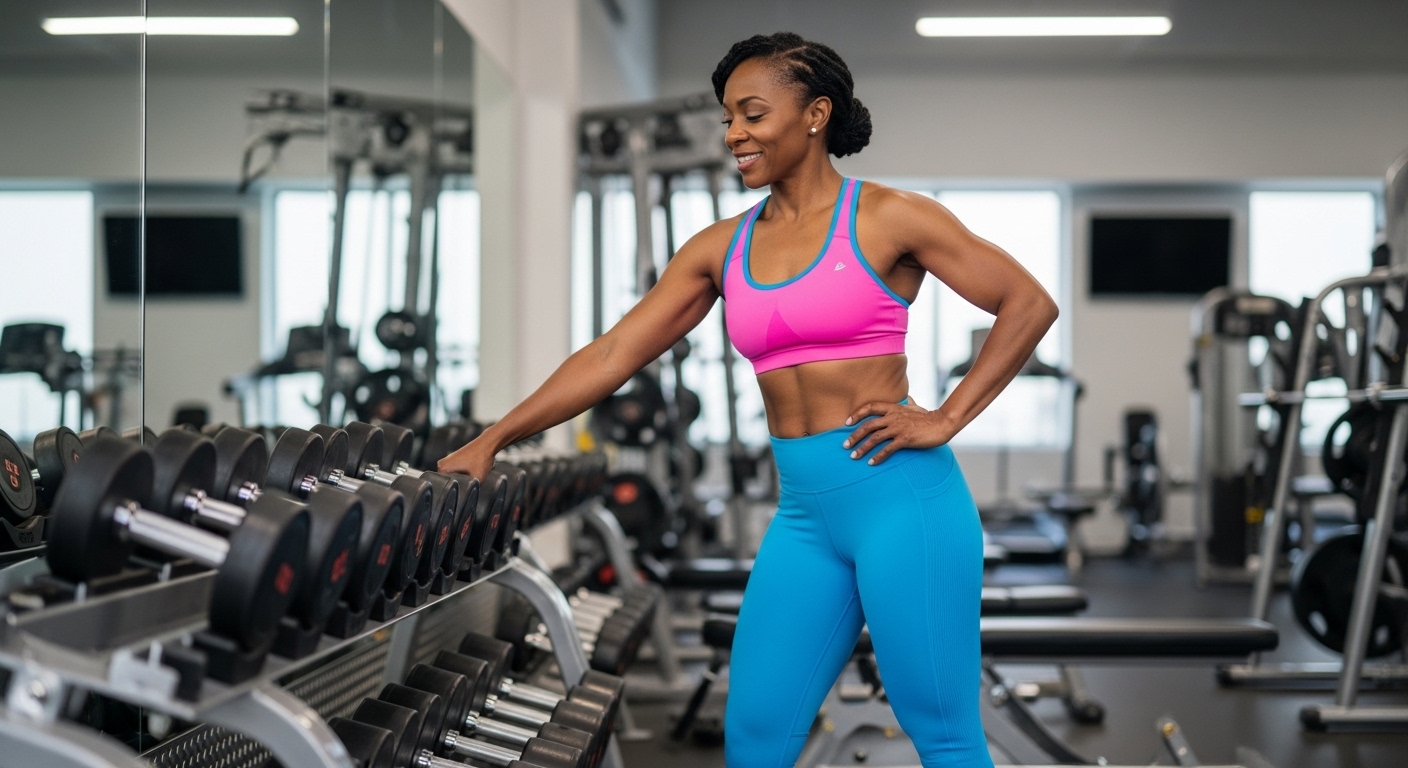
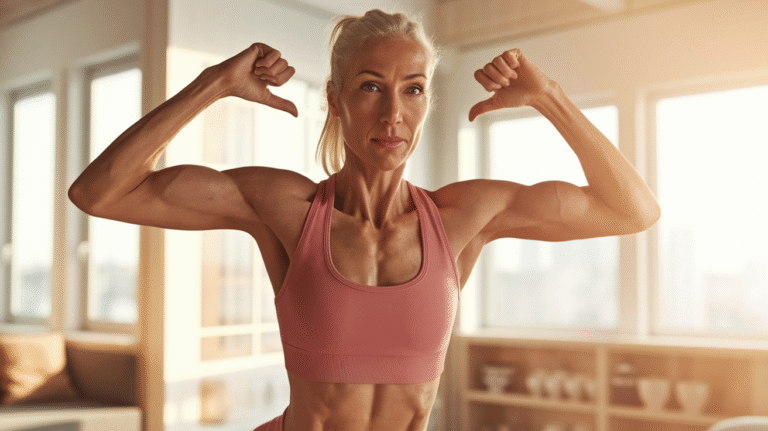
Here is something most women over 40 do not know. The single most powerful thing you can do for your body right now is not more cardio. It is no longer walks. It is not cutting calories or adding another yoga class.
It is picking up a pair of dumbbells and starting to lift weights.
This is not an opinion. It is one of the most thoroughly researched conclusions in women’s health science over the past decade — and the research findings are extraordinary enough that every woman over 40 deserves to know them clearly.
Strength training for women, especially those over 40 has been overlooked for a long time but it is finally getting the attention it deserves. It is really important for maintaining muscles bone mass and keeping you doing the things you want to do no matter your age.
The good news is that you do not need to be an athlete. You do not need a gym membership. You do not need to lift heavy weights from day one. The American College of Sports Medicine guidelines note that two to three sessions per week of strength training is plenty to start seeing benefits.
What you do need is a reason to start — and this post gives you seven of them. Every single one is backed by research. And every single one applies directly to what is happening in your body right now.
Why 40 Is the Most Important Time to Start
Before we get into the seven reasons, it helps to understand why 40 specifically is such a critical turning point for women and weightlifting.
Around age 35, hormonal shifts — particularly in estrogen, progesterone and testosterone — begin to change how our bodies respond to exercise.
Lower estrogen levels impact muscle recovery, joint health, and how efficiently we build and maintain lean muscle. Strength training becomes even more important, but how we train needs to adjust too. When hormones shift, our bodies become more sensitive to inflammation, stress and recovery demands.
Fortunately weightlifting can buffer against these hormonal changes by strengthening your body and improving your long term health.
The women who start weightlifting in their 40s consistently report that they feel stronger, more energetic and more capable in their 50s and 60s than they ever did in their 30s. That is not a coincidence. That is the compounding effect of building muscle and bone density during the decade when the body needs it most.
Reason 1: You Are Losing Muscle Every Single Year — and Weightlifting Is the Only Way to Stop It
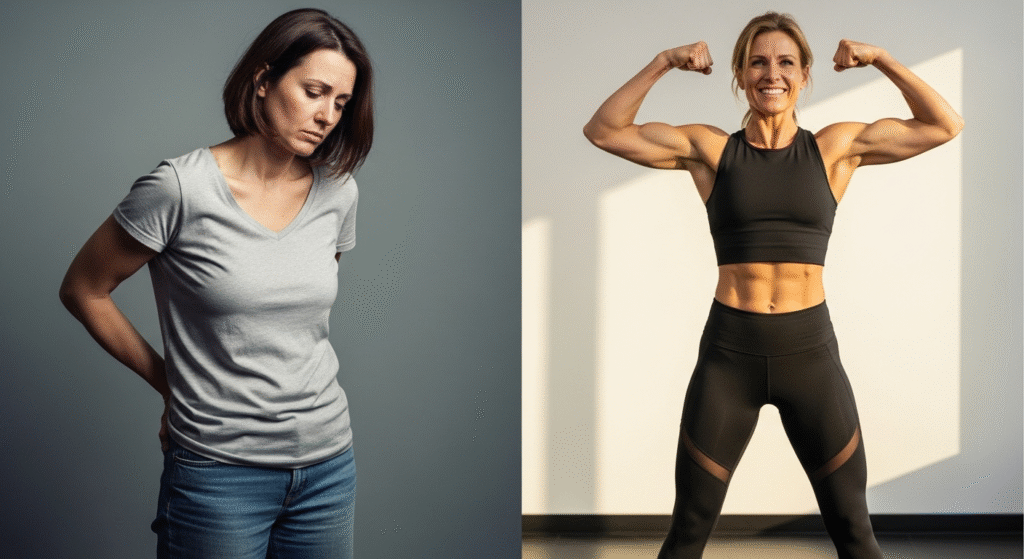
This is the reason that makes every other reason on this list possible — and it is the one most women over 40 are completely unaware of until the effects become impossible to ignore.
As we get older, we naturally start to lose muscle a condition known as sarcopenia. This muscle loss can lead to decreased strength, mobility issues and an increased risk of falls and fractures. TravelPulse
The rate of that loss is significant. Studies have shown that women who regularly engage in heavy resistance training are able to maintain and even increase their muscle mass well into their later years. The key is to progressively overload the muscles by gradually increasing the weight, reps or volume of the exercises over time. TravelPulse
What makes this particularly urgent for women over 40 is the hormonal context. Estrogen is essential for regulating satellite cell function in females — it helps us regenerate muscle stem cells, which help us maintain our muscles.
When researchers take estrogen from animals, their ability to regenerate these cells drops by up to 60 per cent. Muscle biopsies in women in the menopause transition echo these findings, showing that estrogen levels are linked to the number of satellite cells.
This means the muscle loss that comes with declining estrogen is not just about ageing — it is about losing the hormonal signal that kept your muscles rebuilding themselves automatically. Weightlifting provides the mechanical signal that replaces it.
Resistance training is the best way to generate those muscle-making cells, and lifting heavy provides the strength-building stimulus women need as estrogen declines.
What this means for you: Starting weightlifting now — even with light dumbbells two to three times a week — directly counteracts the muscle loss that would otherwise accelerate through your 40s and 50s. Every session is a deposit into a muscle bank account that will pay dividends for decades.
Reason 2: Weightlifting Builds Bones — and Your Bones Need It More Than Ever After 40
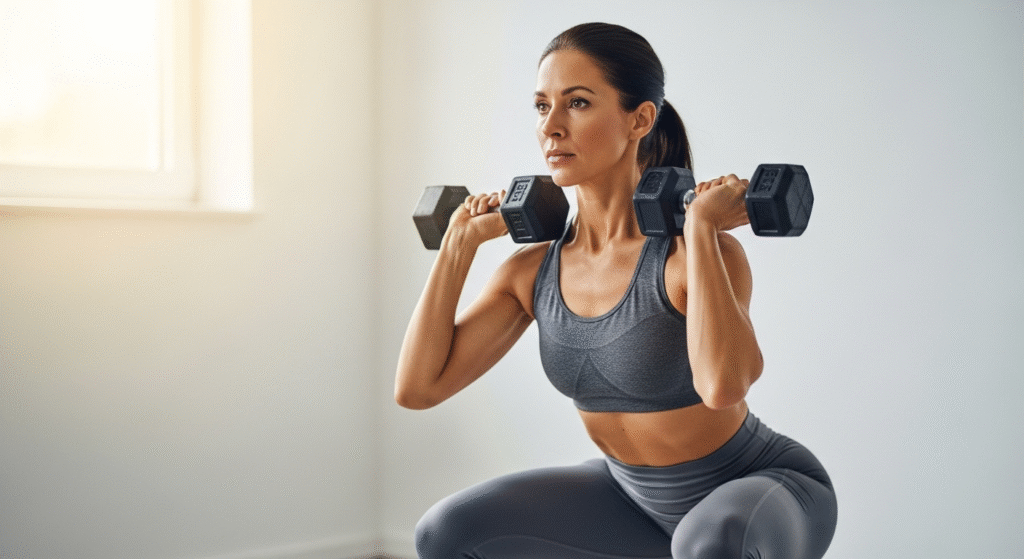
If there is one reason on this list that should make every woman over 40 put down this article and pick up a dumbbell immediately, it is this one.
With hormonal changes, it becomes important for women to adopt weight-bearing exercises as part of their fitness regimen. Research shows that strength training can improve symptoms of menopause, such as a drop in estrogen and can improve strength and bone density, which are both negatively affected as women age.
As estrogen levels decline with age, women become more susceptible to osteoporosis and an increased risk of fractures.
The compressive and resistance forces applied to the bones during heavy lifting stimulate the osteoblasts — the cells responsible for building bone. This can lead to increased bone mineral density and a reduced risk of osteoporosis-related fractures.
The research on exactly how much weightlifting is needed to build bone is now very specific. Research in 2023 and 2025 showed that women can build strong bones using moderate to high loads at about 65 to 80 per cent of one rep max, with roughly 6 to 12 challenging reps performed three times per week.
These studies found the most consistent improvements in bone mineral density at the spine and hip. You do not need to lift at your absolute max.
Lift challenging loads with great form week after week. Over time, that kind of steady effort is what creates meaningful change in your bones and muscles.
This is not a small benefit. Osteoporosis affects one in two women over 50. Every weightlifting session you do in your 40s is direct prevention work against that statistic.
What this means for you: Two to three weightlifting sessions per week using challenging loads — not maximum effort, just challenging — consistently builds bone mineral density at the spine and hip. This is the most effective thing a woman over 40 can do to prevent osteoporosis. Calcium supplements and walking simply do not deliver the same results.
Reason 3: Weightlifting Raises Your Metabolism — and Keeps It Raised Even at Rest
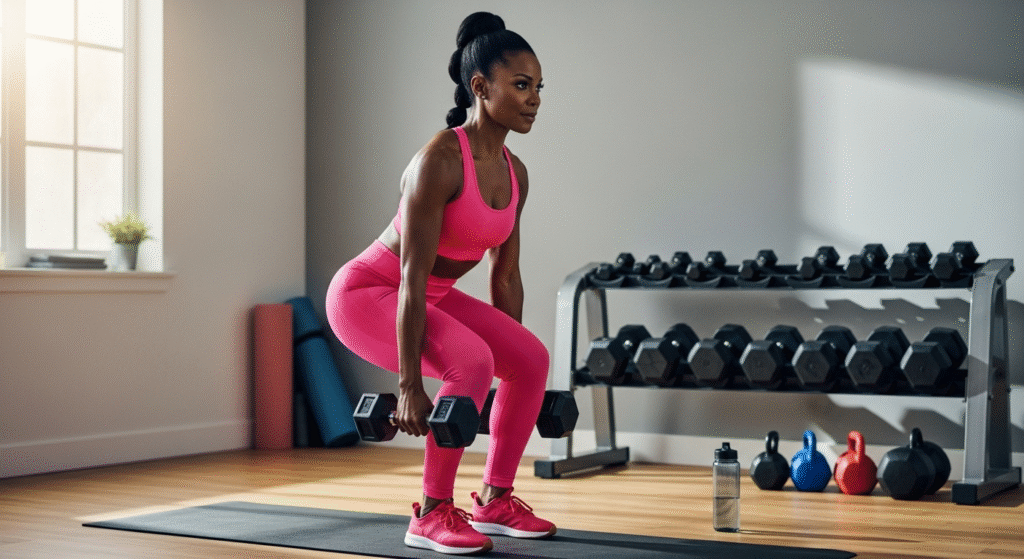
This is the reason that surprises most women over 40 because it directly challenges the assumption that cardio is the most effective tool for weight management.
As we get older, our resting metabolic rate tends to slow down, making it harder to maintain a healthy weight. However, muscle is a metabolically active tissue that burns calories even at rest. By building and preserving muscle mass through heavy resistance training, women can boost their resting metabolic rate and make it easier to manage their weight as they age.
The numbers are meaningful. Nine months of resistance training increased resting metabolic rate by an average of 5 per cent or about 158 calories per day. That is 158 extra calories burned every single day without doing anything differently — simply by having more muscle on your body.
Muscle fuels your metabolic engine. It requires more energy simply to exist and it gives you more energy to run lift ride, and row. For postmenopausal women, more muscle may also help you burn more fat while you exercise.
This is particularly important in the context of perimenopause and menopause. The metabolic slowdown that most women experience in their 40s and 50s is not inevitable — it is largely a consequence of muscle loss. Replacing that muscle through weightlifting directly addresses the root cause of the slowdown rather than trying to outrun it with more cardio.
What this means for you: Every pound of muscle you build through weightlifting raises your resting metabolic rate and makes weight management easier every single day — not just on the days you exercise. This is the most sustainable and most effective approach to managing the body composition changes that come with perimenopause.
Reason 4: Weightlifting Helps You Live Longer — and the Research on This Is Extraordinary
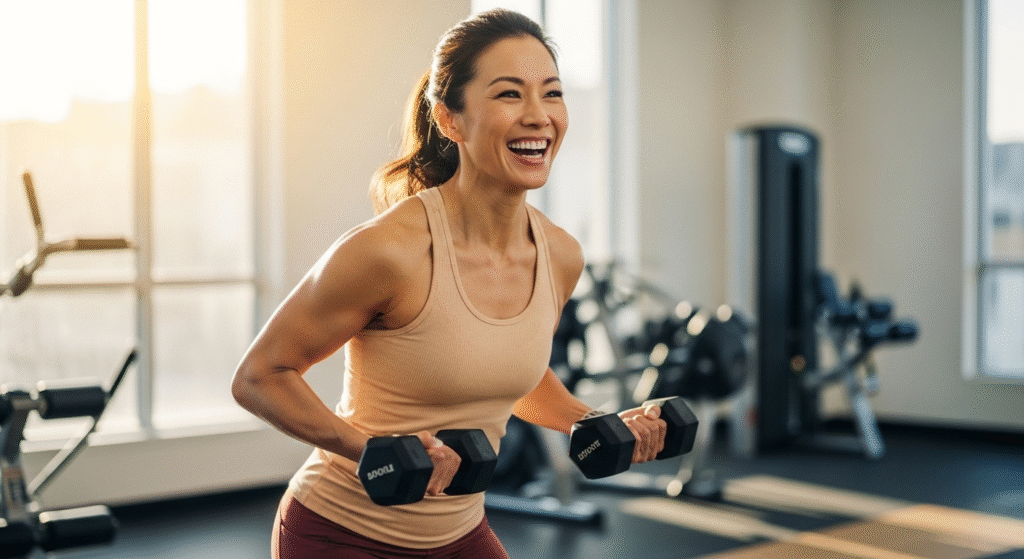
This reason stops most women mid-scroll — because the longevity data on weightlifting for women is genuinely extraordinary and almost completely unknown outside of research circles.
A new study finds that women who do strength training exercises two to three days a week are more likely to live longer and have a lower risk of death from heart disease compared to women who do none. Strength training is good for everyone, but women who train regularly get a significantly bigger boost in longevity than men.
The data from larger studies is equally compelling. According to a study of nearly 100,000 adults that appeared in a 2022 issue of the British Journal of Sports Medicine, participants who lifted weights tracked over an average of 9 years were found to have a 9 per cent lower risk of death from all causes, including cardiovascular disease and cancer.
And those who combined just one to two sessions of weight training per week with moderate to vigorous aerobic exercise showed a 41 per cent lower risk of death.
Research shows aerobic exercise in isolation reduces your all-cause mortality by 16 percent and strength training only reduces it by 21 percent whereas if you do both, you reduce your all-cause mortality by 29 per cent.
These are not marginal benefits. A 41 per cent lower risk of death from combining weightlifting with aerobic exercise is one of the most powerful health interventions available to any woman — and it requires two to three hours of exercise per week.
What this means for you: Two weightlifting sessions per week, combined with your existing walking or cardio routine, could reduce your risk of dying from cardiovascular disease and cancer by up to 41 per cent. That single statistic is reason enough to start this week.
Reason 5: Weightlifting Transforms Mental Health — Faster Than Almost Any Other Intervention
This reason matters enormously for women over 40 because the mental health challenges of perimenopause — anxiety, low mood, brain fog, disrupted sleep — are among the most common and most distressing symptoms of this life stage. And weightlifting addresses all of them.
One of the best results of weightlifting is the immediate boost it gives to our mental health. An analysis of 38 studies found that just 10 to 30 minutes of moderate intensity anaerobic activity like weightlifting, is the type of exercise that gives the most significant boost in mood. Other studies have shown that within just minutes of exercise, people feel happier.
Over the years researchers have found it helpful in combating loads of mental health symptoms and conditions, from anxiety and depression to panic attacks and low moods. It also helps relieve stress and encourages better sleep, which itself is a key component of optimal mental health — all without the negative side effects of antidepressant medications.
The cognitive benefits are equally significant. Research indicates that weightlifting can enhance brain health, improve memory and slow cognitive decline. It is a form of exercise that keeps both your body and mind sharp.
Research consistently links strength training to better cognitive health, improved mood and longer lifespan.
For women navigating the brain fog and mood changes of perimenopause, this is not a peripheral benefit — it is one of the most direct and fastest acting interventions available. Most women report feeling clearer, calmer and more capable within the first two weeks of regular weightlifting.
What this means for you: A 30-minute weightlifting session delivers a mood boost within minutes, reduces anxiety and depression symptoms within weeks and builds cognitive protection that compounds over the years. For women over 40 managing the mental health symptoms of perimenopause, this is one of the most powerful tools available.
Reason 6: Weightlifting Protects Your Joints and Keeps You Moving Without Pain
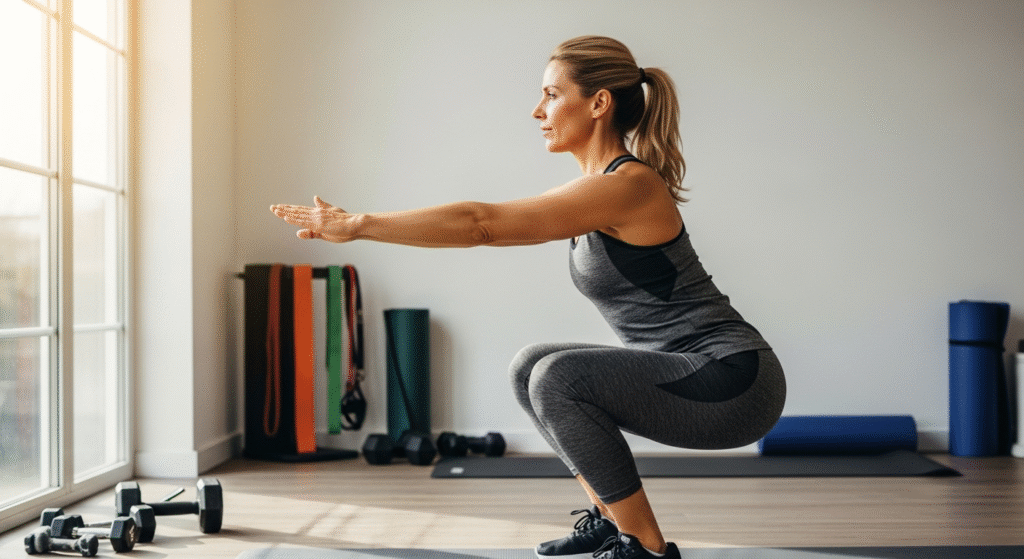
This reason directly addresses one of the most common fears women over 40 have about weightlifting — that it will hurt their joints rather than help them.
The research says the exact opposite.
Resistance training enhances flexibility and improves mobility, which is especially important as we age. Strong muscles help absorb and distribute the stresses placed on joints during daily activities, making it easier to perform routine movements without pain. Over time, weightlifting can even alleviate chronic pain conditions such as arthritis by improving joint function and reducing inflammation.
Age-related mobility limitations are a fact of life for many older adults. Studies have shown that about 30 per cent of adults over age 70 have trouble with walking, getting up out of a chair or climbing stairs. The women who avoid that statistic are overwhelmingly the ones who built and maintained strong muscles through their 40s and 50s.
The mechanism is straightforward. Joints are protected by the muscles that surround them. Weak muscles mean joints bear more direct load during every movement, which causes the wear and pain most women attribute to ageing when it is actually attributable to muscle loss. Building stronger muscles through weightlifting reduces the load on joints directly.
We ensure each person is properly guided and supported as they learn to lift safely and effectively. Safety is key — proper form and technique in every session ensures your posture and alignment are correct to avoid unnecessary strain on the joints.
What this means for you: The knee pain, hip discomfort, and back ache that most women over 40 experience is largely a consequence of muscle weakness around the joints — not irreversible joint damage. Building stronger muscles through weightlifting directly reduces joint load, reduces pain, and improves mobility in a way that rest and avoidance simply cannot.
Reason 7: Weightlifting Builds a Kind of Confidence That Nothing Else Can
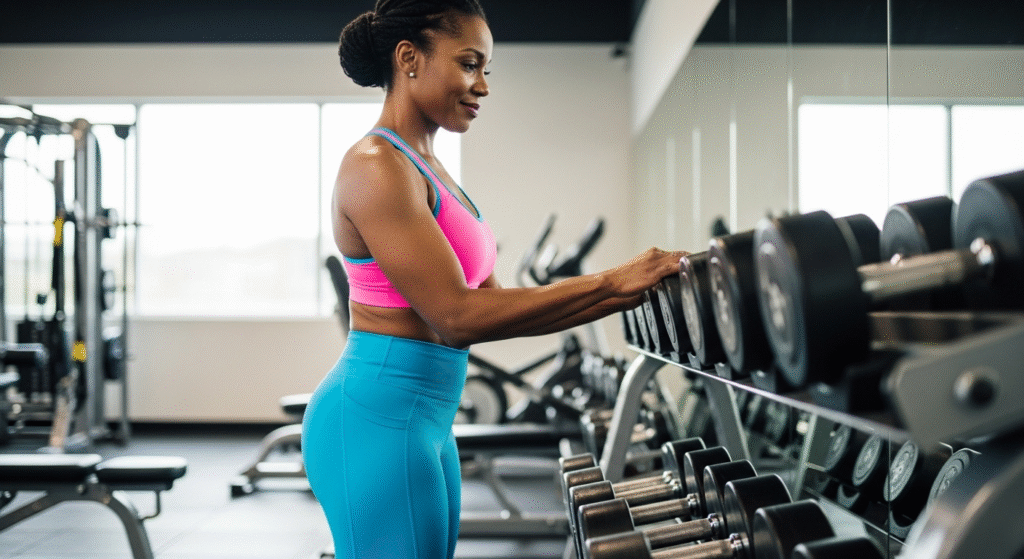
This final reason is the one that most surprises women who start weightlifting after 40 — because nobody warns them that the mental transformation will be as significant as the physical one.
During and after a weightlifting workout, I always feel calmer clear headed motivated, rejuvenated and ready to take on my day. I also feel stronger mentally and physically, so I can live life with a greater sense of capability and optimism.
The confidence that comes from weightlifting after 40 is qualitatively different from the confidence that comes from cardio or weight loss — because it is rooted in capability rather than appearance. When you deadlift your bodyweight or squat heavier than you did last month, your relationship with your body shifts from critical to respectful. From what does it look like to what can it do?
Research consistently links strength training to better cognitive health, improved mood and longer lifespan. It enhances your ability to enjoy everyday activities — whether it is hiking, travelling or simply keeping up with kids and grandkids.
This practical capability matters enormously for women over 40. The ability to carry your own luggage, lift heavy shopping bags, get up from the floor easily, climb stairs without aching knees and feel physically capable in every situation you encounter — all of it comes directly from building and maintaining muscle through weightlifting.
We all should think about how to build up a base of strong muscles to prepare for the loss of muscle and strength that we will experience as we age. The women who build that base in their 40s are the ones who remain strong, independent, and capable in their 60s, 70s and beyond.
What this means for you: Weightlifting after 40 builds a kind of physical confidence and capability that reframes your entire relationship with your body — from something you manage and criticise to something you build, strengthen and celebrate. That shift alone is worth starting today.
H2 IMAGE PROMPT — How to Start: Your First Week
Flat lay on a clean white surface of beginner weightlifting essentials — a pair of light dumbbells in soft pink, a resistance band in sage green, a clean workout journal open to a weekly plan, a small water bottle and a pair of white athletic trainers — warm natural overhead light, minimal editorial lifestyle photography style, no text no watermarks no logos
How to Start Weightlifting After 40 — Your First Week
Now that you have seven powerful reasons to start, here is exactly how to begin safely and effectively.
Bodyweight exercises are an excellent starting point. Then gradually introduce resistance bands, dumbbells or machines to build strength safely. A physical therapist can help you develop a personalised plan and ensure proper technique to avoid injury, especially if you are dealing with past injuries, joint pain or are brand new to strength work.
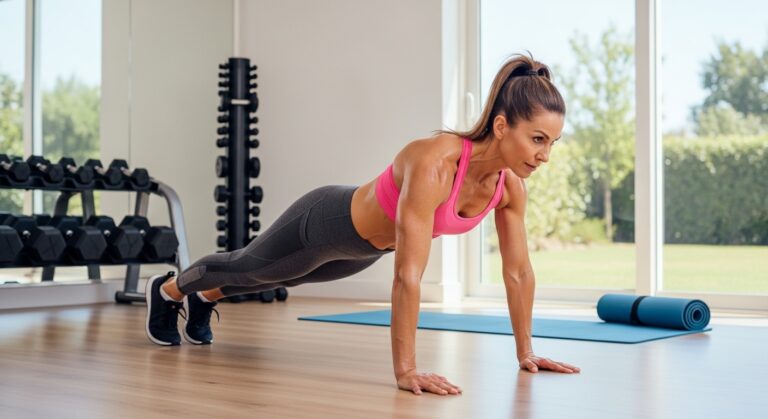
Week 1 — The Foundation Start with two sessions of 20 to 30 minutes. Use light dumbbells — 2kg to 4kg — or resistance bands. Focus entirely on form rather than weight. The exercises that deliver the best foundation for beginners are squats, deadlifts, dumbbell rows, overhead press, glute bridges and modified push-ups.
Focus on compound exercises that work multiple muscle groups, such as squats, deadlifts and overhead presses. Remember to allow for proper rest and recovery between sessions and gradually increase the weight and intensity over time.
The Progressive Overload Principle The key is to progressively overload the muscles by gradually increasing the weight reps or volume of the exercises over time. This does not mean adding weight every session. It means making each session slightly more challenging than the last — whether through one extra rep, one extra set or slightly heavier weight every two to three weeks.
Recovery After 40 When hormones shift, our bodies become more sensitive to inflammation, stress, and recovery demands. This means rest days are not optional — they are where the muscle building actually happens. Two to three sessions per week with full rest days between them is the optimal starting frequency for women over 40.
Quick Reference: What Weightlifting Delivers for Women Over 40
| Benefit | What the Research Shows |
|---|---|
| Muscle mass | Maintains and rebuilds muscle lost through sarcopenia and declining estrogen |
| Bone density | Builds bone mineral density at the spine and hip — directly preventing osteoporosis |
| Metabolism | Raises resting metabolic rate by an average of 158 calories per day |
| Longevity | 41 percent lower risk of death when combined with aerobic exercise |
| Mental health | Most significant mood boost of any exercise type within 10 to 30 minutes |
| Joint health | Reduces joint load, reduces chronic pain and improves mobility |
| Confidence | Builds capability-based confidence that transforms the relationship with the body |
Final Thoughts
The research on weightlifting for women over 40 is no longer ambiguous. It is one of the most thoroughly studied and most consistently positive interventions in women’s health science — and the findings apply directly to every woman reading this right now.
Strength training for women, especially those over 40, has been overlooked for a long time, but it is finally getting the attention it deserves.
You do not need to lift heavy from day one. You do not need a gym. You do not need to know what you are doing perfectly before you start. You need two dumbbells, two sessions a week, and the seven reasons in this post to remind you why it is worth it every time you feel like skipping.
Save this post and share it with every woman over 40 in your life. The best time to start was five years ago. The second best time is today.