7 Effective Barre Workouts for Women Over 40
Meta Description: Discover 7 proven barre workouts designed specifically for women over 40. Low-impact, highly effective routines that build strength, improve balance, and boost confidence—no dance experience needed!
Remember when you thought turning 40 meant slowing down? Think again! Barre workouts are revolutionizing how women over 40 approach fitness—and the best part? You don’t need to be a ballerina to benefit from these amazing, low-impact exercises.
Here’s the truth: high-intensity workouts aren’t the only path to staying fit and strong. In fact, for many women over 40, the constant pounding and jarring movements can do more harm than good. Your body has different needs now—joint health becomes paramount, bone density requires attention, and preserving lean muscle mass is essential for metabolism and overall vitality.
Enter barre workouts: the perfect fusion of ballet-inspired movements, Pilates precision, and yoga flexibility. This combination creates a complete body transformation that respects your joints while challenging your muscles in ways that deliver real, visible results.
Throughout this guide, we’ll explore seven effective barre workouts specifically designed for your body’s needs after 40. These routines address everything from core strength and posture to cardiovascular health and muscle toning. Whether you’re working out at home with a sturdy chair or attending a studio class, these exercises are completely accessible—no prior dance experience required.
The benefits speak for themselves: improved posture that makes you look and feel taller, increased flexibility that makes daily activities easier, a stronger core that supports your entire body, and beautifully toned muscles without adding bulk. You’ll also experience better balance, enhanced body awareness, and that wonderful sense of accomplishment that comes from moving your body with grace and intention.
Let’s explore why barre is the ultimate workout for your 40s and beyond, plus the seven essential routines that will transform your fitness journey. Get ready to discover a workout method that makes you feel powerful, graceful, and completely in control of your fitness destiny.
Why Barre Workouts Are Perfect for Women Over 40
Low-Impact but Highly Effective
Barre workouts protect your joints while building serious strength—that’s the magic combination we all need after 40. Unlike running or high-impact aerobics that stress your knees, hips, and ankles, barre uses small, controlled movements that create big results without the wear and tear.
You’ve probably heard about the famous “shake factor” in barre classes—that trembling sensation when you’re holding a position or pulsing through tiny movements. This isn’t a sign you’re doing something wrong; it’s actually proof you’re doing it right! These isometric holds and micro-movements fatigue your muscles deeply, creating the kind of muscle engagement that builds lean, strong tissue without requiring you to lift heavy weights or jump around.
The controlled nature of barre movements means you’re always working within a safe range of motion. You’re not throwing your body around or risking sudden movements that could lead to injury. Instead, you’re building strength systematically, layer by layer, in a way that actually prevents injuries during your regular daily activities.
Builds Bone Density and Muscle Strength
After 40, maintaining bone density becomes critical—and barre delivers exactly what your bones need. The weight-bearing exercises inherent in barre routines help combat age-related bone loss and reduce your risk of osteoporosis. When you’re standing at the barre, holding positions, and working against your own body weight, you’re sending signals to your bones to stay strong and dense.
But it’s not just about bones. Women naturally begin losing muscle mass in their 40s—up to 8% per decade if we don’t actively work against it. This muscle loss directly impacts your metabolism, making it harder to maintain a healthy weight. Barre’s resistance work targets all major muscle groups, helping you preserve and even build lean muscle tissue. The result? A stronger, more efficient metabolism and the functional strength you need for everything from carrying groceries to playing with grandchildren.
Improves Balance and Flexibility
Balance naturally declines as we age, but this isn’t something you have to accept passively. Barre’s ballet-inspired movements—standing on one leg, working through various positions, engaging your core for stability—enhance your balance in ways that translate directly to real life. Better balance means fewer falls, more confidence on uneven surfaces, and greater independence as you age.
The flexibility component is equally important. Barre incorporates stretching throughout each workout, not just at the end. This approach keeps your muscles supple and your joints mobile, reducing your risk of strains and improving your overall range of motion. You’ll notice the difference when you’re reaching for something on a high shelf or bending down to tie your shoes—movements that should be easy become easy again.
Perhaps most valuable is the mind-body connection you develop through barre. You become more aware of how your body moves through space, how to engage specific muscles, and how to maintain proper alignment. This body awareness is protective—it helps you move more efficiently and avoid the awkward movements that often lead to injuries.
Getting Started: Essential Barre Equipment and Setup
What You Need for At-Home Barre Workouts
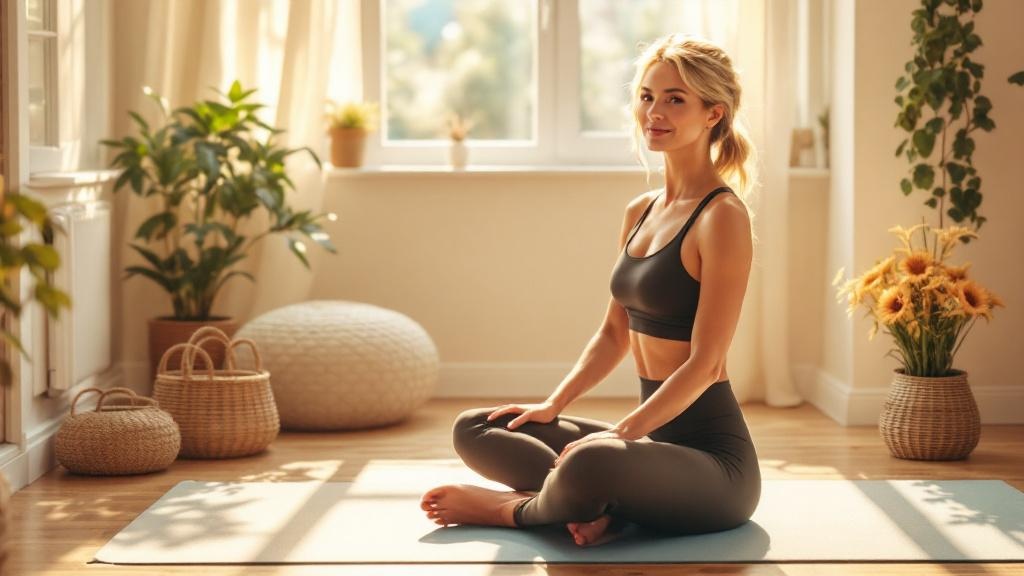
Starting your barre journey doesn’t require a huge investment. A sturdy chair with a tall back works perfectly as your barre—just make sure it won’t slide across the floor during your workout. If you want to invest in an actual barre, a wall-mounted option is ideal, but a portable barre works well too.
Your yoga mat is essential for cushioning and stability during floor work. Choose one with good grip and adequate padding to protect your knees and hips during mat exercises. You’ll be grateful for that extra cushioning during your core work!
Light hand weights are perfect for barre—we’re talking 1-3 pounds here. This isn’t about building bulky muscles; it’s about creating long, lean definition through high repetitions with light resistance. If you don’t have weights, water bottles work in a pinch.
A small ball or firm pillow is incredibly useful for inner thigh work. You’ll squeeze it between your legs during various exercises, and this simple prop adds significant challenge to your lower body routines. A resistance band is optional but effective for adding variety to your arm work and stretches.
Finally, wear comfortable, form-fitting workout clothes. You need to see your body alignment, and loose clothing can get in the way or hide poor form. Grippy socks are popular in barre studios, but bare feet work perfectly well at home.
Creating Your Perfect Barre Space
Your workout space doesn’t need to be large—just clear and safe. You need enough room to extend your arms and legs in all directions without hitting furniture or walls. A space about 6 feet by 6 feet is typically sufficient.
Position your chair or barre near a clear wall where you can place one hand for balance during standing work. Having that wall nearby provides additional support when you need it and gives you a reference point for proper alignment.
A mirror is helpful but definitely not essential. If you have one, great—you can check your form and alignment. If not, focus on feeling the correct muscle engagement and listening to your body’s feedback. Many women find they develop better body awareness without constantly watching themselves in a mirror.
Music makes a huge difference in your motivation and enjoyment. Create a playlist with upbeat but not overwhelming music—you want something that energizes you without being so loud you can’t hear your own breathing or focus on form.
Simple Safety Tips for Beginners
Always start with a proper warm-up. Your muscles need preparation before you ask them to hold challenging positions or perform repetitive movements. Five to ten minutes of gentle movement gets your blood flowing and your joints lubricated.
Listen to your body throughout every workout. Barre should challenge you—that’s the point—but it shouldn’t cause sharp pain or discomfort in your joints. The muscle burn is good; joint pain is not. Learn to distinguish between the two and modify accordingly.
Start slowly and build intensity gradually. If you’re new to barre, begin with basic routines and master the fundamental movements before adding complexity or increasing your workout duration. Consistency matters more than intensity when you’re building a foundation.
If you have any existing injuries, chronic conditions, or concerns about starting a new exercise program, consult with your healthcare provider first. This is especially important if you have osteoporosis, joint issues, or balance problems.
Workout #1 – The Complete Barre Basics Routine
Warm-Up and Plié Series (10 minutes)
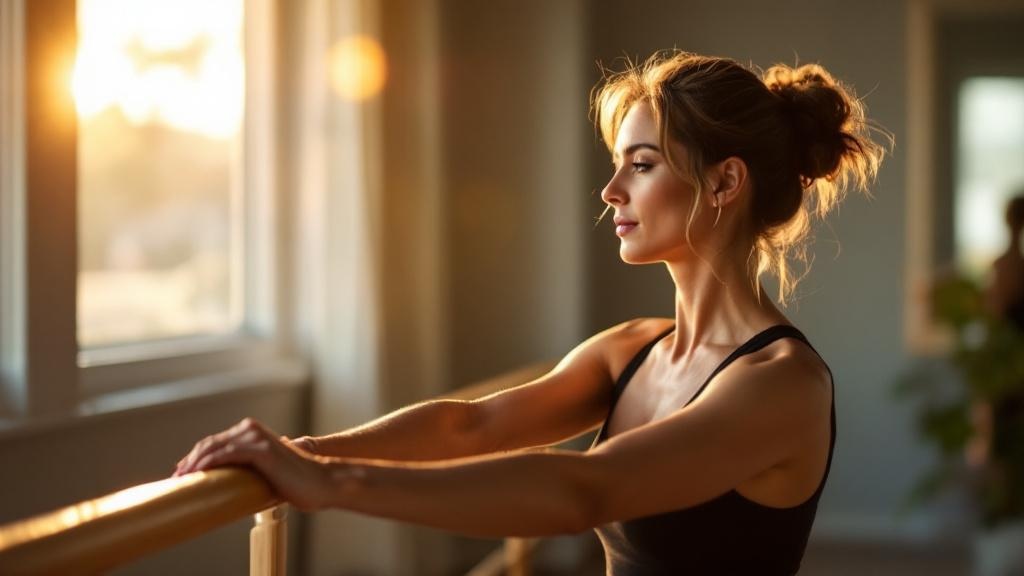
Start in first position with your heels together and toes turned out comfortably—about 45 degrees, not the extreme turnout you see in professional ballet. Place both hands lightly on your barre or chair back. This is your foundation position, and getting it right matters.
Begin with gentle pliés, bending your knees over your toes while keeping your back straight and your core engaged. Think about sitting down into an invisible chair rather than just bending your knees. Lower for two counts, hold for one, rise for two counts. Repeat this 10 times, focusing on smooth, controlled movement.
Move to second position by stepping your feet hip-width apart, maintaining that gentle turnout. Your pliés will feel different here—you’ll engage your inner thighs more intensely. Perform another 10 pliés, this time adding a heel lift at the top of each rise. This challenges your balance and activates your calves.
The key to proper form: keep your knees tracking over your toes, never letting them collapse inward. Tuck your tailbone slightly under—imagine you’re trying to scoop your pelvis forward. This protects your lower back and engages your core throughout the movement.
If you have knee sensitivity, don’t bend as deeply. A small plié is just as effective when performed with proper form and intention. You can also keep one hand on the barre and place the other on your core to feel the engagement.
Upper Body Sculpting (10 minutes)
Grab your light weights and stand facing your barre or chair. This arm series targets your shoulders and biceps while keeping your core engaged. Start with arms down by your sides, then lift them forward to shoulder height, pulse up one inch for 20 counts, then lower slowly. Your shoulders will start burning—that’s perfect!
Next, extend your arms out to the sides at shoulder height. Make small circles forward for 20 counts, then reverse for 20 counts. Keep your shoulders down away from your ears and your core tight. These tiny movements create incredible shoulder definition.
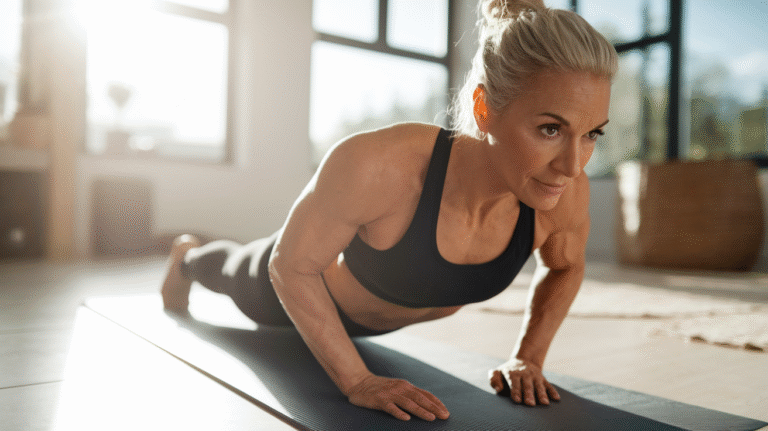
For push-ups, place your hands on the barre or chair seat, walk your feet back until your body forms a straight line, and perform 10 controlled push-ups. Keep your elbows close to your body rather than flaring out to the sides. This variation protects your shoulders while still building serious upper body strength.
Tricep dips come next. Sit on the edge of your chair, place your hands beside your hips, slide forward off the seat, and bend your elbows to lower your body. Perform 15 dips, keeping your elbows pointing straight back. Your triceps—those muscles on the back of your upper arms—will definitely feel this work.
Rest for 30 seconds between each exercise, but keep moving gently. Shake out your arms, roll your shoulders, and take deep breaths.
Core and Cool-Down (10 minutes)
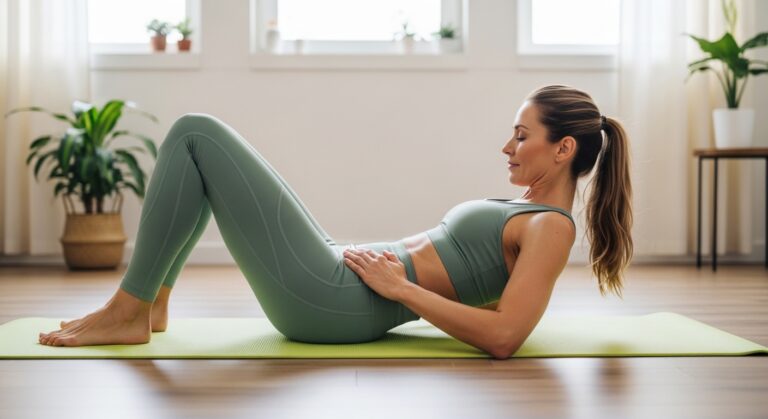
Move to your mat for core work. Lie on your back and perform a modified hundreds exercise: lift your head and shoulders off the mat, extend your legs to a comfortable angle (bent knees if needed), and pump your arms by your sides. Breathe in for five pumps, out for five pumps, continuing for 100 total pumps.
Transition to a plank hold from your forearms. Focus on creating one straight line from head to heels, keeping your hips level and your core deeply engaged. Hold for 30 seconds, rest, then repeat twice more. If a full plank is too challenging, drop to your knees—you’ll still build tremendous core strength.
Finish with gentle stretches for your entire body. Child’s pose releases your lower back, a seated forward fold stretches your hamstrings, and gentle spinal twists release any tension. Take your time here—stretching is just as important as the strengthening work.
End in a comfortable seated position, taking several deep, relaxing breaths. Notice how your body feels—energized but not exhausted, worked but not depleted.
Key Takeaway: This 30-minute routine is perfect for beginners and provides a complete introduction to barre fundamentals. Perform it three times per week, and you’ll notice improved strength and posture within two weeks.
Workout #2 – Barre Cardio Fusion for Energy and Fat Burning
Dynamic Warm-Up Flow (5 minutes)
This cardio-focused workout starts with movement that elevates your heart rate while preparing your body for the work ahead. Begin with ballet-inspired arm sweeps—reach your arms overhead while rising onto your toes, then lower everything down with control. Repeat this flowing movement 10 times, coordinating your breath with the motion.
Add gentle side-to-side stepping, reaching your arms in the direction you’re moving. This lateral movement wakes up muscles you don’t use during regular walking and starts engaging your obliques. Continue for one minute, keeping your movements smooth and controlled.
Perform some hip circles and shoulder rolls to mobilize your joints. These feel wonderful and ensure you’re ready for the more dynamic movements coming next. Take a few deep breaths and set your intention for this workout—you’re here to energize your body and challenge yourself.
Cardio Barre Intervals (20 minutes)
Now we’re combining strength holds with dynamic movements to keep your heart rate elevated while building muscle. Start with curtsy lunge sequences: step your right foot diagonally back behind your left leg, lower into a lunge, then return to standing. Perform 15 on each side, then immediately move into 30 seconds of quick alternating knee lifts.
This alternating pattern—strength move followed by cardio burst—continues throughout the workout. Next up: standing leg lifts at the barre. Lift your leg to the side 15 times with control, then perform 30 seconds of side-to-side hops (or fast steps if hopping doesn’t work for you).
Standing ab work comes next, and it’s surprisingly challenging. Stand at your barre, engage your core, and bring your knee to your chest while pulling your elbow down to meet it. Alternate sides quickly for one minute, really focusing on that core contraction.
Perform pulsing squats for 30 seconds, then hold a squat position for 30 seconds. Your legs will shake—embrace it! This is where the real strength-building happens. Take a 30-second water break, shaking out your legs and catching your breath.
Continue this pattern with different exercises: arabesque pulses followed by quick alternating leg lifts, plié pulses followed by relevés (rising onto your toes repeatedly), and standing arm work with light weights followed by fast arm circles.
The beauty of this interval approach is that just when one muscle group is fatiguing, you switch to something different. Your heart rate stays elevated, you burn more calories, and the workout feels dynamic and engaging rather than repetitive.
Active Recovery and Stretch (10 minutes)
Bring your heart rate down gradually with controlled movements. Perform slow, deliberate pliés, focusing on your breath and the lengthening sensation in your muscles. Walk around your space, letting your arms swing naturally and your breathing return to normal.
Move into deep stretches for all the muscle groups you’ve worked. Hold each stretch for 30-45 seconds, breathing deeply and allowing your muscles to release. A standing quad stretch, forward fold for hamstrings, and figure-four stretch for hips are essential.
Practice some balance work by standing on one leg with your eyes closed (keep the barre nearby for safety). This challenges your proprioception and helps develop the deep stabilizing muscles that prevent falls.
Finish in a final relaxation pose on your mat—either lying on your back with legs extended or in a comfortable seated position. Take several deep breaths and acknowledge what your body just accomplished.
Key Takeaway: This 35-minute routine combines the best of cardio and strength training—perfect for busy mornings when you need an energy boost. You’ll burn calories during the workout and for hours afterward thanks to the muscle-building component.
Workout #3 – Lower Body Toning and Sculpting
Standing Leg Series at the Barre (15 minutes)
This lower body workout delivers the toned, strong legs and lifted glutes that barre is famous for. Start with attitude lifts—a ballet term for lifting your leg behind you with a bent knee. Stand at your barre, engage your core, and lift your right leg behind you, knee bent at 90 degrees. Pulse up one inch for 20 counts, then hold at the top for 10 counts. The burn in your glutes is intense and incredibly effective.
Switch to leg lifts to the side for outer thigh work. Keep your working leg straight, flex your foot, and lift directly to the side—no leaning or hiking your hip. Perform 20 lifts, then pulse at the top for 20 counts. Your outer thigh and hip will be on fire, but this is exactly what creates that beautiful leg definition.
Arabesque holds come next, and they’re challenging! Extend your leg straight behind you, lifting as high as you comfortably can while maintaining a straight back. Hold for 30 seconds, then pulse up for 20 counts. This works your entire posterior chain—glutes, hamstrings, and lower back.
Now here comes the famous “barre shake”—that trembling sensation when your muscles are working so hard they start to quiver. This is not a sign of weakness; it’s actually proof that you’re working at the right intensity! The shake means you’re fatiguing the muscle fibers, which is exactly what creates strength and definition. Embrace the shake—it’s your friend.
Proper alignment protects your lower back during all these movements. Keep your core engaged, your shoulders down, and avoid arching your back excessively. If you need to lower your leg to maintain proper form, do it—quality matters more than height.
For balancing techniques, keep a light touch on the barre rather than gripping it tightly. This forces your body to engage more stabilizing muscles. As you get stronger, try hovering your hand just above the barre for an extra balance challenge.
Thigh Work on the Mat (10 minutes)
Move to your mat for targeted thigh work that hits muscles you didn’t even know you had. Start with inner thigh work using your small ball or pillow. Lie on your back, bend your knees with feet flat, place the ball between your knees, and squeeze. Pulse the squeeze for 50 counts—yes, 50! Your inner thighs will burn intensely.
Roll to your right side for outer thigh lifts. Stack your hips, bend your bottom leg for stability, and lift your top leg with your foot flexed. Perform 20 lifts, then hold at the top and pulse for 20 counts. This creates beautiful outer thigh definition and strengthens your hip stabilizers.
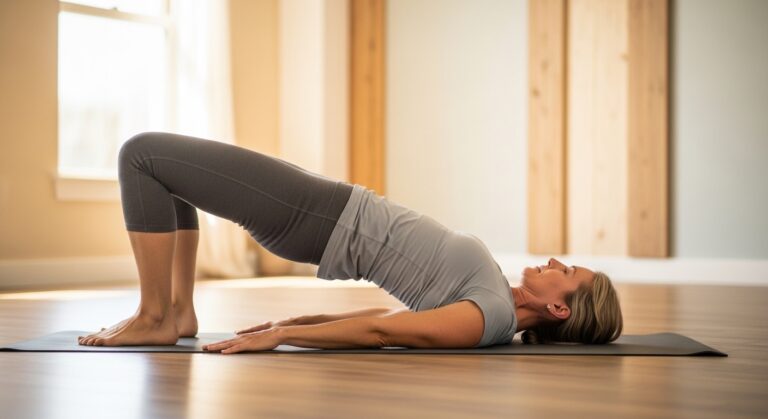
Bridge variations come next for hamstrings and glutes. Lie on your back, feet hip-width apart, and lift your hips into a bridge. Hold for 5 seconds, lower slowly, and repeat 10 times. Then hold the bridge position and pulse your hips up one inch for 30 counts. Your glutes and hamstrings will be thoroughly worked.
The pulse technique—those tiny, controlled movements—is what creates maximum muscle fatigue in barre. You’re keeping the muscle under constant tension, which is incredibly effective for building strength and endurance. Keep your movements small and precise rather than large and loose.
Coordinate your breathing with the pulses: breathe in for two pulses, out for two pulses. This rhythm helps you power through the burn and keeps you focused on the movement rather than the discomfort.
Glute Burnout and Stretch (10 minutes)
Finish your lower body work with an all-fours series that will leave your glutes thoroughly exhausted. Start with donkey kicks—lift your right leg behind you with a bent knee, pressing your heel toward the ceiling. Perform 20 kicks, then pulse at the top for 20 counts.
Fire hydrants target the side of your glutes. From all fours, lift your bent knee out to the side, keeping your knee at 90 degrees. Pulse up for 20 counts, then extend the leg straight and pulse for another 20 counts. The combination hits every angle of your glute muscles.
Return to standing at your barre for final standing glute pulses. Lean slightly forward, lift one leg behind you, and pulse up quickly for 30 counts. This standing burnout ensures you’ve completely fatigued the muscle.
Now comes the essential recovery work. Hip flexor stretches are crucial after all this leg work. Kneel on your right knee, left foot forward, and gently press your hips forward. Hold for 45 seconds on each side. Tight hip flexors can cause lower back pain, so don’t skip this stretch.
Pigeon pose variations deeply stretch your glutes and outer hips. From all fours, bring your right knee forward and extend your left leg back. Lower down to your comfort level and hold for one minute on each side. Breathe deeply and allow the stretch to release any tension.
Foam rolling tips for recovery: if you have a foam roller, use it on your outer thighs, inner thighs, and glutes after this workout. Roll slowly over tender spots, pausing for 30 seconds on particularly tight areas. This self-massage helps reduce soreness and speeds recovery.
Key Takeaway: This 35-minute lower body routine will leave you feeling accomplished and strong—expect to feel the results within 2-3 weeks of consistent practice. Your legs will feel more toned, your glutes will lift, and you’ll notice improved strength in daily activities like climbing stairs.
Conclusion
These seven effective barre workouts provide everything you need to transform your fitness after 40. You’ve discovered routines for building foundational strength, boosting cardiovascular health, sculpting your lower body, strengthening your core, and getting complete full-body workouts—all designed specifically for your body’s needs and capabilities.
The beauty of barre is that it meets you exactly where you are. Whether you’re completely new to exercise or returning after a break, these low-impact workouts deliver real results without beating up your joints or requiring you to be a former dancer. The small, controlled movements might look simple, but they create profound changes in your strength, posture, flexibility, and overall body composition.
Consistency is your secret weapon here. Commit to three barre workouts per week, and you’ll notice changes within two weeks—better posture, improved energy, and that wonderful feeling of being strong in your body. Within a month, you’ll see visible muscle definition and feel significantly stronger. Within three months, barre will have transformed not just your body but your entire relationship with movement and fitness.
Remember that modifications aren’t failures—they’re smart training. Listen to your body, adjust as needed, and focus on proper form over intensity. The shake, the burn, and yes, even the occasional frustration are all part of the journey toward a stronger, more capable you.
Your 40s and beyond can be your strongest, most vibrant years yet. Barre workouts give you the tools to make that happen—one plié, one pulse, and one powerful movement at a time.
Ready to start your barre journey today? Choose one of these seven workouts, clear some space in your living room, and commit to showing up for yourself three times this week. Your future self will thank you for starting today. And remember—you don’t have to be perfect; you just have to begin. Let’s get moving!