7 Best Luteal Phase Workouts for Women Over 40

Have you ever wondered why some weeks you crush your workouts effortlessly, while other weeks that same routine feels impossible? Here’s the truth no one talks about: your hormones are running the show, and after 40, understanding this game-changer can transform your fitness results.
I know exactly how frustrating it feels. You’re doing everything “right”—showing up to the gym, following that same program that worked last month—but suddenly you’re exhausted, retaining water, and questioning whether you’ve lost your edge. Your body isn’t betraying you. It’s actually trying to communicate something important.
The concept of cycle syncing workouts might sound complicated, but it’s actually brilliantly simple: align your exercise intensity with your body’s natural hormonal rhythm. Even in perimenopause, when cycles become unpredictable, this approach delivers powerful results.
The luteal phase—the two weeks between ovulation and your period—affects women over 40 differently than younger women.
Your progesterone levels rise (though not as high as they used to), your metabolism increases by 5-10%, and your body becomes more sensitive to stress and inflammation. That high-intensity bootcamp class that felt amazing last week? It might spike cortisol and leave you feeling depleted this week.
This article reveals seven proven workouts designed specifically for your body’s hormonal rhythm during the luteal phase. You’ll discover strength-building routines that work with your fluctuating energy, not against it. You’ll learn which exercises reduce bloating, balance hormones, and deliver results without burning you out.
This isn’t about working harder—it’s about working smarter with your body. The luteal phase workouts I’m sharing are unique because they honor the reality of being over 40: you need effective training that supports hormone balance, protects your joints, and fits into your busy life. Ready to stop fighting your body and start working with it?
Understanding Your Luteal Phase After 40 (What’s Actually Happening in Your Body)

The Luteal Phase Basics: Your Body’s Monthly Rhythm
The luteal phase spans approximately days 15-28 of your menstrual cycle, starting right after ovulation and ending when your period begins. Think of it as your body’s preparation phase—progesterone rises to prepare for a potential pregnancy, while estrogen fluctuates in a complex dance.
Here’s what makes this phase fascinating: it’s actually two distinct periods. During the early luteal phase (days 15-21), progesterone steadily climbs while you still have decent estrogen levels. You might feel strong, focused, and ready to tackle challenging workouts. Your metabolism kicks into higher gear, burning an extra 100-300 calories daily.
Then comes the late luteal phase (days 22-28), when both hormones begin to drop if pregnancy hasn’t occurred. This is when you experience the classic symptoms: energy dips, bloating, cravings, mood sensitivity, and that feeling that everything requires twice the effort.
After 40, these hormonal fluctuations become more pronounced. Perimenopause introduces irregular cycles, shorter luteal phases, and lower overall progesterone production. Your body produces less estrogen and progesterone than it did in your 30s, making you more sensitive to stress and slower to recover from intense exercise.
Why Traditional Workout Advice Fails Women Over 40
The fitness industry sells you a lie: push harder, go longer, and results will follow. That “no pain, no gain” mentality? It’s designed for 25-year-old men with stable testosterone levels, not women navigating complex hormonal shifts.
Ignoring your hormonal fluctuations leads to a frustrating cycle: you push through high-intensity workouts when your body needs restoration, spike cortisol levels, trigger inflammation, and end up storing fat instead of burning it. You feel exhausted, retain water, and wonder why you’re working so hard with minimal results.
The science backs this up. Research shows that high-intensity exercise during the late luteal phase increases cortisol production in women over 40. Elevated cortisol combined with dropping progesterone creates the perfect storm for stubborn weight retention, especially around your midsection. Your body interprets excessive exercise as stress and holds onto fat as protection.
When you honor your luteal phase instead, you reduce injury risk (because your ligaments are more lax during this time), support hormone balance, and achieve sustainable results. You’re not being weak—you’re being strategic.
Signs You’re in Your Luteal Phase
Physical indicators give you clear signals. You might notice breast tenderness, mild bloating (especially in your abdomen), skin changes like breakouts, and noticeable energy shifts throughout the day. Some women experience food cravings—particularly for carbohydrates and chocolate—as your body’s metabolism increases.
Emotionally, you might feel more introspective, need extra sleep, experience mood sensitivity, or notice decreased tolerance for stress. These aren’t character flaws—they’re hormonal realities.
Perimenopause complicates cycle recognition. Your luteal phase might shorten from 14 days to 10 days, or your cycles might become irregular. Track your patterns using a simple app or journal, noting energy levels, physical symptoms, and workout performance. Even with irregular cycles, you’ll notice patterns that help you adjust your training approach.
The Powerful Benefits of Cycle-Synced Workouts for Women 40+
Why This Approach Gets Results
Cycle-synced training delivers results because it reduces injury risk by honoring your body’s natural strength fluctuations. During the luteal phase, your ligaments become more lax due to hormonal changes, increasing vulnerability to strains and tears. Lower-intensity workouts protect your joints while maintaining fitness.
Better hormone balance translates to easier weight management. When you stop flooding your system with cortisol from excessive high-intensity training, your body releases stored fat more readily. Your insulin sensitivity improves, reducing cravings and energy crashes.
You’ll experience improved energy levels and mood stability. Instead of pushing through exhaustion and then collapsing, you maintain consistent vitality throughout the month. Your workouts energize rather than deplete you.
Enhanced recovery becomes your secret weapon. By matching exercise intensity to your hormonal capacity, you reduce inflammation and give your body the restoration it needs. You show up to each workout feeling capable instead of drained.
The sustainability factor matters most. This approach prevents burnout because you’re not constantly fighting your biology. You can maintain fitness for decades, not just months, because you’re working with your body’s wisdom.
What Makes Luteal Phase Training Different
Lower intensity doesn’t mean less effective—this is the mindset shift that transforms everything. During your luteal phase, your metabolism naturally increases. You burn more calories at rest, meaning you don’t need brutal workouts to see results. A 30-minute moderate-intensity strength session delivers powerful benefits without overtaxing your system.
The focus shifts from performance to maintenance and restoration. You’re not trying to set personal records or push boundaries. You’re maintaining the strength you built during your follicular and ovulatory phases while supporting hormone balance and reducing inflammation.
Your body composition can actually improve during the luteal phase when you train appropriately. The increased metabolism combined with strength-maintaining workouts and adequate nutrition creates ideal conditions for fat burning and muscle preservation. You’re building a foundation of sustainable fitness that serves you through perimenopause and beyond.
The 7 Best Luteal Phase Workouts to Transform Your Fitness After 40
1. Strength Training with Moderate Weights (Early Luteal Phase)
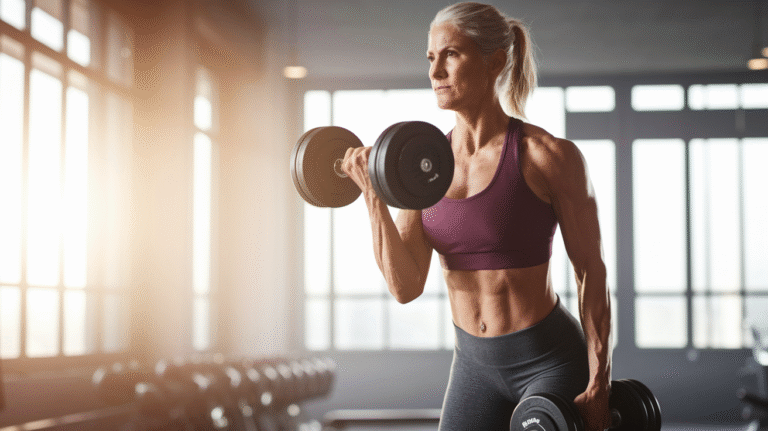
Why it works: Progesterone supports muscle building and repair. During the early luteal phase, you can capitalize on this by maintaining strength training with controlled intensity. You’re building lean muscle that boosts metabolism and protects bone density—critical for women over 40.
The approach: Focus on controlled, deliberate movements rather than maximum weight. Perform 3-4 sets of 8-12 reps using 60-70% of your maximum weight. This intensity challenges your muscles without triggering excessive cortisol production.
Prioritize compound movements that work multiple muscle groups: squats build lower body strength and glute definition, deadlifts strengthen your posterior chain and core, rows improve posture and back strength, and chest presses tone your upper body. These exercises deliver maximum results in minimum time.
Rest periods matter. Take 60-90 seconds between sets to allow adequate recovery without losing the training effect. This isn’t a race—quality movement beats rushed repetitions every time.
Here’s a sample 30-minute routine: 5-minute warm-up with dynamic stretching, goblet squats (3 sets of 10), dumbbell rows (3 sets of 10 per side), glute bridges (3 sets of 12), dumbbell chest press (3 sets of 10), and plank holds (3 sets of 30 seconds). Cool down with gentle stretching.
Pro tip: This workout is perfect for home training with dumbbells or resistance bands. You don’t need a gym membership to build strength effectively. Start with weights that challenge you while maintaining proper form.
2. Power Yoga and Dynamic Stretching
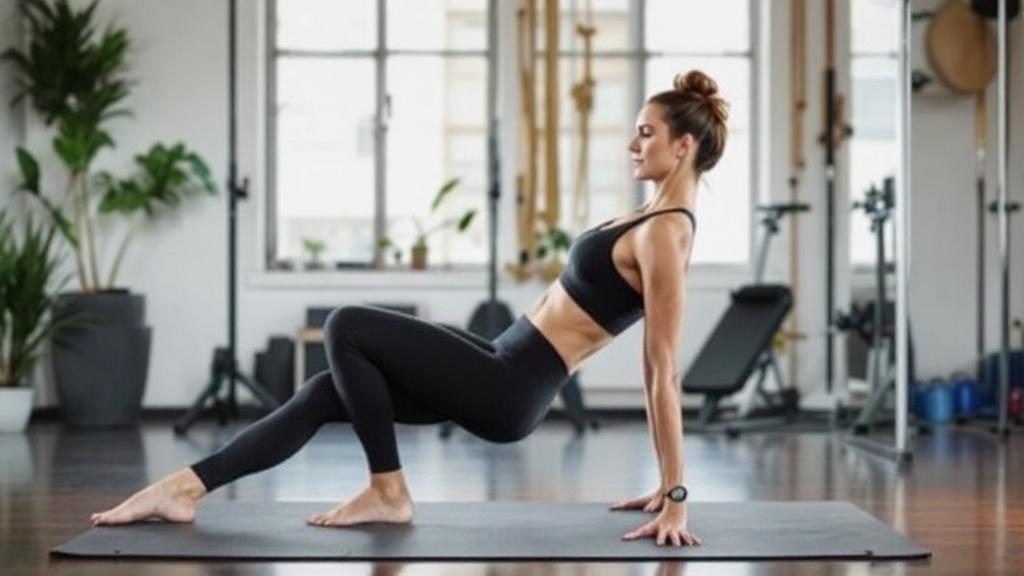
Why it works: Power yoga builds strength while supporting lymphatic drainage and reducing the bloating common during the luteal phase. The flowing movements improve circulation, helping your body eliminate excess fluid and toxins. You’re toning muscles while managing uncomfortable symptoms.
The approach: Choose flowing sequences that create heat and challenge your muscles without excessive jumping or high-impact movements. The continuous movement keeps your heart rate elevated in the moderate zone—perfect for luteal phase training.
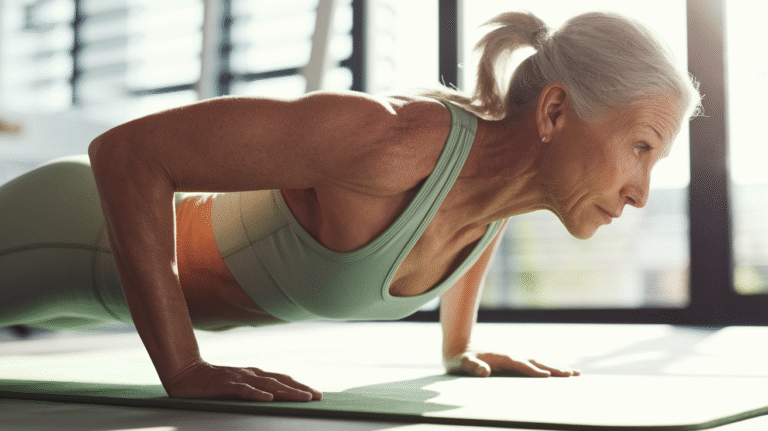
Best poses for this phase include the warrior series (builds leg strength and improves balance), chair pose (sculpts thighs and glutes), bridge pose (strengthens posterior chain and opens hips), and various plank variations (builds core strength without crunching). Each pose offers modifications for different fitness levels.
Duration matters: aim for 30-45 minute sessions, 3-4 times weekly during your early luteal phase. As you transition into late luteal, reduce to 2-3 sessions with gentler variations.
The beauty of power yoga is its adaptability. Feeling energetic? Add more challenging variations. Energy dipping? Modify poses and slow the pace. You maintain strength while honoring your body’s signals.
Pro tip: Regular yoga practice during the luteal phase significantly reduces PMS symptoms including cramping, mood swings, and fatigue. You’re not just maintaining fitness—you’re actively improving how you feel.
3. Low-Impact Pilates and Barre Workouts
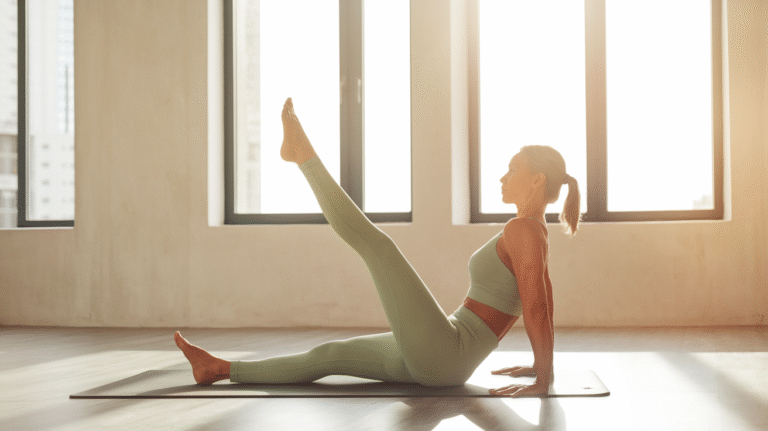
Why it works: Pilates and barre deliver effective core strengthening and muscle sculpting without stressing your joints. The small, controlled movements create muscular endurance and definition while protecting the ligament laxity that occurs during the luteal phase.
The approach: Small, controlled movements that create a deep burn and build lean muscle. You’ll work muscles you didn’t know existed, improving posture, balance, and functional strength for daily activities.
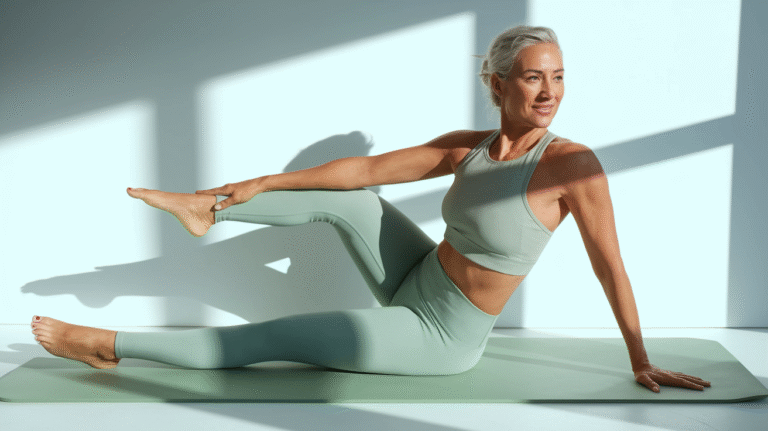
Focus on key areas: pelvic floor strengthening (essential for women over 40), deep core activation (beyond superficial abs), glute development (combats age-related muscle loss), and inner thigh toning (improves hip stability). These areas directly impact your quality of life and injury prevention.
This workout is perfect for women who feel intimidated by high-impact gym classes or those managing joint issues. You get an intense workout that leaves you feeling accomplished, not destroyed.
Plan for 20-40 minute sessions you can easily do at home with minimal equipment—just a mat and maybe light weights or a resistance band. The accessibility removes excuses and makes consistency achievable.
Pro tip: Pilates and barre are particularly beneficial for managing perimenopause symptoms including pelvic floor weakness, core instability, and bone density concerns. You’re investing in long-term health, not just immediate fitness.
4. Steady-State Cardio (Walking, Swimming, Cycling)
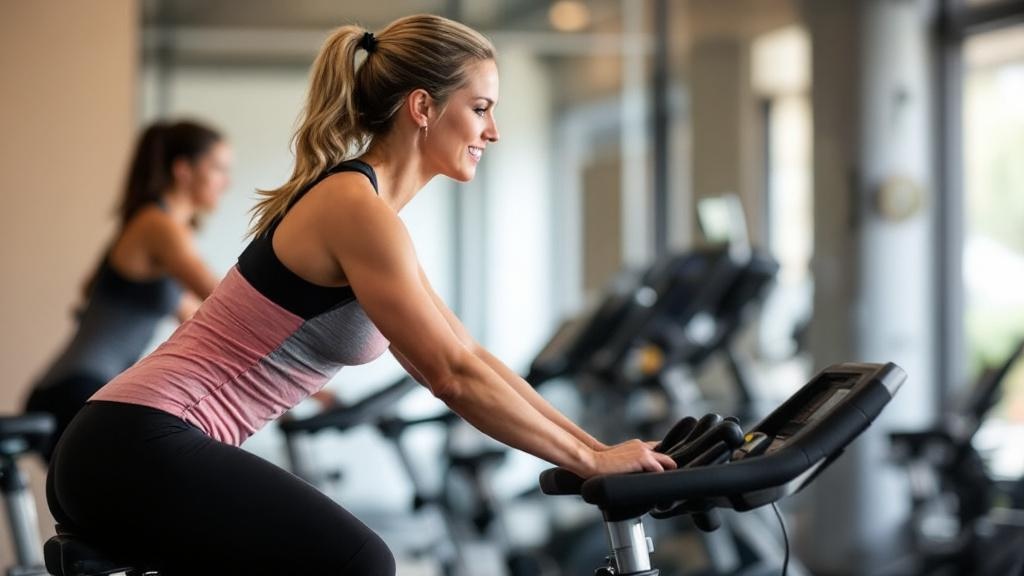
Why it works: Steady-state cardio burns fat without spiking stress hormones. During the luteal phase, your body preferentially uses fat for fuel, making moderate-intensity cardio incredibly effective for body composition changes.
The approach: Maintain 60-70% of your maximum heart rate—you should be able to hold a conversation but feel like you’re working. This intensity zone maximizes fat burning while supporting hormone balance.
Walking delivers powerful results with zero equipment needed. Aim for 30-45 minutes at a conversational pace, ideally outdoors for the added mental health benefits of nature exposure. You’re burning calories, reducing stress, and clearing your mind.
Swimming offers a low-impact, full-body workout that reduces inflammation and feels amazing when you’re bloated or uncomfortable. The water supports your joints while providing resistance that tones muscles. It’s also cooling, which helps if you’re experiencing perimenopause-related temperature fluctuations.
Cycling—whether stationary or outdoor—is gentle on joints while maintaining cardiovascular health and leg strength. You control the intensity easily, making it adaptable to your daily energy levels.
Pro tip: Your luteal phase metabolism is primed to use fat for fuel. Steady-state cardio during this time is remarkably effective for fat loss without the cortisol spike of high-intensity intervals.
5. Resistance Band Training
Why it works: Resistance bands provide joint-friendly strength building that’s perfect for home workouts. The constant tension throughout each movement sculpts muscles without the impact stress of free weights. You get effective strength training that protects aging joints.
The approach: Constant tension that challenges muscles through their full range of motion. Bands create progressive resistance—the stretch increases difficulty, making every rep count.
Eight essential exercises cover your entire body: banded squats (targets quads, glutes, and core), rows (strengthens back and improves posture), chest press (tones chest and arms), lateral raises (sculpts shoulders), glute bridges (builds posterior chain), bicep curls (defines arms), tricep extensions (tones upper arms), and pallof press (builds anti-rotation core strength).
Perform 2-3 sets of 12-15 reps for each exercise. The higher rep range with moderate resistance builds muscular endurance and creates lean, toned muscle definition.
Resistance bands are affordable (a quality set costs $20-40), portable (throw them in your suitcase for travel), and require no gym membership. You eliminate barriers to consistency.
Pro tip: This workout is ideal for busy professionals who need effective 20-minute sessions at home and stay-at-home parents who need flexibility to exercise whenever time allows. No excuses—just results.
6. Gentle HIIT (Early Luteal Only)
Why it works: Short bursts of higher intensity maintain metabolic benefits and cardiovascular fitness without the excessive cortisol production of traditional HIIT. You get the efficiency of interval training adapted for your hormonal reality.
The approach: Modified intervals with longer recovery periods. Work for 20-30 seconds at moderate-high intensity, then rest for 40-60 seconds. This ratio allows adequate recovery while maintaining training effect.
Choose exercises like bodyweight squats, modified burpees (step back instead of jumping), step-ups, and modified mountain climbers. Each movement is adaptable to your fitness level and energy.
Keep total workout time to 15-20 minutes maximum. You’re not trying to destroy yourself—you’re maintaining fitness efficiently.
Important limitation: Only perform gentle HIIT during days 15-21 of your cycle (early luteal phase). After day 21, switch to gentler workouts as progesterone peaks and then drops. Your body simply can’t handle the stress as effectively in late luteal phase.
Pro tip: Listen to your body above all else. If gentle HIIT feels too hard, it probably is. There’s no prize for pushing through—only increased cortisol and delayed recovery. Honor the signal and choose a gentler option.
7. Restorative Yoga and Mobility Work (Late Luteal Phase)
Why it works: Restorative yoga provides active recovery that prevents stiffness while honoring lower energy levels. You’re maintaining flexibility, reducing inflammation, and supporting hormone balance through gentle movement and breathwork.
The approach: Gentle movement that supports your body’s natural hormone fluctuations. Focus on hip openers (releases tension and improves circulation), spinal twists (aids digestion and detoxification), forward folds (calms nervous system), and supported poses using props.
Duration of 20-30 minutes is sufficient. You’re not trying to burn calories—you’re supporting recovery and preparing your body for menstruation.
The benefits extend beyond the mat: reduced menstrual cramping, improved sleep quality (crucial when hormones disrupt rest), lower stress and anxiety levels, and better body awareness. You’re practicing powerful preventive care.
Pro tip: This isn’t “doing nothing” or being lazy. Restorative movement is a sophisticated training tool that prevents injury, supports hormone balance, and maintains the consistency that delivers long-term results. You’re being smart, not weak.
Creating Your Personalized Luteal Phase Workout Schedule

Week 1 of Luteal Phase (Days 15-21): Moderate Intensity
Your early luteal phase supports moderate-intensity training. Here’s a sample weekly schedule combining the workouts that match your hormonal capacity:
Monday: Strength training with moderate weights (30 minutes). Focus on compound movements that build full-body strength.
Tuesday: Power yoga (40 minutes). Flow through sequences that build heat and tone muscles while supporting lymphatic drainage.
Wednesday: Steady-state cardio (35 minutes). Choose walking, swimming, or cycling based on what feels good today.
Thursday: Resistance band training (25 minutes). Hit all major muscle groups with joint-friendly resistance.
Friday: Gentle HIIT (15-20 minutes). Short, efficient intervals that maintain metabolic benefits.
Weekend: Active rest with power yoga (30 minutes) or a leisurely walk. Listen to your body and adjust intensity based on energy levels.
The key is adjusting based on daily energy. Some days you’ll feel amazing and can push slightly harder. Other days, you’ll need to dial back. Both responses are perfectly normal and acceptable.
Week 2 of Luteal Phase (Days 22-28): Gentle Intensity
As you transition into late luteal phase, gradually reduce intensity. Your body is preparing for menstruation, and lower-intensity movement serves you better.
Monday: Pilates or barre (30 minutes). Small, controlled movements that maintain strength without stress.
Tuesday: Walking or swimming (30 minutes). Gentle cardio that supports fat burning without cortisol spikes.
Wednesday: Restorative yoga (25 minutes). Deep stretching and breathwork that calms your nervous system.
Thursday: Light resistance band work (20 minutes). Maintain muscle engagement with reduced volume.
Friday: Gentle stretching or mobility work (20 minutes). Focus on areas that feel tight or uncomfortable.
Weekend: Rest or easy walking. Honor your body’s need for recovery.
Signs you need to dial back further include persistent fatigue, increased bloating or discomfort, mood disruption from exercise, or workouts that leave you feeling depleted rather than energized. There’s no shame in choosing rest—it’s the intelligent choice.
Making It Work with Your Busy Life
Time-saving strategies make consistency achievable. Twenty-minute workouts deliver results when you match intensity to your hormonal phase. You don’t need hour-long sessions to maintain fitness.
Home workouts eliminate commute time and gym intimidation. With minimal equipment—dumbbells, resistance bands, and a yoga mat—you have everything needed for effective training.
When you can’t follow the “perfect” schedule, adapt intelligently. Miss a workout? Don’t try to make it up by doubling tomorrow’s intensity. Simply continue with the planned schedule. Consistency over time matters more than perfection.
For irregular cycles during perimenopause, track your symptoms rather than calendar days. When you notice bloating, cravings, or energy dips, shift to gentler workouts regardless of where you are in your cycle. Your body’s signals trump the calendar.
Nutrition and Recovery Tips to Maximize Your Luteal Phase Results
Eating to Support Your Workouts
Your caloric needs increase by 100-300 calories during the luteal phase due to elevated metabolism. Honor this by eating slightly more, focusing on nutrient-dense foods that support hormone production and reduce inflammation.
Best foods for this phase include complex carbohydrates (sweet potatoes, quinoa, oats) that stabilize blood sugar and reduce cravings, magnesium-rich foods (dark leafy greens, pumpkin seeds, dark chocolate) that reduce cramping and improve sleep, and B vitamin sources (eggs, salmon, chickpeas) that support energy production and mood regulation.
Managing cravings without derailing progress requires understanding they’re hormonally driven, not character flaws. Satisfy chocolate cravings with small amounts of dark chocolate (70% cacao or higher). Address carb cravings with whole-food sources rather than processed options. Your body is communicating real needs.
Hydration becomes even more important during the luteal phase. Drink at least 8-10 glasses of water daily to combat bloating (counterintuitive but true—water retention decreases when you’re well-hydrated) and support workout performance and recovery.
Recovery Is Where the Magic Happens
Sleep quality matters more during the luteal phase when progesterone can disrupt rest. Prioritize 7-9 hours nightly, create a cool, dark sleep environment, and establish a consistent bedtime routine. Your body repairs and balances hormones during deep sleep.
Stress management techniques directly impact hormone balance. Practice deep breathing exercises, spend time in nature, limit overcommitment, and say no to non-essential obligations. High stress during the luteal phase amplifies negative symptoms and undermines your workout results.
Your body is remarkably intelligent. When you honor its rhythms rather than fight them, you unlock sustainable fitness that serves you for decades. The workouts I’ve shared aren’t about limitation—they’re about optimization. You’re not doing less; you’re doing what’s most effective for your unique biology.
Transform Your Fitness by Working With Your Body
The seven luteal phase workouts I’ve shared give you a complete toolkit for maintaining strength, managing symptoms, and achieving sustainable results after 40. You now understand why some weeks feel effortless while others feel impossible—and more importantly, how to work with those fluctuations instead of against them.
Cycle-synced training isn’t a trend or gimmick. It’s science-backed strategy that honors your hormonal reality. When you match exercise intensity to your body’s capacity, you reduce injury risk, balance hormones, improve energy, and achieve the consistent results that have felt frustratingly elusive.
Start by tracking your cycle and symptoms for one month. Notice when energy peaks and dips. Experiment with the workouts I’ve recommended, paying attention to how your body responds. You’ll quickly discover your personal patterns.
Remember: lower intensity during the luteal phase doesn’t mean less effective. You’re working smarter, not harder. You’re building sustainable fitness that protects your joints, supports hormone balance, and serves you through perimenopause and beyond.
The fitness industry has sold you the wrong approach for too long. You don’t need to push harder or do more. You need to align your training with your biology. That’s the secret to transforming your fitness after 40.
Ready to stop fighting your body and start working with it? Choose one workout from this article and try it this week during your luteal phase. Notice how you feel. Pay attention to your energy, your mood, your recovery. Your body will tell you everything you need to know.
You’ve got this. Your hormones aren’t your enemy—they’re your guide to the most effective training of your life.