10 Best Kettlebell Exercises for Women: Transform Your Body With This Complete Full-Body
You’re busy. Between work deadlines, family commitments, and trying to maintain some semblance of a social life, finding time for the gym feels impossible. But here’s the truth: you don’t need hours at the gym to build a strong, toned body. You need one simple tool and 20-30 minutes of focused effort.
Enter the kettlebell—the ultimate fitness tool that’s been transforming women’s bodies for decades. This cast-iron powerhouse combines cardio and strength training into efficient, results-driven workouts that fit your schedule, not the other way around.
The science backs this up. Research shows kettlebell training can burn up to 20 calories per minute while building lean muscle and improving functional fitness. That’s more than most traditional cardio workouts, and you’re building strength at the same time.
What makes kettlebells different from dumbbells? The offset weight distribution forces your entire body to engage with every movement. Your core works overtime to stabilize. Your heart rate spikes. Your muscles activate in ways that mirror real-life movements—picking up groceries, lifting kids, carrying luggage.
This guide is designed for you—whether you’re a beginner just starting your fitness journey or an intermediate exerciser looking to level up your home workouts. You’ll discover the most effective full-body and core kettlebell exercises, complete with proper form tips, common mistakes to avoid, and actionable workout plans you can start today.
By the end of this article, you’ll have a complete roadmap to building lean muscle, sculpting your core, and transforming your fitness—all from the comfort of your home. No gym membership required. No complicated equipment. Just you, a kettlebell, and the commitment to show up for yourself.
Why Kettlebells Are a Game-Changer for Women’s Fitness
 I. Introduction
The Unique Benefits of Kettlebell Training
Kettlebells aren’t just another fitness trend—they’re a proven training tool that delivers results traditional equipment can’t match. Here’s what makes them so powerful.
The offset weight distribution creates a unique challenge. Unlike dumbbells where the weight is balanced in your hand, a kettlebell’s center of mass extends beyond your grip. This means every exercise requires greater stabilization, engaging more muscle groups simultaneously. Your core fires constantly to keep you balanced. Your stabilizer muscles work overtime. You’re not just moving weight—you’re controlling it through space.
This translates to functional strength that improves your daily life. Carrying groceries becomes easier. Playing with your kids doesn’t leave you exhausted. You move through your day with more energy and confidence.
Let’s address the elephant in the room: “Won’t lifting weights make me bulky?” No. This myth needs to die. Women don’t have the testosterone levels required to build bulky muscle mass without extreme effort and specific training protocols. What kettlebells actually do is build lean, toned muscle that creates definition and strength. You’ll look athletic, not bulky. Strong, not masculine. Confident, not intimidated.
Perfect for Your Busy Lifestyle
 III. Essential Full-Body Kettlebell Exercises
Time is your most valuable resource. Kettlebell training respects that.
One kettlebell replaces an entire rack of dumbbells. You can store it in a closet, under your bed, or in a corner of your living room. No dedicated home gym required. No expensive equipment taking up space.
Full-body workouts take 20-30 minutes. That’s it. You can squeeze in an effective session before work, during your lunch break, or after the kids go to bed. The efficiency is unmatched—you’re combining cardio and strength training in every movement, maximizing calorie burn and muscle building simultaneously.
The cost-effectiveness is significant. A quality kettlebell costs $30-$80 and lasts forever. Compare that to gym memberships running $50-$200 per month. Your investment pays for itself in weeks.
What the Science Says
 IV. Core-Focused Kettlebell Exercises That Transform Your Midsection
Research from the American Council on Exercise found that kettlebell workouts can burn approximately 20.2 calories per minute. That’s 400 calories in a 20-minute session—comparable to running at a 6-minute-mile pace, except you’re building strength while you burn.
The metabolic benefits extend beyond your workout. High-intensity kettlebell training creates an “afterburn effect” (technically called excess post-exercise oxygen consumption, or EPOC). Your body continues burning calories at an elevated rate for hours after you finish exercising. You’re literally burning fat while sitting on the couch recovering.
Functional fitness improvements are measurable and real. Studies show kettlebell training enhances core strength, improves posture, increases grip strength, and develops explosive power. These aren’t vanity metrics—they’re improvements that make everyday activities easier and reduce injury risk.
Essential Full-Body Kettlebell Exercises
 V. Creating Your Effective Kettlebell Workout Plan
Kettlebell Swing (The Foundation Movement)
 VI. Conclusion
The kettlebell swing is the cornerstone of effective kettlebell training. Master this movement, and you’ll build explosive power, strengthen your posterior chain, and torch calories like nothing else.
Proper Form Breakdown:
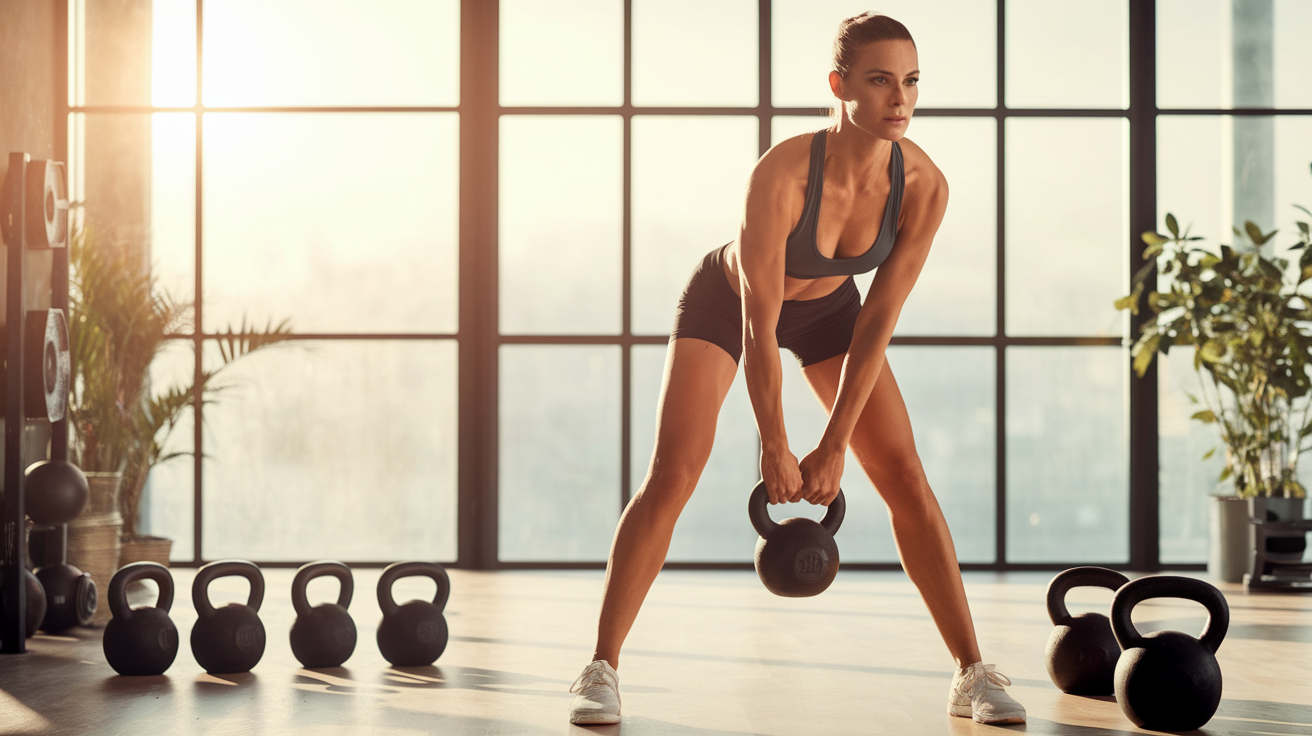
Stand with feet shoulder-width apart, kettlebell positioned about a foot in front of you. Hinge at your hips (not your knees—this isn’t a squat), grab the kettlebell with both hands, and hike it back between your legs like you’re hiking a football. Drive through your heels and explosively thrust your hips forward. The power comes from your glutes and hamstrings, not your arms. Your arms are simply ropes holding the weight. The kettlebell should float to chest height at the top of the swing.
Muscles Worked:
This movement is a full-body powerhouse. Your glutes and hamstrings generate the explosive power. Your core stabilizes throughout the entire movement. Your shoulders and back control the weight. Even your grip strength improves with every rep.
Common Mistakes to Avoid:
Don’t squat the swing—this is a hip hinge movement. Don’t pull with your arms—let hip drive create the momentum. Don’t hyperextend your back at the top—finish with a strong plank position. Keep your neck neutral—don’t crane your head to watch the kettlebell.
Modifications and Progressions:
Beginners should start with a lighter weight and focus on the hip hinge pattern. Practice the movement with a towel or light dumbbell first if needed. Once you’ve mastered the two-handed swing, progress to single-arm swings for an increased core challenge and unilateral strength development.
Goblet Squat (Build Strong Legs & Core)
The goblet squat is safer and more accessible than barbell squats, making it perfect for building lower body strength at home.
Step-by-Step Technique:
Hold the kettlebell by the horns (the handles) at chest height, close to your body. Stand with feet slightly wider than shoulder-width, toes pointed slightly outward. Keeping your chest proud and core engaged, sit back and down as if sitting in a chair. Your elbows should track between your knees at the bottom. Drive through your heels to return to standing, squeezing your glutes at the top.
Why It’s More Effective:
The front-loaded weight naturally keeps your torso upright, reducing lower back strain. The kettlebell’s position forces your core to engage throughout the movement. You can’t cheat the form—if you lean forward, you’ll feel it immediately.
Core Engagement:
Your abs work constantly to prevent you from tipping forward. This anti-flexion challenge builds deep core strength that traditional ab exercises miss.
Variations:
Try sumo goblet squats with a wider stance to target inner thighs. Add pulse squats at the bottom for increased time under tension. Progress to single-leg variations once you’ve built sufficient strength.
Kettlebell Deadlift (Sculpt Your Posterior Chain)
The kettlebell deadlift teaches proper hip hinge mechanics while building serious strength in your glutes, hamstrings, and lower back.
Perfect Form for Back Safety:
Place the kettlebell between your feet. Hinge at your hips, pushing them back while maintaining a neutral spine. Grip the kettlebell handle with both hands. Drive through your heels, engaging your glutes and hamstrings to stand up. The kettlebell should stay close to your body throughout the movement. At the top, squeeze your glutes and stand tall—don’t hyperextend your back.
Target Muscles:
Your glutes and hamstrings do the heavy lifting. Your lower back stabilizes. Your core prevents spinal flexion. Your grip strength improves with every rep.
Functional Movement Benefits:
This movement pattern translates directly to picking things up from the floor safely. You’re training your body to move properly in daily life, reducing injury risk and improving overall movement quality.
Single-Leg Deadlift Variation:
Once you’ve mastered the basic deadlift, progress to single-leg variations. Stand on one leg, holding the kettlebell in the opposite hand. Hinge forward, extending your free leg behind you for balance. This challenges your balance, stability, and unilateral strength while targeting the same muscle groups.
Kettlebell Clean and Press (Total Body Power)
This compound movement combines lower body power, core stability, and upper body strength into one efficient exercise.
Breaking Down the Movement:
Start with the kettlebell between your feet. Clean the weight to rack position: explosively pull the kettlebell up, rotating your hand underneath so it rests against your forearm at shoulder height. From here, press the kettlebell overhead by driving through your legs slightly and pressing your arm straight up. Lower with control back to rack position, then to the floor.
Full-Body Engagement:
Your legs initiate the clean with explosive power. Your core stabilizes as the weight moves. Your shoulders and arms press the weight overhead. Your grip, forearms, and back work throughout the entire movement.
Building Explosive Strength:
The clean portion develops power and coordination. The press builds shoulder strength and stability. Combined, you’re training your body to generate and control force—essential for athletic performance and functional fitness.
Beginner Simplification:
If the full clean and press feels overwhelming, start with a single-arm press from rack position. Focus on proper overhead pressing mechanics before adding the clean component. Once comfortable, add the clean movement to complete the full exercise.
Core-Focused Kettlebell Exercises That Transform Your Midsection
Kettlebell Russian Twist (Oblique Sculptor)
Russian twists target your obliques—the muscles responsible for rotational strength and that coveted defined waistline.
Proper Positioning:
Sit on the floor with knees bent, feet elevated or on the ground (depending on your fitness level). Hold the kettlebell by the horns at chest height. Lean back slightly, engaging your core to maintain a neutral spine. Rotate your torso from side to side, moving the kettlebell from hip to hip. The movement comes from your core rotation, not just your arms.
Targeting Obliques Effectively:
Focus on controlled rotation. Don’t just swing your arms—actually twist your torso. Your obliques should feel the burn with each rotation. Keep your chest proud and avoid rounding your spine forward.
Tempo Tips:
Slow, controlled movements build more muscle engagement than fast, sloppy reps. Try a 2-second rotation to each side. The time under tension creates better results than rushing through high rep counts.
Beginner Modification:
Keep your feet planted on the floor for stability. As you build core strength, progress to elevating your feet, which increases the challenge significantly. Start with a lighter weight or even just your hands clasped together until you master the movement pattern.
Turkish Get-Up (The Ultimate Core Stabilizer)
The Turkish get-up looks complicated, but it’s one of the most effective full-body exercises you can do. This movement builds total-body stability, functional strength, and bulletproof core control.
Step-by-Step Progression:
Lie on your back with the kettlebell in your right hand, arm extended straight up. Bend your right knee, foot flat on the floor. Roll onto your left elbow, then your left hand. Drive through your right foot to lift your hips, sweeping your left leg back into a kneeling position. From here, stand up while keeping the kettlebell stable overhead. Reverse the movement with control to return to the starting position.
Why This Exercise Is Proven Gold:
The Turkish get-up trains your body to stabilize under load through multiple planes of motion. You’re moving from lying down to standing while controlling weight overhead—this requires every muscle in your body to work together. It builds coordination, stability, and functional strength that transfers to everything you do.
Breaking It Down:
Don’t rush to do the full movement. Master each phase separately. Practice the roll to elbow. Then add the press to hand. Then the hip bridge. Then the leg sweep. Once each component feels solid, string them together.
Deep Core Activation:
This exercise strengthens your transverse abdominis and deep stabilizers that traditional crunches can’t reach. These muscles are responsible for spinal stability and injury prevention.
Kettlebell Windmill (Flexibility Meets Core Strength)
The windmill is an advanced movement that builds core stability, shoulder mobility, and oblique strength simultaneously.
Detailed Form Cues:
Press the kettlebell overhead with your right arm. Turn your feet 45 degrees to the left. Keep your eyes on the kettlebell throughout the movement. Push your right hip out to the side as you hinge, reaching your left hand toward your left foot. Your right arm stays locked overhead. Return to standing by driving through your right hip.
Benefits:
This movement improves shoulder stability and mobility. It strengthens your obliques through a full range of motion. It enhances hip flexibility and core control. The coordination required builds body awareness and movement quality.
Prerequisites:
Master the basic hip hinge first. Build shoulder stability with overhead presses. Develop core strength with planks and side planks. The windmill combines all these elements, so ensure you have the foundational strength before attempting it.
Easier Regression:
Try the bent-knee windmill first. Keep your knees slightly bent throughout the movement, which reduces the flexibility requirement and makes the exercise more accessible while you build strength and mobility.
Plank Pull-Through (Dynamic Core Challenge)
This anti-rotation exercise builds core stability while adding a dynamic challenge that traditional planks lack.
How It Works:
Start in a high plank position with a kettlebell positioned just outside your right hand. Maintain a strong plank while reaching your left hand under your body to grab the kettlebell and pull it to the left side. Return to plank position. Repeat on the other side. Your hips should stay square to the floor throughout—don’t rotate.
Building a Rock-Solid Midsection:
The challenge comes from resisting rotation. Your core works overtime to keep your hips stable while your arms move. This anti-rotation strength translates to better posture, reduced back pain, and improved athletic performance.
Variations:
Make it easier by widening your stance or performing on your knees. Increase difficulty by using a heavier kettlebell or narrowing your stance. Add a push-up between each pull-through for an intense full-body challenge.
Maintaining Tension:
Focus on keeping your entire body rigid. Squeeze your glutes. Brace your core like someone’s about to punch you in the stomach. Don’t let your hips sag or pike up. Quality over quantity—10 perfect reps beat 30 sloppy ones.
Creating Your Effective Kettlebell Workout Plan
Choosing the Right Kettlebell Weight
Starting with the appropriate weight is crucial for building strength safely and effectively.
Recommended Starting Weights:
For beginners, start with 8-12kg (18-26lbs) for two-handed exercises like swings and goblet squats. For single-arm movements and overhead presses, consider starting with 6-8kg (13-18lbs). These weights allow you to master proper form while still providing sufficient challenge.
When to Progress:
You’re ready for a heavier kettlebell when you can complete all prescribed reps with perfect form and the last few reps don’t feel challenging. If you can easily do 15-20 swings without fatigue, it’s time to go heavier. Progressive overload—gradually increasing the challenge—drives results.
Why Multiple Weights Optimize Results:
Having 2-3 different kettlebell weights allows you to match the resistance to the exercise. You’ll use heavier weights for lower body movements like swings and squats, medium weights for rows and single-arm work, and lighter weights for overhead presses and core exercises. This variety ensures every exercise provides appropriate challenge.
Sample Workout Routines
Beginner Full-Body Circuit (20 minutes, 2-3x per week):
Warm up for 5 minutes with bodyweight movements. Then complete 3 rounds of:
- Kettlebell swings: 15 reps
- Goblet squats: 12 reps
- Kettlebell deadlifts: 10 reps
- Russian twists: 20 reps (10 per side)
- Rest 60-90 seconds between rounds
This circuit targets your entire body, combining strength and cardio for efficient calorie burn and muscle building.
Intermediate Strength & Conditioning (30 minutes, 3-4x per week):
Warm up for 5 minutes. Complete 4 rounds of:
- Kettlebell swings: 20 reps
- Clean and press: 8 reps per arm
- Single-leg deadlifts: 10 reps per leg
- Plank pull-throughs: 8 reps per side
- Turkish get-ups: 2 reps per side
- Rest 45-60 seconds between rounds
This advanced routine builds serious strength while maintaining cardiovascular challenge.
Core-Focused Finisher (10 minutes):
Add this to any workout for extra core work. Complete 3 rounds with minimal rest:
- Russian twists: 30 reps
- Plank pull-throughs: 10 reps per side
- Windmills: 5 reps per side (or substitute side planks if not ready)
Programming Tips for Maximum Results
Weekly Structure:
Schedule 2-4 kettlebell sessions per week, depending on your fitness level and recovery capacity. Beginners should start with 2-3 sessions, allowing at least one rest day between workouts. Intermediate exercisers can handle 3-4 sessions with proper recovery protocols.
Balancing Intensity and Recovery:
You build strength during recovery, not during workouts. Listen to your body. If you’re excessively sore or fatigued, take an extra rest day. Pushing through exhaustion leads to injury and burnout, not results.
Tracking Progress:
Keep a simple workout journal. Record the weight used, reps completed, and how you felt. This data reveals patterns and progress you might otherwise miss. Celebrate when you increase weight, add reps, or complete a workout that previously felt impossible.
Rest and Recovery:
Recovery isn’t laziness—it’s strategic. Your muscles repair and grow stronger during rest periods. Get adequate sleep (7-9 hours). Stay hydrated. Eat sufficient protein to support muscle recovery. Consider active recovery like walking or gentle yoga on rest days.
Safety and Form Fundamentals
Essential Warm-Up:
Never start kettlebell training cold. Spend 5-10 minutes warming up with dynamic movements: arm circles, leg swings, hip circles, bodyweight squats, and light cardio. This increases blood flow, improves range of motion, and prepares your nervous system for loaded movements.
Form Before Weight or Speed:
Perfect form with a lighter weight builds better results than sloppy form with heavy weight. Master the movement pattern first. Add weight gradually. Never sacrifice form for ego.
Listening to Your Body:
Learn the difference between productive discomfort and pain. Muscle burn and fatigue are normal. Sharp pain, joint discomfort, or shooting sensations are warning signs. Stop immediately if something feels wrong.
When to Seek Professional Guidance:
Consider hiring a certified kettlebell instructor for 1-2 sessions to check your form, especially for complex movements like Turkish get-ups and cleans. This investment prevents injury and accelerates your progress by ensuring you’re training correctly from the start.
Your Kettlebell Journey Starts Now
You now have everything you need to transform your fitness with kettlebell training. Let’s recap why this approach works so well for busy women seeking real results.
Kettlebells deliver efficient, effective workouts that fit your schedule. Twenty to thirty minutes of focused training builds lean muscle, burns serious calories, and strengthens your entire body. The science-backed benefits—improved functional fitness, increased calorie burn, and enhanced metabolic rate—make kettlebell training one of the most powerful tools in your fitness arsenal.
The exercises covered in this guide target your full body and core: kettlebell swings build explosive power and strengthen your posterior chain. Goblet squats and deadlifts sculpt strong legs and glutes. Clean and presses develop total-body strength and coordination. Russian twists, Turkish get-ups, windmills, and plank pull-throughs create a strong, stable core that improves everything you do.
Here’s the empowering truth: consistency beats perfection every single time. You don’t need perfect form, the perfect kettlebell, or the perfect schedule. You need to start where you are with what you have and show up consistently. Progress comes from accumulated effort, not perfect circumstances.
Action Steps to Take Today
Stop planning and start doing. Choose 3-4 exercises from this guide and try them in your next workout. If you don’t own a kettlebell yet, order one today—it’s an investment in yourself that pays dividends for years. If budget is tight, start with one medium-weight kettlebell (8-12kg) that works for multiple exercises.
Commit to 2-3 sessions per week for the next four weeks. Put them in your calendar like important appointments—because they are. You’re making an appointment with your health, strength, and confidence.
Track your progress. Write down what you did, how it felt, and celebrate small wins. Did you complete all your reps today? Celebrate. Did you use better form than last week? Celebrate. Did you show up even though you didn’t feel like it? That’s the biggest win of all.
Final Motivation
You have everything you need to transform your fitness at home. You don’t need a fancy gym, expensive equipment, or hours of free time. You need one kettlebell, 20-30 minutes, and the commitment to show up for yourself consistently.
Results don’t come from perfect equipment or ideal conditions. They come from showing up imperfectly but consistently. From doing the work even when motivation is low. From trusting the process and giving your body time to adapt and grow stronger.
Your stronger, more confident self isn’t some distant fantasy. She’s just consistent effort away. She’s built through accumulated workouts, one rep at a time, one session at a time, one week at a time.
The kettlebell is waiting. Your workout is planned. The only question remaining is: when will you start?
Today is the perfect day. Right now is the perfect time. You’ve got this.