5 Muscle-Building Moves for Women Over 40 That Work Fast
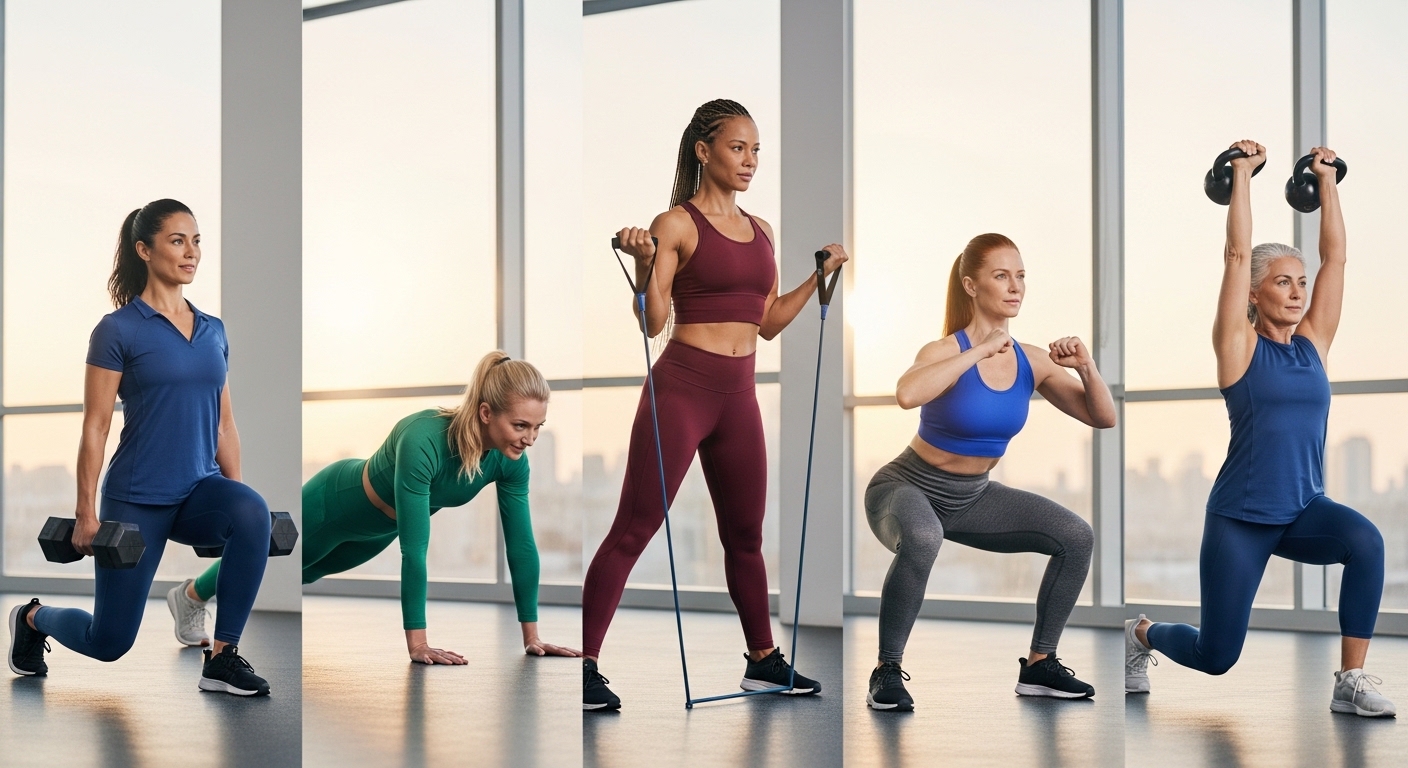
You’ve noticed it, haven’t you? The jeans that fit perfectly last year feel different. Your arms don’t look quite as defined in sleeveless tops. And no matter how much cardio you do, your body seems to be working against you instead of with you.
Here’s what nobody tells you: after 40, your body plays by different rules. The workouts that sculpted your body in your 20s and 30s don’t deliver the same results anymore. But here’s the powerful truth—you can build muscle faster and more effectively than you think. You just need the right approach.
I’m going to share five proven muscle-building moves that target the specific challenges women over 40 face. These aren’t complicated gym exercises that require fancy equipment. These are efficient, science-backed movements you can do at home with minimal equipment. And they work fast because they’re designed specifically for your body’s current needs.
The women who commit to these exercises three times per week see visible changes in 4-6 weeks. Tighter arms. Sculpted legs. A metabolism that finally starts working with you instead of against you. You’re about to discover how to transform your body using movements that respect where you are right now while pushing you toward where you want to be.
Why Women Over 40 Need a Different Muscle-Building Approach

The Hormonal Shift That Changes Everything
Let’s talk about what’s really happening inside your body. After 40, estrogen and testosterone levels decline significantly. These aren’t just reproductive hormones—they’re powerful muscle-building and fat-burning hormones. When they drop, your body loses muscle mass at an accelerated rate, roughly 3-8% per decade after 30, with that rate increasing after 40.
This hormonal shift directly impacts where your body stores fat. You’ve probably noticed fat accumulating around your midsection, even if you haven’t changed your diet. That’s estrogen decline redirecting fat storage from your hips and thighs to your abdomen. Meanwhile, declining testosterone makes it harder to build and maintain lean muscle mass.
The workouts that worked in your 20s and 30s don’t deliver the same results anymore because your hormonal environment has fundamentally changed. That hour of steady-state cardio? It’s not building the muscle you need to boost your metabolism. Those light weights with high reps? They’re not creating enough stimulus to trigger muscle growth in your new hormonal reality.
Here’s the powerful connection: muscle mass directly drives your metabolism. Every pound of muscle burns approximately 6 calories per day at rest, while fat burns only 2 calories. Build more muscle, and you create a metabolic engine that burns calories 24/7. This is why muscle-building becomes non-negotiable after 40—it’s the most effective way to combat metabolic slowdown.
The Science Behind Fast-Twitch Muscle Fibers
Your muscles contain two primary fiber types: slow-twitch and fast-twitch. Slow-twitch fibers are endurance-oriented, used for activities like walking or jogging. Fast-twitch fibers are power-oriented, responsible for explosive movements and strength.
Here’s what matters: fast-twitch muscle fibers decline significantly faster than slow-twitch fibers as you age. Research shows you can lose up to 40% of your fast-twitch fibers between ages 20 and 80, with accelerated loss after 40. This explains why you might feel less powerful, less steady on your feet, and less able to catch yourself if you stumble.
Fast-twitch fibers are also more metabolically active than slow-twitch fibers. They burn more calories, respond better to strength training, and have greater growth potential. When you target these fibers specifically with resistance training, you build muscle faster and see more dramatic body composition changes.
The proven metabolic benefits of maintaining fast-twitch muscle fibers extend beyond calorie burning. These fibers improve insulin sensitivity, reduce diabetes risk, strengthen bones, and enhance functional fitness for everyday activities. Every time you lift something heavy, climb stairs quickly, or catch yourself from falling, you’re relying on fast-twitch fibers.
Why Compound Movements Are Your Secret Weapon
Compound movements are exercises that work multiple muscle groups across multiple joints simultaneously. Think squats, deadlifts, and rows. Isolation exercises work single muscle groups across single joints—like bicep curls or leg extensions.
After 40, compound movements become your secret weapon for three powerful reasons. First, time efficiency. You’re busy. You don’t have two hours to spend in a gym isolating individual muscles. Compound movements work your entire body in 30-45 minutes, delivering maximum results in minimum time.
Second, hormonal response. Compound exercises that engage large muscle groups trigger greater release of growth hormone and testosterone—the exact muscle-building hormones that decline after 40. A set of heavy squats creates a much stronger hormonal response than a set of leg extensions, even though both work your legs.
Third, functional strength. Compound movements mimic real-life activities. When you pick up groceries, you’re doing a deadlift. When you get up from a chair, you’re doing a squat. When you lift your grandchild, you’re doing a clean and press. Training these movement patterns builds strength you actually use every single day, reducing injury risk and maintaining independence as you age.
What You Need to Get Started (No Gym Required)
Minimal Equipment, Maximum Results
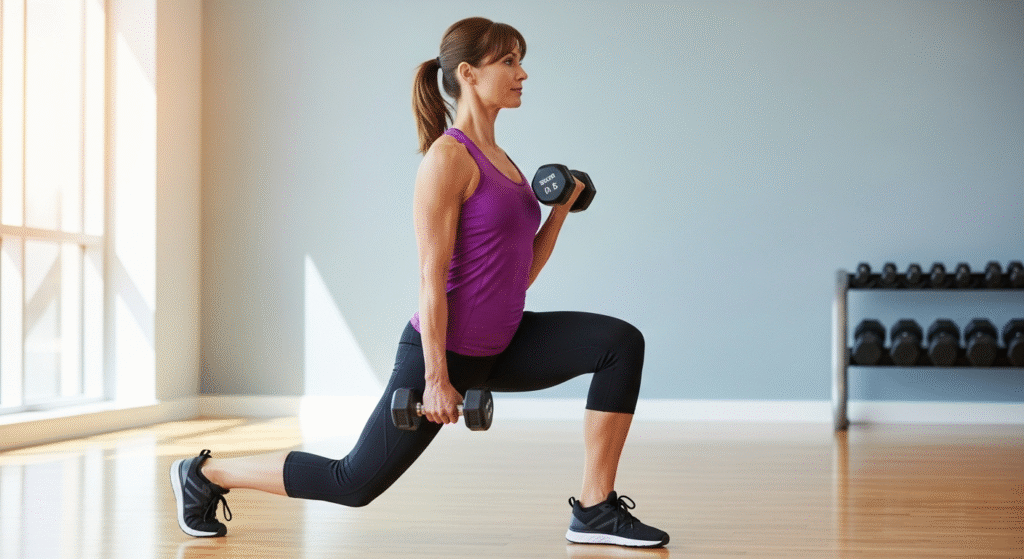
You don’t need a gym membership or expensive equipment to build serious muscle. Here’s your complete shopping list: a set of dumbbells and a resistance band. That’s it.
For dumbbells, I recommend starting with two sets. If you’re a beginner, get 5-pound and 10-pound dumbbells. If you have some strength training experience, start with 10-pound and 15-pound weights. As you progress, you’ll want to add 20-pound or 25-pound dumbbells, but don’t invest in heavier weights until you’re consistently lifting your current set for all prescribed reps with good form.
Resistance bands offer an affordable alternative or complement to dumbbells. A set of loop resistance bands with varying resistance levels costs $15-30 and provides progressive resistance for dozens of exercises. They’re perfect for travel and take up zero space.
Optional equipment that enhances your workouts: a stability ball ($15-25) adds core challenge to exercises, a yoga mat ($20-30) protects your joints during floor exercises, and a sturdy chair or bench enables additional exercise variations. Your total investment for a complete home setup ranges from $30-100—less than two months of gym membership.
This minimal equipment delivers maximum results because muscle-building isn’t about fancy machines. It’s about progressive overload—consistently challenging your muscles with increasing resistance. Whether that resistance comes from dumbbells, bands, or bodyweight doesn’t matter. What matters is showing up consistently and working hard.
Creating Your Workout Space at Home
You need approximately 6 feet by 6 feet of clear space—about the size of a small bathroom. That’s enough room to perform lunges, rows, and floor exercises without bumping into furniture. Any room in your house works: bedroom, living room, garage, or basement.
For busy schedules, the best workout times are early morning before your family wakes up, during lunch breaks if you work from home, or after kids’ bedtime. The specific time doesn’t matter—what matters is choosing a time you can consistently protect three days per week.
Set yourself up for success by laying out your equipment the night before. Put your dumbbells, mat, and workout clothes where you’ll see them first thing in the morning. This simple strategy eliminates the mental friction of “getting ready” and makes starting your workout effortless.
Eliminate common excuses before they start. “I don’t have time” becomes irrelevant when your workout takes 30 minutes in your living room. “I’m too tired” loses power when your equipment is already waiting. “The gym is too far” doesn’t apply when your gym is ten steps from your bedroom.
The Right Mindset for Building Muscle After 40
Patience is your foundation. Visible results typically appear in 4-6 weeks, with significant transformation in 12 weeks. Your body is building muscle, strengthening connective tissue, and improving neuromuscular coordination before you see external changes. Trust the process.
Consistency beats intensity every single time. Showing up three times per week with moderate effort delivers better results than one heroic workout followed by a week of soreness and avoidance. Your body builds muscle during recovery, not during workouts. Regular, sustainable training creates the consistent stimulus your muscles need to grow.
Progress over perfection. Celebrate every small win: lifting 2 more pounds than last week, completing one extra rep, feeling stronger walking up stairs. These micro-improvements compound into dramatic transformation over time. Don’t dismiss them as insignificant.
Your body is capable of incredible transformation at any age. The research is clear: women in their 40s, 50s, 60s, and beyond build muscle at similar rates to younger women when they follow effective training programs. Age is not your limitation—inconsistency is. Commit to these five moves three times per week, and you will see results.
The 5 Powerful Muscle-Building Moves That Deliver Results
Move #1: The Goblet Squat (Your Lower Body Transformer)
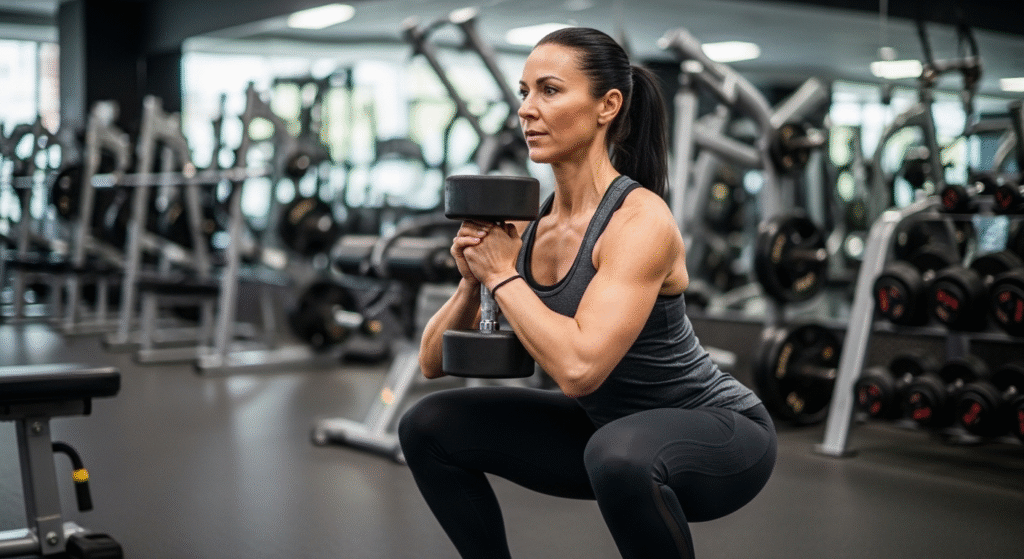
Why it works: The goblet squat targets your quads, glutes, hamstrings, and core simultaneously while improving bone density in your hips and spine—exactly where women over 40 need it most. This single movement builds the largest muscle groups in your body, triggering maximum hormonal response for muscle growth throughout your entire body.
How to perform it: Hold one dumbbell vertically at chest height, gripping the top weight with both hands like you’re holding a goblet. Stand with feet slightly wider than hip-width, toes pointed slightly outward at about 15 degrees. Keep your chest lifted and core engaged throughout the movement.
Lower down as if sitting back into a chair, keeping your weight in your heels. Your knees should track over your toes, not caving inward. Descend until your thighs are parallel to the floor, or as low as you can go while maintaining good form. The dumbbell stays at chest height throughout—don’t let it drop forward.
Drive through your heels to return to the starting position, squeezing your glutes at the top. That’s one rep. Complete 10-12 reps for 3 sets, resting 60-90 seconds between sets.
Common mistakes to avoid: Watch for knees caving inward—actively push them out in line with your toes throughout the movement. Don’t lean too far forward; keep your chest proud and torso upright. Avoid rising onto your toes; the weight should stay in your heels from start to finish.
Modifications: Beginners can use no weight or a lighter dumbbell while learning proper form, and reduce depth to whatever feels comfortable—even a quarter squat builds strength. Advanced lifters can pause at the bottom position for 3 seconds to increase time under tension, or increase weight progressively.
Why this builds muscle fast: Squats engage the largest muscle groups in your body—glutes, quads, and hamstrings—which triggers the strongest hormonal response for muscle growth. This hormonal cascade promotes muscle building throughout your entire body, not just your legs.
Move #2: The Romanian Deadlift (Your Posterior Chain Sculptor)
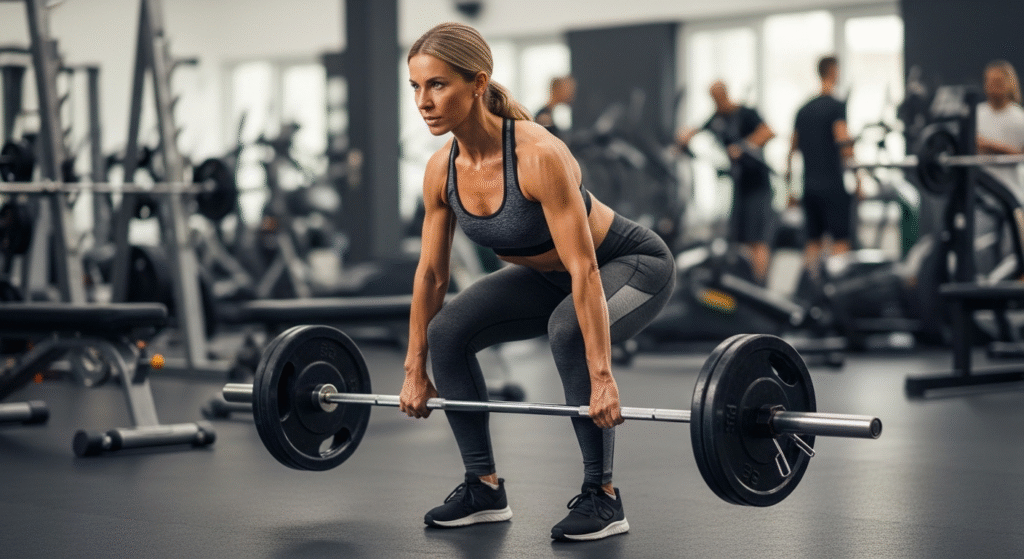
Why it works: The Romanian deadlift targets your hamstrings, glutes, lower back, and core—the posterior chain muscles where women over 40 tend to lose muscle first. This movement directly counteracts the muscle loss and postural changes that come with aging, creating a sculpted, powerful backside while strengthening your spine.
How to perform it: Hold dumbbells in front of your thighs with palms facing your body. Stand with feet hip-width apart and knees slightly bent—maintain this slight knee bend throughout the movement. This isn’t a squat, so your knees don’t bend more.
Hinge at your hips, pushing them back while keeping your back straight and core tight. Imagine closing a car door with your butt. Lower the weights along the front of your legs, keeping them close to your body, until you feel a stretch in your hamstrings. For most people, this occurs around mid-shin level.
Squeeze your glutes to return to the starting position, driving your hips forward. The movement comes from your hips, not your back. Complete 10-12 reps for 3 sets, resting 60-90 seconds between sets.
Common mistakes to avoid: Never round your back—maintain a neutral spine throughout by keeping your core engaged and chest up. Don’t bend your knees too much; this is a hip hinge, not a squat. Keep your neck neutral with your spine; looking up or down creates unnecessary strain.
Modifications: Beginners should use lighter weights and not descend as far—stop when you feel a gentle hamstring stretch. Advanced lifters can progress to single-leg Romanian deadlifts for increased balance challenge and unilateral strength, or use heavier weights.
Why this builds muscle fast: This movement directly targets the glutes and hamstrings with high muscle fiber recruitment, particularly the fast-twitch fibers that decline rapidly after 40. Plus, strengthening your posterior chain improves posture, reduces back pain, and creates the lifted, sculpted appearance you want.
Move #3: The Push-Up to Dumbbell Row (Your Upper Body Powerhouse)
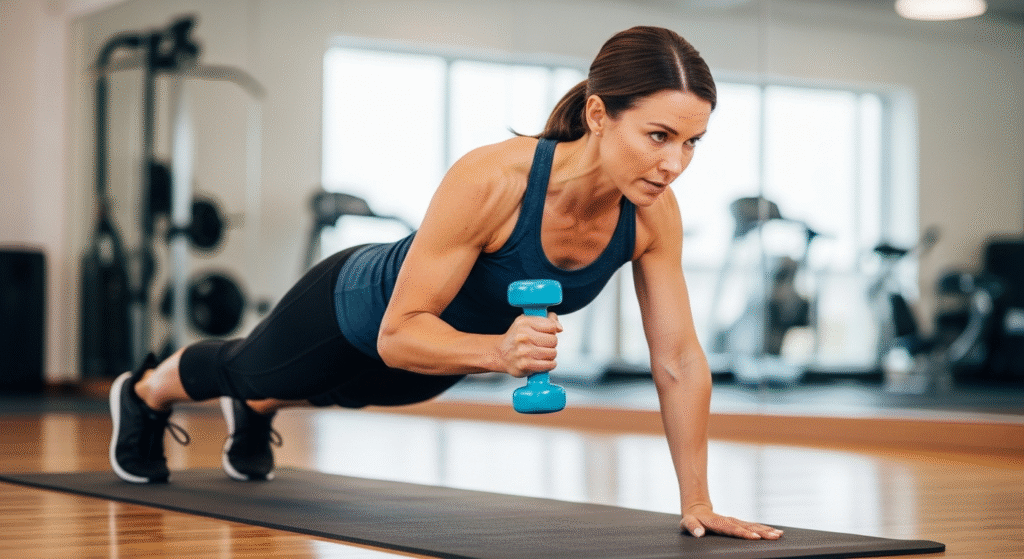
Why it works: This combination exercise works your chest, triceps, shoulders, back, and core in one powerful compound movement. You’re getting both a push and a pull exercise simultaneously, creating balanced upper body development while maximizing time efficiency.
How to perform it: Place two dumbbells on the floor shoulder-width apart. Grip the dumbbells with your hands and get into a push-up position, body forming a straight line from head to heels. Engage your core to prevent your hips from sagging.
Perform one push-up, lowering your chest toward the floor while keeping your elbows at a 45-degree angle to your body. Push back up to the starting position. At the top, row the right dumbbell to your ribcage, keeping your elbow close to your body and minimizing torso rotation. Lower the dumbbell back to the floor.
Row the left dumbbell to your ribcage, then lower it. That’s one complete rep. Complete 8-10 reps for 3 sets, resting 90 seconds between sets.
Common mistakes to avoid: Don’t let your hips sag or pike up—maintain a rigid plank position throughout. Avoid rotating your torso during the row; keep your hips square to the floor by engaging your core. During the push-up, keep your elbows at a 45-degree angle, not flared straight out to the sides.
Modifications: Beginners can perform this from their knees to reduce the load, or separate the movements—do a set of push-ups, then a set of rows. Advanced lifters can add an extra push-up between each row, or increase dumbbell weight for the rows.
Why this builds muscle fast: Working opposing muscle groups (push and pull) in the same exercise creates balanced upper body development and maximum time efficiency. The plank position engages your entire core throughout, and the combination of movements keeps your heart rate elevated for additional metabolic benefits.
Move #4: The Reverse Lunge with Bicep Curl (Your Total-Body Toner)
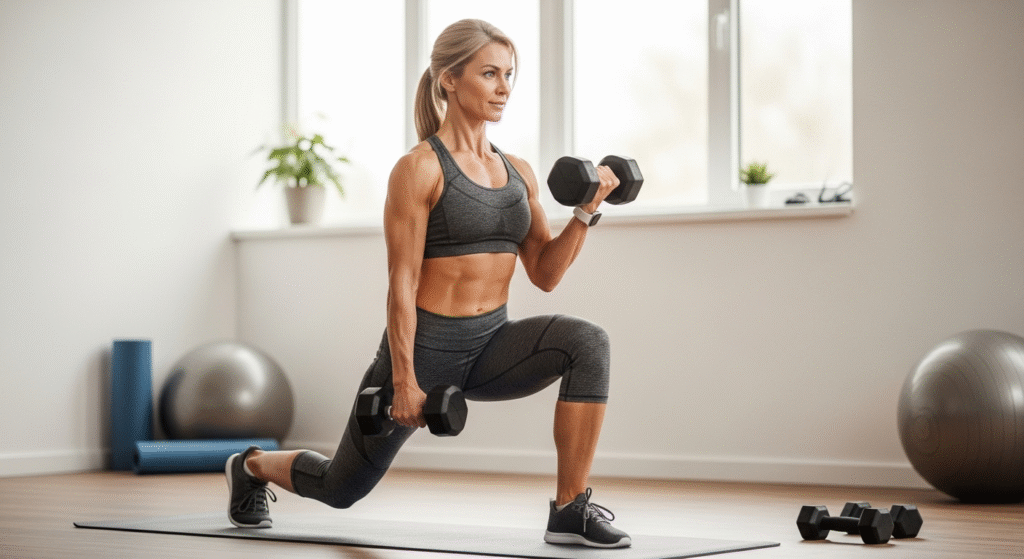
Why it works: This combination movement targets your quads, glutes, hamstrings, and biceps while challenging your balance and core stability. Unilateral training (one leg at a time) forces each side to work independently, correcting muscle imbalances that develop over time.
How to perform it: Hold dumbbells at your sides with palms facing forward. Stand with feet hip-width apart, core engaged, and chest up. Step your right foot back into a lunge position, lowering until both knees form 90-degree angles. Your front knee should be directly over your ankle, not extending past your toes.
As you descend into the lunge, curl the dumbbells to your shoulders with controlled movement—no swinging. Push through your left heel to return to the starting position while lowering the weights back to your sides. That’s one rep on your left leg.
Alternate legs, stepping back with your left foot for the next rep. Complete 10-12 reps per leg (20-24 total reps) for 3 sets, resting 60-90 seconds between sets.
Common mistakes to avoid: Don’t let your front knee extend past your toes; keep your shin vertical by sitting back slightly. Avoid leaning forward; keep your torso upright throughout the movement. Don’t use momentum to swing the weights up; curl with controlled movement, feeling your biceps work.
Modifications: Beginners can hold onto a chair or wall for balance, use lighter weights, or eliminate the bicep curl until the lunge pattern feels stable. Advanced lifters can hold the bottom lunge position for 3 seconds to increase time under tension, or add an overhead press at the top of the movement.
Why this builds muscle fast: Unilateral training forces each leg to support your full body weight, creating greater muscle activation than bilateral exercises. The balance challenge engages your core and stabilizer muscles throughout, while the bicep curl maximizes workout efficiency by training upper and lower body simultaneously.
Move #5: The Dumbbell Chest Press to Glute Bridge (Your Metabolism Igniter)
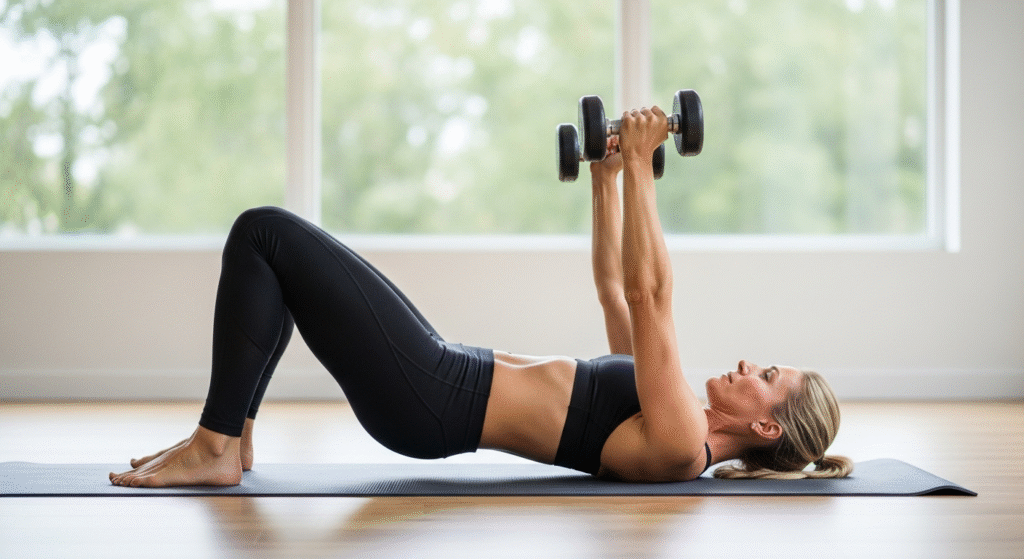
Why it works: This combination targets your chest, triceps, shoulders, glutes, and hamstrings while creating an intense metabolic demand. Performing upper body work while holding a glute bridge position forces your entire posterior chain to work constantly, building muscle and burning calories simultaneously.
How to perform it: Lie on your back with knees bent and feet flat on the floor, hip-width apart. Hold dumbbells at chest level with palms facing forward. Press your hips up into a glute bridge, creating a straight line from your knees through your hips to your shoulders. Squeeze your glutes hard to maintain this position.
While holding the bridge, press the dumbbells straight up over your chest until your arms are fully extended. Lower the dumbbells back to chest level with control. That’s one rep. Complete 10-12 reps while maintaining the bridge position, then lower your hips. Rest for 60-90 seconds. Complete 3 sets.
Common mistakes to avoid: Don’t let your hips drop during the chest press—maintain the bridge position throughout all reps by constantly squeezing your glutes. Avoid arching your lower back excessively; your core should stay engaged. Don’t let the dumbbells drift toward your face or stomach; press straight up over your chest.
Modifications: Beginners can reduce the number of reps, use lighter weights, or perform the chest press and bridge separately until they build the strength to combine them. Advanced lifters can hold the bridge position for the entire set without lowering between reps, or perform single-leg bridges for increased difficulty.
Why this builds muscle fast: This movement creates intense metabolic demand by forcing your glutes to work isometrically while your chest, shoulders, and triceps work dynamically. The constant tension on your posterior chain while pressing weight overhead recruits maximum muscle fibers and triggers significant hormonal response for muscle growth.
Your 4-Week Transformation Plan
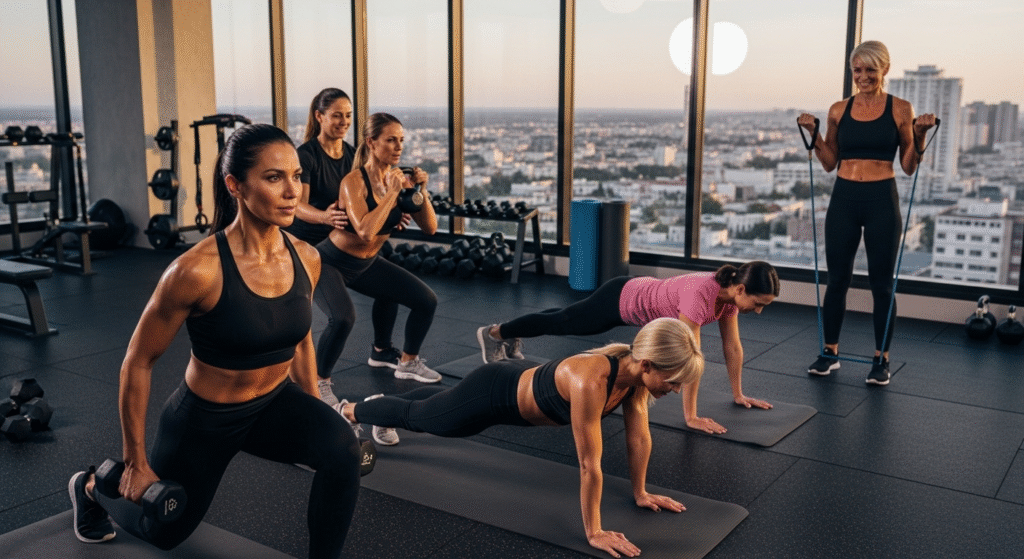
Now you have the five powerful moves. Here’s how to structure them into an effective program that delivers fast results.
Week 1-2: Building Your Foundation
Perform these five exercises three times per week with at least one rest day between sessions (Monday, Wednesday, Friday works perfectly). Complete 3 sets of each exercise with the rep ranges specified: 10-12 reps for goblet squats, Romanian deadlifts, reverse lunges, and chest press bridges; 8-10 reps for push-up to rows.
Start with lighter weights that allow you to complete all reps with good form. If you finish the last set and feel like you could have done 3-4 more reps, increase the weight by 2-5 pounds next session. Rest 60-90 seconds between sets.
Your body is adapting to these new movement patterns. You might feel sore—that’s normal and temporary. Focus on perfecting your form during these foundation weeks. Take videos of yourself to check your technique, or work out in front of a mirror.
Week 3-4: Increasing Intensity
Continue the same three-day-per-week schedule, but now you’re ready to challenge yourself. Increase your weights by 2-5 pounds on exercises where you’re completing all prescribed reps easily. For push-up to rows, if you’re doing them from your knees, try a few reps from your toes.
Add a fourth set to 2-3 of the exercises each session—choose the movements where you feel strongest. This increases your training volume, which drives muscle growth. Reduce rest periods slightly to 45-60 seconds between sets to increase metabolic demand.
By the end of week 4, you should notice visible changes: clothes fitting differently, increased definition in your arms and legs, improved energy levels, and better sleep quality. These are signs your body is transforming.
Progressive Overload: Your Key to Continued Results
After your first four weeks, continue progressing by gradually increasing weight, adding reps, reducing rest periods, or incorporating the advanced modifications described for each exercise. Your muscles adapt to training stimulus, so you must consistently challenge them with progressive overload.
Track your workouts in a simple notebook or phone app. Write down the weight used, reps completed, and how you felt. This data shows your progress over time and tells you when to increase difficulty. Aim to improve one variable—weight, reps, or sets—every 1-2 weeks.
Transform Your Body, Transform Your Life
You now have everything you need: five proven muscle-building moves designed specifically for women over 40, the science behind why they work, and a complete 4-week plan to get started. No more guessing. No more frustration with workouts that don’t deliver results.
These exercises work fast because they target the specific challenges your body faces after 40: declining muscle mass, slowing metabolism, and loss of fast-twitch muscle fibers. They’re efficient because they’re compound movements that work multiple muscle groups simultaneously. And they’re effective because they create the progressive overload your muscles need to grow stronger and more defined.
The women who see the most dramatic transformations share one characteristic: consistency. They show up three times per week, even when they don’t feel like it. They track their progress and celebrate small wins. They trust the process during the first few weeks when changes aren’t yet visible. And they’re rewarded with bodies that are stronger, leaner, and more capable than they’ve been in years.
Your body is capable of incredible transformation at any age. The muscle loss, metabolic slowdown, and body composition changes you’ve experienced aren’t inevitable—they’re reversible. These five moves give you the power to rebuild your body from the inside out, creating lean muscle that burns calories 24/7, strengthens your bones, and makes everyday activities effortless.
Start today. Not Monday. Not next month. Today. Grab your dumbbells, clear 6 feet of space in your living room, and perform your first workout. Your future self—stronger, leaner, and more confident—is waiting for you to take action.
You’ve got this. Now go build the body you deserve.