5 Low-Impact Wall Exercises for Women Over 40
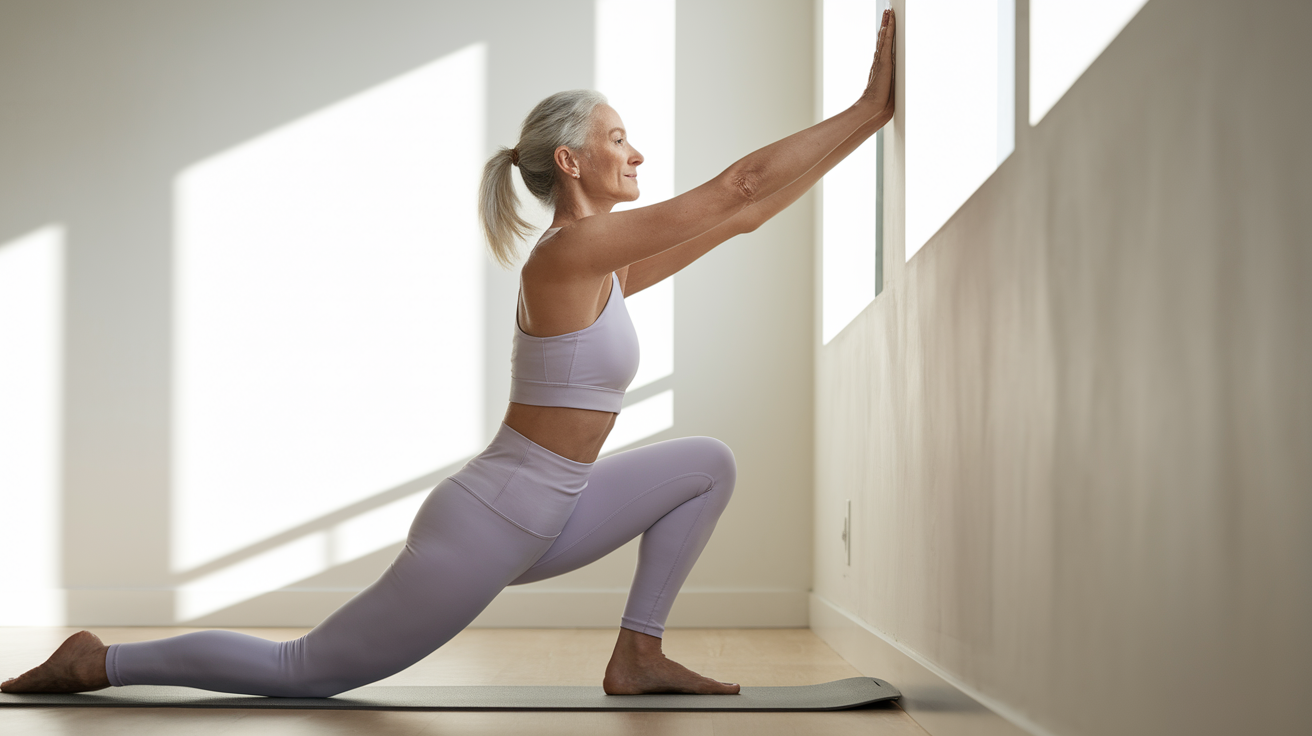
If you’re over 40 and tired of workout routines that leave your joints aching for days, you’re not alone. The truth is, staying fit shouldn’t mean sacrificing your body’s comfort or risking injury. That’s exactly where wall exercises come in—a proven, gentle approach that delivers real results without the strain.
Wall exercises are your secret weapon for building strength, improving balance, and enhancing flexibility, all while using the most accessible piece of equipment you already own: a clear wall space.
No expensive gym membership required, no complicated equipment to figure out, and absolutely no high-impact movements that leave you wincing.
These five essential exercises work because they’re simple enough for complete beginners yet effective enough to challenge your muscles and transform your fitness level. Whether you’ve been away from exercise for years or you’re looking for a safer alternative to your current routine, these movements will help you build the strong, capable body you deserve.
The best part? Wall exercises give you complete control over the intensity. You determine how challenging each movement feels, and the wall provides consistent support so you can focus on proper form without worrying about balance or stability.
Let’s explore why wall exercises are the perfect fitness solution for women over 40, and how you can start seeing results this week.
Why Wall Exercises Are Perfect for Women Over 40
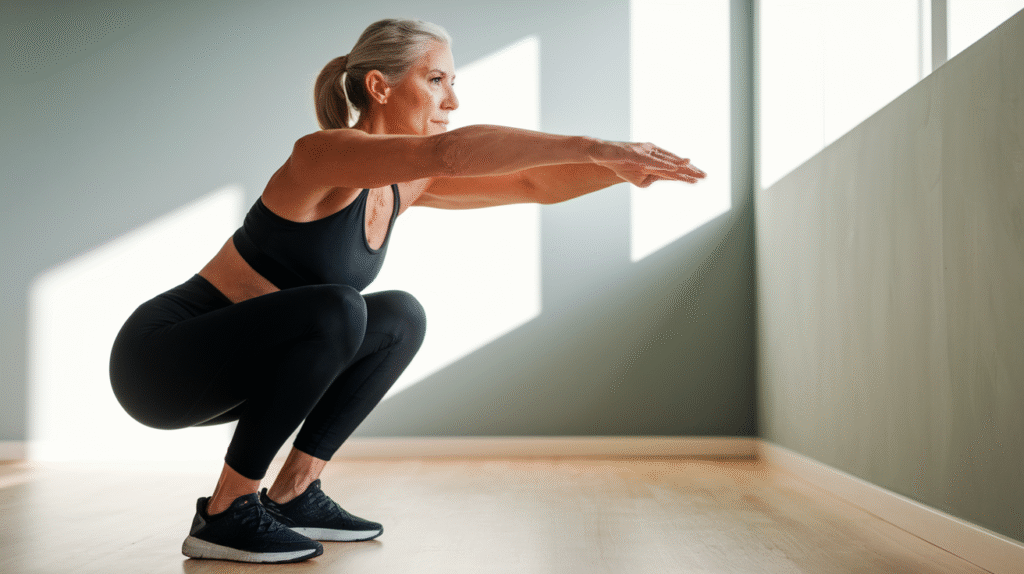
Understanding Low-Impact Movement
Low-impact doesn’t mean low-results. When we talk about low-impact exercise, we’re referring to movements where at least one foot stays in contact with the ground (or in this case, your body maintains contact with a stable surface).
This approach dramatically reduces the stress on your joints, particularly your knees, hips, and ankles, while still providing an effective strength-building workout.
After 40, our bodies experience natural changes. Hormonal shifts, particularly the decline in estrogen during perimenopause and menopause, affect bone density, joint lubrication, and muscle mass.
Your body also recovers more slowly from intense workouts, making injury prevention essential. Wall exercises acknowledge these realities without treating them as limitations—they’re simply smart adaptations that keep you moving safely.
The support of the wall reduces injury risk in a way that’s difficult to replicate with other exercise methods. You’re not balancing precariously on one leg or putting excessive pressure on vulnerable joints. Instead, you’re working with your body’s natural mechanics, building strength from a stable foundation.
The Amazing Benefits You’ll Experience
When you commit to regular wall exercises, you’ll notice improvements that extend far beyond the workout itself. Better balance and stability mean you move through daily activities with greater confidence—whether you’re carrying groceries, playing with grandchildren, or navigating uneven surfaces.
Your core muscles get strengthened without the back strain that comes from traditional floor exercises. Many women over 40 struggle with back pain, and wall exercises address this by engaging their deep core stabilizers while your spine stays in proper alignment. You’ll find yourself standing taller, sitting with better posture, and experiencing less discomfort throughout your day.
Enhanced flexibility and range of motion are natural byproducts of these controlled movements. As we age, we tend to lose flexibility, which can lead to stiffness and reduced mobility. Wall exercises gently stretch and strengthen simultaneously, helping you maintain the movement quality you need for an active lifestyle.
Research shows that resistance training—which is exactly what you’re doing with wall exercises—increases bone density and builds muscle tone. This matters tremendously for women over 40, who face increased osteoporosis risk. Every wall push-up and wall squat is an investment in your long-term bone health.
Why the Wall Makes All the Difference
The wall isn’t just a support system—it’s a training tool that creates unique advantages. It provides the stability you need to focus entirely on proper form and muscle engagement, rather than worrying about balance or coordination. This means you can target specific muscle groups more effectively.
You control the intensity simply by adjusting your distance from the wall or changing your body angle. Move closer for easier variations, step farther away for more challenge. This built-in progression system means you’ll never outgrow these exercises—they grow with you.
The wall creates the perfect angle for engaging muscles that are difficult to target otherwise. Wall angels, for example, work your shoulder and upper back muscles in a way that’s nearly impossible to replicate without this vertical support. Wall leg slides activate deep core muscles that many traditional ab exercises miss entirely.
Best of all, you need absolutely no special equipment. No weights to buy, no machines to learn, no fancy gear required. Just you, comfortable clothing, and a clear wall space. This simplicity removes every excuse and makes consistency easy.
The 5 Most Effective Wall Exercises to Transform Your Fitness
Exercise 1: Wall Push-Ups for Upper Body Strength
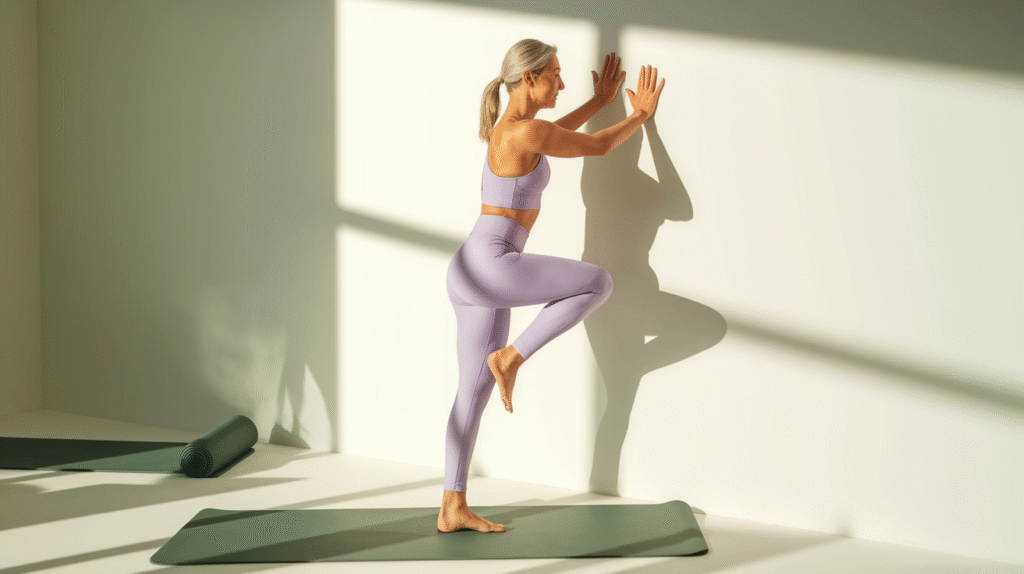
Wall push-ups are your gateway to building serious upper-body strength without the wrist strain or shoulder pressure of floor push-ups. They work your chest, shoulders, triceps, and core muscles simultaneously, giving you more results in less time.
How to do it: Stand facing the wall at arm’s length. Place your palms flat against the wall at shoulder height and slightly wider than shoulder-width apart. Your fingers should point upward. Step back until your body forms a slight angle—the farther back you step, the more challenging the exercise becomes. Keeping your body in a straight line from head to heels, bend your elbows to lower your chest toward the wall. Your elbows should move at about a 45-degree angle from your body, not straight out to the sides. Push back to the starting position with control.
Why it works: This exercise builds functional upper body strength that translates directly to daily activities like pushing open heavy doors, lifting objects overhead, or getting up from the floor. The wall angle reduces stress on your wrists and shoulders while still providing significant resistance. You’re strengthening the same muscle groups as traditional push-ups, but with joint-friendly positioning.
Quick modifications: Beginners should stand closer to the wall, creating a more upright body position. As you build strength, step farther back to increase the challenge. You can also slow down the movement, taking three seconds to lower and three seconds to push back up, which dramatically increases muscle engagement.
Reps and sets: Start with 10-12 repetitions for 2-3 sets. Rest 30-60 seconds between sets. When this feels comfortable, increase to 15 reps or add another set before stepping farther from the wall.
Exercise 2: Wall Squats for Lower Body Power
Wall squats build incredible leg strength while protecting your knees and maintaining perfect form. They’re one of the most effective exercises for strengthening your quadriceps, glutes, and hamstrings—the powerhouse muscles that keep you mobile and independent.
How to do it: Stand with your back against the wall and your feet hip-width apart, positioned about two feet from the wall. Slide your back down the wall, bending your knees and keeping your back flat against the surface. Lower until your thighs are parallel to the floor (or as close as comfortable), creating a 90-degree angle at your knees. Your knees should stay directly above your ankles, not extending past your toes. Hold this position, then slide back up the wall to standing.
Why it works: The wall provides feedback and support that ensures proper alignment throughout the movement. This is crucial because poor squat form can stress your knees and lower back. Wall squats strengthen the exact muscles you use for standing up from chairs, climbing stairs, and maintaining balance—essential movements for independent living. They also build the kind of muscular endurance that reduces fatigue during daily activities.
Simple progression: Start by holding the squat position for 20-30 seconds, building up to 60 seconds as you get stronger. You can also add small pulses at the bottom of the movement, moving up and down just a few inches, which creates an intense burn and accelerates strength gains. Another effective variation is the single-leg wall sit, where you extend one leg straight out while holding the squat position.
Reps and sets: Begin with 8-10 squats or 20-30 second holds, performing 2-3 sets. As your strength improves, increase the hold time or number of repetitions before adding more sets.
Exercise 3: Wall Angels for Posture and Shoulder Mobility
Wall angels are the perfect antidote to modern life’s hunched-over posture. If you spend time at a computer, looking at your phone, or driving, this exercise will counteract that forward shoulder position and restore healthy alignment.
How to do it: Stand with your back against the wall, feet about six inches away from the base. Press your lower back, upper back, and head against the wall. Raise your arms to shoulder height and bend your elbows to 90 degrees, creating a goalpost position. Your elbows and the backs of your hands should touch the wall. Slowly slide your arms up the wall, straightening them overhead while maintaining contact with the wall. Then slide them back down to the starting position. Move slowly and deliberately throughout the entire range of motion.
Why it works: This exercise opens up your chest, strengthens the muscles between your shoulder blades, and improves shoulder mobility. Many women over 40 develop rounded shoulders from years of daily activities that pull the shoulders forward. Wall angels reverse this pattern, creating better posture that reduces neck and upper back pain. The movement also increases shoulder flexibility, which can decrease over time and limit your ability to reach overhead comfortably.
Common mistakes to avoid: Don’t let your lower back arch away from the wall—this means you’re compensating with your back instead of working your shoulders properly. If you can’t keep your arms against the wall throughout the entire movement, reduce your range of motion. Work within your current flexibility, and you’ll see improvement over time. Move slowly—this isn’t a race. The controlled pace increases muscle engagement and prevents using momentum instead of strength.
Reps and sets: Perform 10-15 slow, controlled repetitions for 2 sets. Focus on quality over quantity. If your shoulders fatigue before you complete all reps, that’s perfectly fine—it means you’re working at the right intensity.
Exercise 4: Wall Leg Slides for Core Stability
Wall leg slides are a game-changer for core strength. They engage your deep abdominal muscles—the ones that actually stabilize your spine and improve your posture—without the neck strain of crunches or sit-ups.
How to do it: Lie on your back with your buttocks close to the wall and your legs extended up the wall, creating an L-shape with your body. Your arms rest by your sides on the floor. Engage your core by gently pressing your lower back toward the floor. Slowly slide one leg down the wall, keeping it straight, until you feel your lower back start to arch away from the floor. Stop before this happens, then slide the leg back up. Alternate legs, maintaining core engagement throughout.
Why it works: This exercise targets your transverse abdominis—the deep core muscle that acts like a natural corset around your midsection. Strengthening this muscle improves spinal stability, reduces back pain, and creates a flatter, more toned appearance. The wall provides resistance and feedback, making it easier to maintain proper form than traditional leg-lowering exercises. You’re building the kind of core strength that protects your back during everyday movements like bending, twisting, and lifting.
Easy adjustment: If you have tight hamstrings, bend your knees slightly or move your hips farther from the wall. You can also slide both legs together instead of alternating, which is slightly easier. As you build strength and flexibility, work toward straightening your legs more and positioning your hips closer to the wall.
Reps and sets: Start with 8-10 slides per leg for 2-3 sets. Move slowly and with control—each slide should take about 3-4 seconds down and 3-4 seconds back up. If you feel your lower back arching or lifting off the floor, you’ve gone too far. Reduce your range of motion and focus on maintaining that flat back position.
Exercise 5: Wall Calf Raises for Balance and Ankle Strength
Calf raises might seem simple, but they’re incredibly effective for building the ankle and lower leg strength that prevents falls and improves your overall balance—critical concerns for women over 40.
How to do it: Stand facing the wall with your feet hip-width apart. Place your hands on the wall at shoulder height for light support. Keep your body in a straight line and rise up onto the balls of your feet, lifting your heels as high as possible. Hold for a moment at the top, then lower your heels back down with control. You can perform these with both feet simultaneously or progress to single-leg raises for more challenge.
Why it works: Strong calves and ankles are essential for balance, walking stability, and fall prevention. These muscles support every step you take and help you recover quickly if you stumble. Calf raises also improve circulation in your lower legs, which can reduce swelling and fatigue. The wall provides just enough support to help with balance without taking away from the muscle-building benefits of the exercise.
Perfect for: This exercise is ideal if you experience foot or ankle fatigue, especially after standing or walking for extended periods. It strengthens the muscles that support your arches and helps prevent common issues like plantar fasciitis. Strong calves also improve your ability to walk on uneven surfaces and navigate stairs safely.
Reps and sets: Perform 12-15 raises for 2-3 sets. When this becomes easy, try single-leg calf raises, which double the challenge. You can also add a pause at the top of each raise, holding for 2-3 seconds before lowering, which significantly increases muscle engagement and balance training.
Your Complete Wall Workout Routine: Putting It All Together
Creating Your Ultimate Weekly Schedule
Consistency creates results, but you don’t need to exercise every day to see significant improvements. A realistic, sustainable schedule is far more effective than an ambitious plan you can’t maintain.
Start with 2-3 workout sessions per week, scheduling them on non-consecutive days. This gives your muscles time to recover and rebuild, which is when actual strength gains occur. Monday, Wednesday, and Friday works perfectly, or Tuesday, Thursday, and Saturday—choose what fits your lifestyle. Each session should take 15-20 minutes once you’re familiar with the exercises.
Perform the exercises in the order presented: wall push-ups, wall squats, wall angels, wall leg slides, and wall calf raises. This sequence alternates between upper body, lower body, and core work, allowing each muscle group to recover slightly between exercises. Complete all sets of one exercise before moving to the next, resting 30-60 seconds between sets.
As you build strength over 4-6 weeks, you can increase the challenge in several ways. Add more repetitions (up to 20 per set), increase the number of sets (up to 4), extend hold times for static exercises like wall squats, or adjust your body position to make exercises more difficult (stepping farther from the wall for push-ups, for example). Progress gradually—adding too much too quickly increases injury risk and can lead to burnout.
Essential Tips for Success
Never skip your warm-up. Spend 3-5 minutes preparing your body with gentle movement. March in place for 60 seconds, perform 10 arm circles in each direction, do 10 gentle shoulder rolls, and take 5-10 slow, deep breaths. This increases blood flow to your muscles and reduces injury risk.
Breathing properly makes every exercise more effective. Exhale during the exertion phase (pushing away from the wall, sliding up from a squat) and inhale during the easier phase (lowering toward the wall, sliding down into a squat). Never hold your breath, which can spike blood pressure and reduce oxygen delivery to your muscles.
Listen to your body—it’s giving you important information. Muscle fatigue and mild discomfort are normal and expected. Sharp pain, joint pain, or pain that doesn’t resolve quickly are signals to stop and reassess. You might need to modify the exercise, reduce your range of motion, or consult a healthcare provider if pain persists.
Consistency matters far more than intensity. Three moderate workouts per week will deliver better results than one intense session followed by a week of rest because you’re too sore to move. Show up regularly, work at a sustainable pace, and trust the process.
Common Mistakes and How to Avoid Them
Holding your breath is one of the most common errors. It feels natural to hold your breath during challenging movements, but this deprives your muscles of oxygen and can make you dizzy. Focus on steady, rhythmic breathing throughout each exercise.
Rushing through movements defeats the purpose. Slower, controlled repetitions create more muscle engagement and better results than fast, momentum-driven movements. If you find yourself speeding up, consciously slow down and count to three during each phase of the exercise.
Skipping warm-up or cool-down might save a few minutes, but it increases injury risk and can lead to excessive soreness. Always bookend your workout with these essential components. A simple cool-down involves 3-5 minutes of gentle stretching for the muscles you just worked.
Comparing yourself to others wastes mental energy and can undermine your motivation. Your fitness journey is uniquely yours. The only meaningful comparison is between where you are today and where you were last week or last month. Celebrate your own progress without worrying about anyone else’s pace.
Maximizing Your Results: What Else You Need to Know
Supporting Your Fitness Journey with Smart Lifestyle Choices
Exercise is just one piece of the fitness puzzle. What you eat directly impacts your energy levels, recovery speed, and strength gains. You don’t need a complicated diet plan—focus on eating adequate protein (aim for a palm-sized portion at each meal), plenty of colorful vegetables and fruits, and whole grains. Protein is particularly important for maintaining and building muscle mass, which naturally declines after 40.
Hydration affects everything from joint lubrication to muscle function. Drink water consistently throughout the day, not just during workouts. A simple guideline: drink enough so your urine is pale yellow. If it’s dark, you need more water. If you’re exercising, add an extra glass or two.
Quality sleep is when your body repairs and strengthens muscles. Adults need 7-9 hours per night for optimal recovery and health. If you struggle with sleep, establish a consistent bedtime routine, keep your bedroom cool and dark, and avoid screens for an hour before bed. Better sleep means better workouts and faster progress.
Incorporate more movement throughout your day beyond your formal workouts. Take the stairs when possible, park farther from store entrances, stand while talking on the phone, or do wall push-ups while waiting for your coffee to brew. These small additions accumulate into significant health benefits.
Tracking Your Amazing Progress
The scale doesn’t tell the complete story—in fact, it often misses the most important changes. Pay attention to how you feel. Do you have more energy throughout the day? Can you climb stairs without getting winded? Are everyday tasks like carrying groceries or playing with grandchildren easier?
Notice physical improvements beyond weight. Your clothes might fit differently as you build muscle and improve posture. You might see more muscle definition in your arms or legs. Your balance might improve—you feel steadier on your feet and more confident in your movements.
Track functional improvements that matter for daily life. Can you get up from the floor more easily? Does your back hurt less at the end of the day? Can you reach overhead without discomfort? These real-world changes are the true measures of fitness success.
Consider keeping a simple journal where you note how you feel after each workout and any improvements you notice. Looking back over weeks and months provides powerful motivation when you see how far you’ve come. Take photos monthly—visual progress often becomes apparent before you notice it in the mirror.
Staying Motivated and Making It a Habit
Consistency comes from making exercise a non-negotiable part of your routine, like brushing your teeth. Schedule your workouts in your calendar and treat them as important appointments you can’t miss. Choose a specific time that works best for you—morning, lunch break, or evening—and stick with it.
Find an accountability partner who shares your fitness goals. This could be a friend who works out with you, a family member who checks in on your progress, or an online community of women over 40 pursuing similar goals. Knowing someone else is counting on you dramatically increases follow-through.
Overcome common obstacles by planning ahead. If lack of time is your challenge, remember that 15 minutes is enough—you can always find 15 minutes. If motivation is the issue, commit to just starting—tell yourself you only need to do five minutes, and you’ll usually continue once you begin. If you’re traveling, hotel rooms have walls too.
Remember your “why”—the deeper reason you started this journey. Maybe it’s keeping up with grandchildren, maintaining independence as you age, reducing pain, or simply feeling strong and capable in your body. Write down your why and review it when motivation wanes. Celebrate every small win along the way, because each workout is an investment in your future health and vitality.
Conclusion
You now have five essential wall exercises that can transform your strength, balance, and confidence: wall push-ups for upper body power, wall squats for lower body strength, wall angels for posture and mobility, wall leg slides for core stability, and wall calf raises for balance and ankle strength. Together, these movements create a complete, effective workout that protects your joints while building the strong, capable body you deserve.
It’s never too late to start building strength and improving your health. Whether you’re 40, 50, 60, or beyond, your body responds positively to consistent, appropriate exercise. These simple movements fit into any lifestyle, require no equipment or gym membership, and deliver proven results when you show up regularly.
Consistency beats perfection every single time. You don’t need to do these exercises perfectly—you just need to do them regularly. Three times per week, 15-20 minutes per session, and you’ll see remarkable improvements in how you look, feel, and move through daily life.
Start today with just one exercise. Choose the wall push-up or wall squat and complete one set right now. Feel how your muscles engage, notice the support the wall provides, and recognize that you’re already on your way to a stronger, healthier you.
This week, commit to one complete 15-minute session. Put it in your calendar, clear a wall space, and show up for yourself. Save this guide so you can reference it easily—you’ll want to review proper form and track your progress as you build this life-changing habit.
Take control of your health journey with confidence. Every wall push-up, every squat, every controlled movement is building strength, protecting your joints, and investing in your future mobility and independence. You have everything you need to succeed—the exercises, the knowledge, and most importantly, the capability within yourself.
Your fitness journey begins with a single step—or in this case, a single wall push-up. You’ve got this, and your stronger, more confident future self will thank you for starting today.