5 Living Room Workouts for Small Spaces That Deliver Real Results
Let’s cut through the noise: You don’t need a sprawling home gym or expensive equipment to transform your body. If you’ve been telling yourself that your apartment is too small or your living room too cluttered for effective workouts, I’m here to flip that script.
I get it. You’re juggling a demanding schedule, living in a space where every square foot counts, and maybe feeling intimidated by the whole gym scene. But here’s what research proves time and again—consistency beats convenience, and your living room can become the most powerful fitness tool you own.
These five proven workouts take 20-30 minutes each, require minimal to no equipment, and deliver results whether you’re just starting your fitness journey or you’re a seasoned athlete adapting to home training. No commute, no judgment, no excuses. Just you, a small patch of floor, and the commitment to show up for yourself.
Ready to discover how small spaces create big transformations? Let’s dive in.
Why Living Room Workouts Are Your Secret Weapon
The Science Behind Small-Space Training
Here’s something that might surprise you: Bodyweight exercises actually activate more muscle groups simultaneously than many isolated gym machine movements.
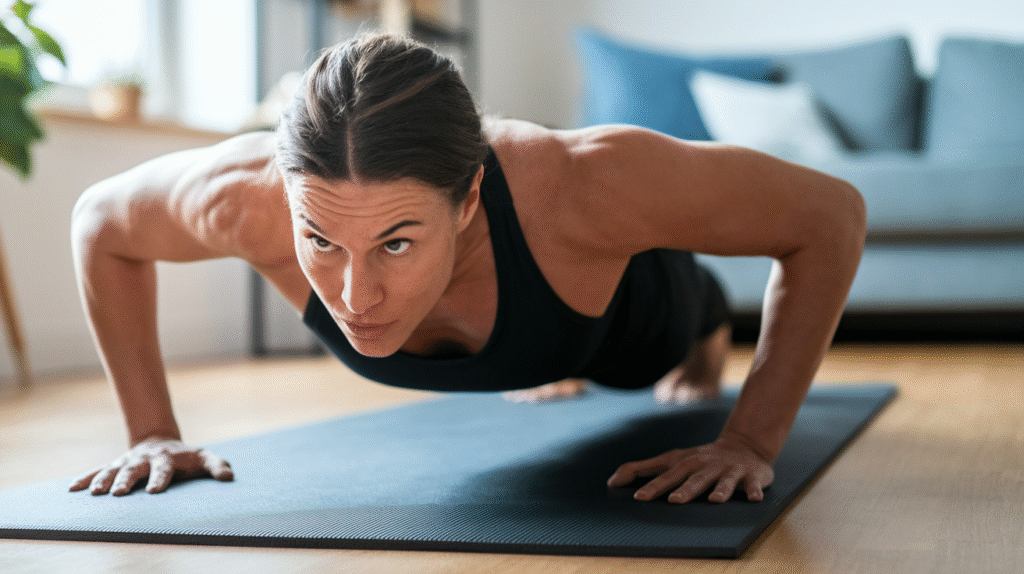
When you perform a push-up, you’re not just working your chest—you’re engaging your core, shoulders, triceps, and even your legs for stabilization. That’s efficient muscle building in action.
Research consistently shows that high-intensity movements burn calories effectively in shorter timeframes. A study published in the Journal of Sports Science & Medicine found that 20 minutes of high-intensity bodyweight training can burn as many calories as 40 minutes of steady-state cardio. Your living room isn’t limiting you—it’s focusing you on what actually works.
The most powerful factor? Consistency beats perfection every single time. That gym membership you don’t use because it’s 15 minutes away isn’t building muscle. But your living room—the space you walk through every single day—becomes your fitness sanctuary when you commit to showing up regularly.
Breaking Down Common Barriers
Let’s talk about the real game-changers here. No commute time means you can squeeze in a workout during your lunch break or right after putting the kids to bed. That extra 30-60 minutes you’d spend traveling to and from a gym? You just reclaimed it for actual training or recovery.
Privacy eliminates one of the biggest psychological barriers to fitness: self-consciousness. You can try new exercises, fail at movements, sweat profusely, and make weird faces without worrying about who’s watching. This psychological freedom accelerates your progress because you’re willing to push harder and experiment more.
The financial impact is substantial too. The average gym membership costs $600-$800 annually. Over five years, that’s $3,000-$4,000 you keep in your pocket. Plus, you can work out at 6 AM or 11 PM—whenever your energy peaks and your schedule allows.
Real Results Without the Real Estate
The evidence is clear: Home workouts build muscle and burn fat just as effectively as gym training when you apply the right principles. A comprehensive study in the International Journal of Exercise Science found no significant difference in strength gains between home-based bodyweight training and traditional gym programs over 12 weeks.
I’ve watched countless people transform their bodies in apartments smaller than 500 square feet. One client lost 35 pounds doing nothing but living room circuits while working from home. Another built visible muscle definition using just her couch and a yoga mat. These aren’t genetic outliers—they’re regular people who committed to consistent effort in small spaces.
The psychology of convenience works in your favor. Research on habit formation shows that reducing friction increases adherence. When your workout space is 10 steps away instead of a 20-minute drive, you’re exponentially more likely to follow through. That consistency compounds into powerful results over weeks and months.
Workout #1: HIIT Circuit for Maximum Fat Burn
The Workout Breakdown
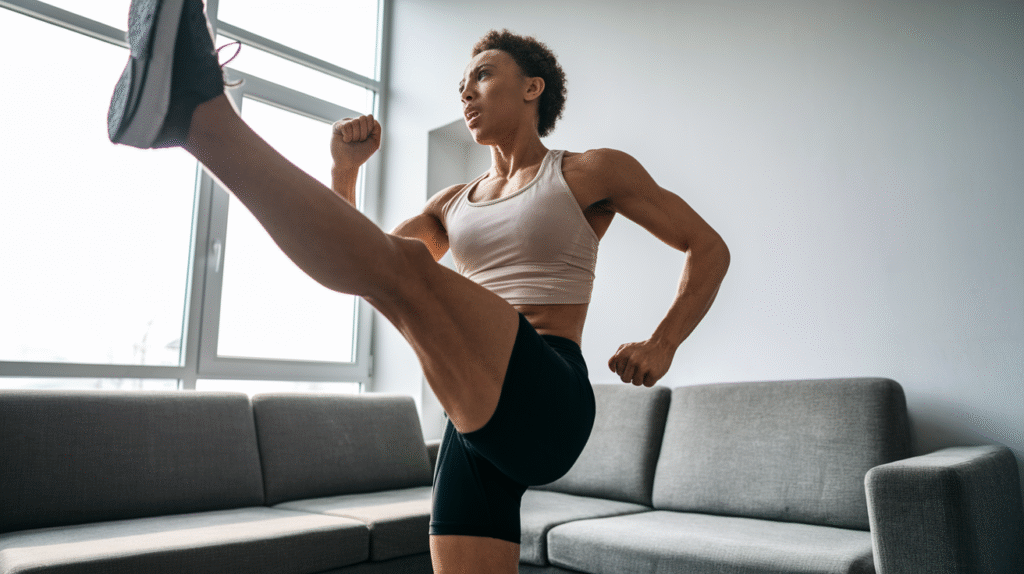
This circuit uses a proven 30 seconds work, 15 seconds rest format that maximizes calorie burn while keeping your workout time efficient. You’ll complete 4 rounds total, taking about 12-15 minutes from start to finish. The beauty of this approach? Your metabolism stays elevated for hours after you finish—the famous “afterburn effect” that keeps burning fat while you’re showering or working at your desk.
Your Exercise Sequence:
Jumping Jacks – Start with this classic to elevate your heart rate and warm up your entire body. Focus on landing softly to protect your joints and respect your downstairs neighbors.
Mountain Climbers – Drive your knees toward your chest while maintaining a strong plank position. This exercise sculpts your core while torching calories.
Burpees (Modified Option Available) – The king of full-body movements. Drop to the floor, kick back, return to standing, and jump. If you’re just starting out, skip the jump and step back instead of kicking—you’ll still get powerful results.
High Knees – Run in place, driving your knees up toward chest height. This builds explosive power in your legs while keeping your heart rate in the fat-burning zone.
Squat Jumps – Sink into a squat, then explode upward. Land softly and immediately descend into your next rep. This movement builds lower body power while burning serious calories.
Why This Works
The science behind HIIT is rock-solid. When you push your body to high intensity for short bursts, you create an oxygen debt that your body must repay. This recovery process burns additional calories for up to 24 hours after your workout ends. We’re talking about an extra 100-200 calories burned while you’re literally doing nothing.
This circuit combines cardio and strength in every movement, which means you’re simultaneously burning fat and building lean muscle. That’s the holy grail of body transformation—you’re not just getting smaller, you’re getting stronger and more defined.
The adaptable intensity makes this perfect whether you’re a beginner or advanced. Beginners can modify every single movement (step instead of jump, slower pace, longer rest periods), while advanced exercisers can increase speed, add explosive power, or reduce rest time.
Pro Tips for Small Spaces
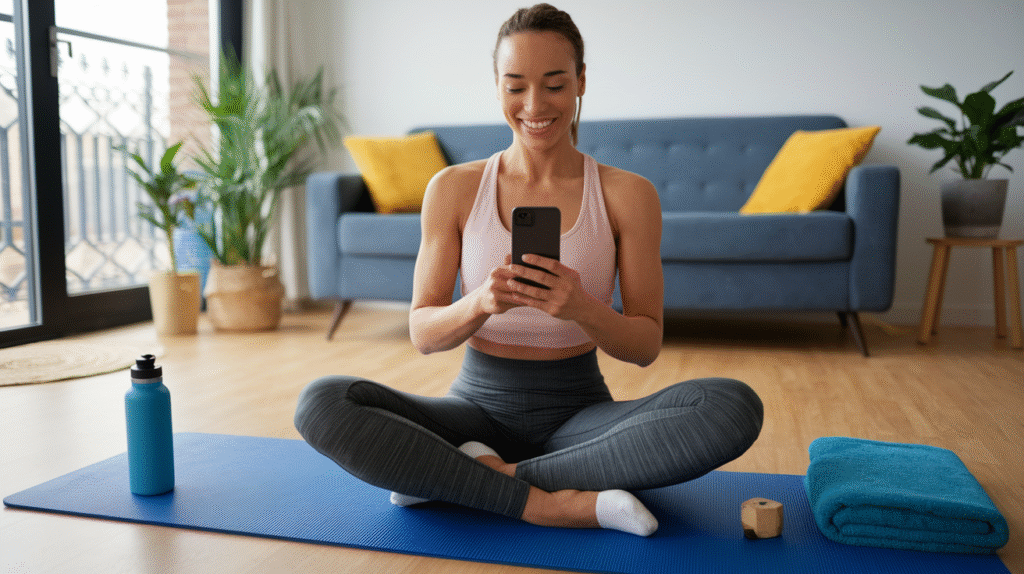
Use a yoga mat to define your workout zone—this psychological boundary helps you stay focused and protects your floors from sweat. If you have a coffee table in your living room, move it temporarily. Those 30 seconds of setup prevent injury and give you the confidence to move freely.
For apartment dwellers concerned about noise, modify jumps to low-impact steps. You’ll still get your heart rate up without creating a percussion concert for your neighbors. The key is maintaining intensity through speed and full range of motion, not necessarily leaving the ground.
Keep a towel and water bottle within arm’s reach. Staying hydrated between rounds maintains your performance and helps your body recover faster.
Workout #2: Bodyweight Strength Sculptor
Upper Body & Core Focus
Building upper body strength without weights is absolutely possible—you just need to understand leverage and progression. Your body provides all the resistance you need when you use it correctly.
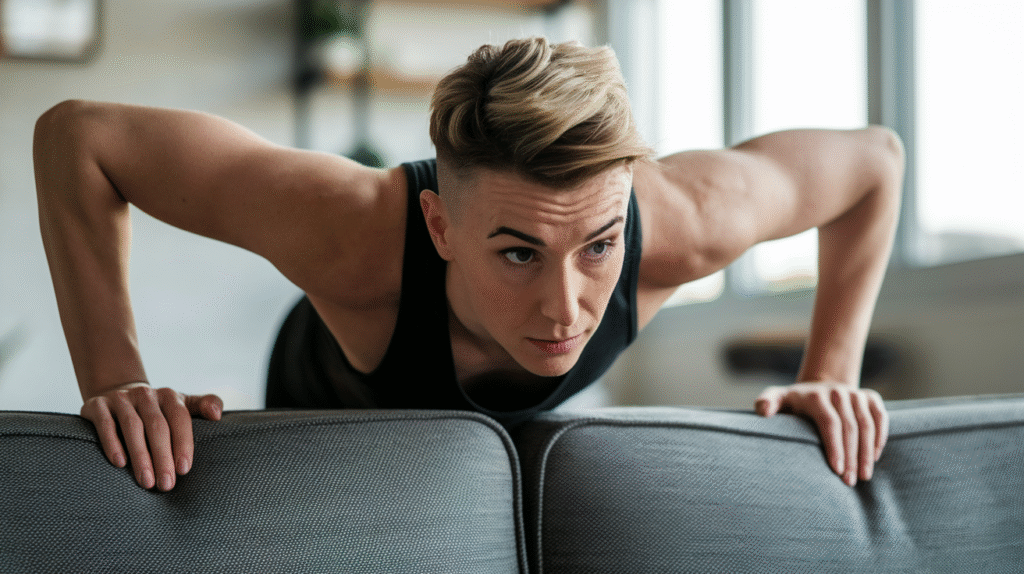
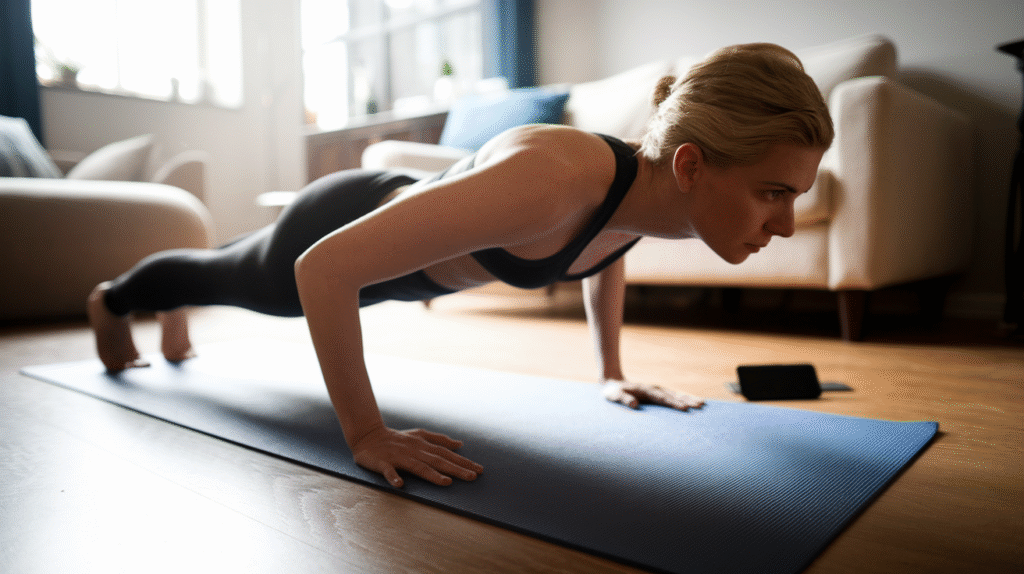
Push-Up Variations – Start with incline push-ups using your couch if standard push-ups feel too challenging. As you build strength, progress to standard push-ups on the floor, then elevate your feet on the couch for decline push-ups. Each variation shifts the emphasis and increases difficulty. Aim for 3 sets of 10-15 reps, resting 45-60 seconds between sets.
Tricep Dips – Use your couch or a sturdy chair. Sit on the edge, place your hands beside your hips, slide forward, and lower your body by bending your elbows. This exercise sculpts the back of your arms and builds serious pressing strength. Keep your shoulders down and core engaged throughout.
Plank Variations – Hold a standard plank for 30-60 seconds, maintaining a straight line from head to heels. Progress to side planks for oblique work, or try plank-to-downward dog flows that add dynamic movement. Your core will burn—that’s how you know it’s working.
Lower Body Power Moves
Your legs contain the largest muscle groups in your body, which means working them burns the most calories and builds the most metabolic-boosting muscle.
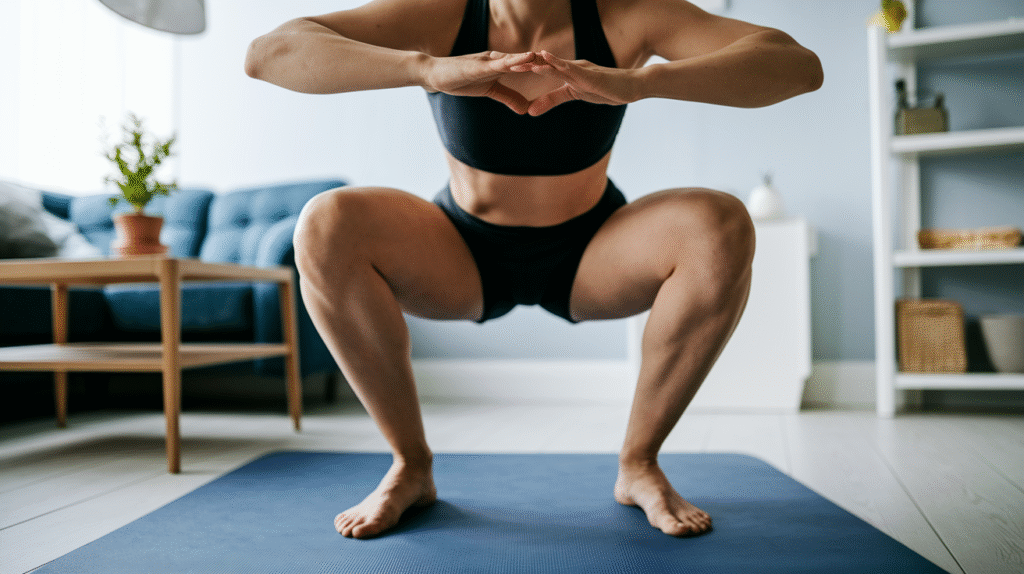
Squats – The foundation of lower body strength. Start with bodyweight squats, focusing on sitting back like you’re lowering into a chair. Progress to single-leg squats (holding a wall for balance) or pulse squats that keep tension constant. Aim for 3 sets of 15-20 reps.
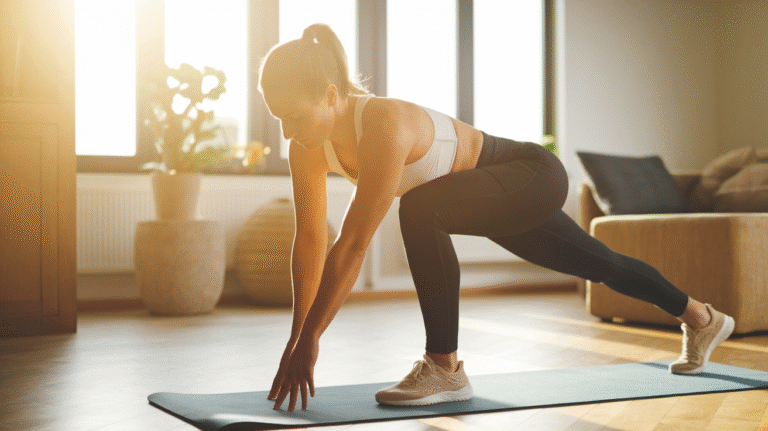
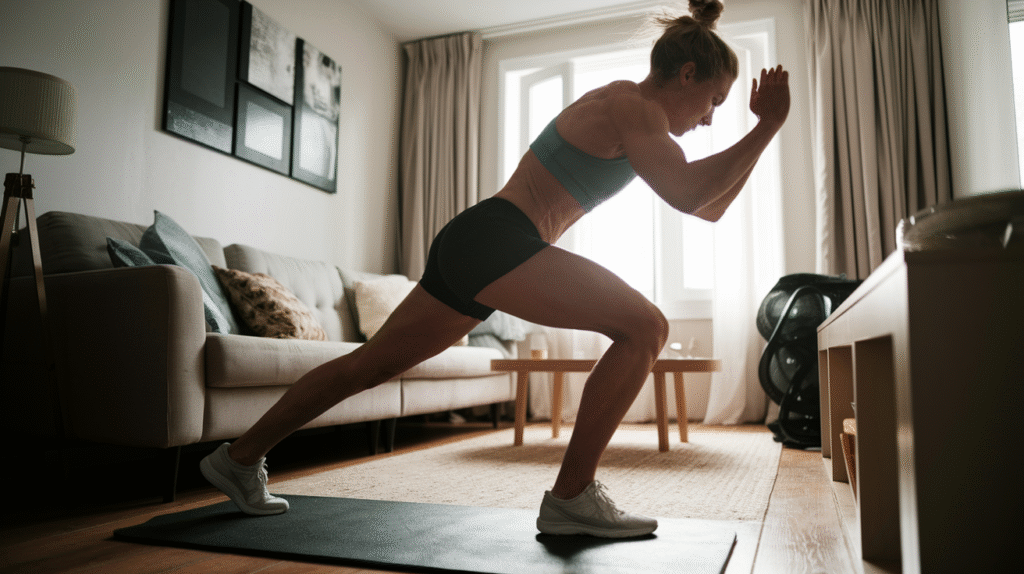
Lunges – Step forward into a lunge, keeping your front knee aligned over your ankle. Push back to standing and repeat. If space is tight, do reverse lunges or walking lunges in place (alternating legs without moving forward). These movements build powerful legs and improve balance.
Glute Bridges – Lie on your back, feet flat on the floor, and drive your hips upward. Squeeze your glutes hard at the top. Progress to single-leg hip thrusts for an intense challenge. This exercise builds a strong posterior chain and combats the hip tightness from sitting all day.
Calf Raises – Stand near a wall for balance and rise onto your toes. Lower with control and repeat for 15-20 reps. Your calves support every step you take—building them improves athletic performance and creates defined lower legs.
The Strength-Building Formula
Progressive overload is the secret to continuous improvement. When 15 reps feel easy, slow down your tempo—take 3 seconds to lower, pause at the bottom, then explode up. This time-under-tension approach builds serious strength without adding weight.
Proper form always trumps speed or rep count. One perfect push-up builds more muscle than ten sloppy ones. Focus on the muscle you’re working, maintain control throughout the movement, and breathe consistently.
Rest periods matter. Taking 45-60 seconds between sets allows partial recovery so you can maintain quality reps. If you’re gasping for air and your form is breaking down, take an extra 15-30 seconds. Building muscle requires intensity, not recklessness.
Workout #3: Yoga Flow for Flexibility & Calm
Energizing Morning Flow Sequence
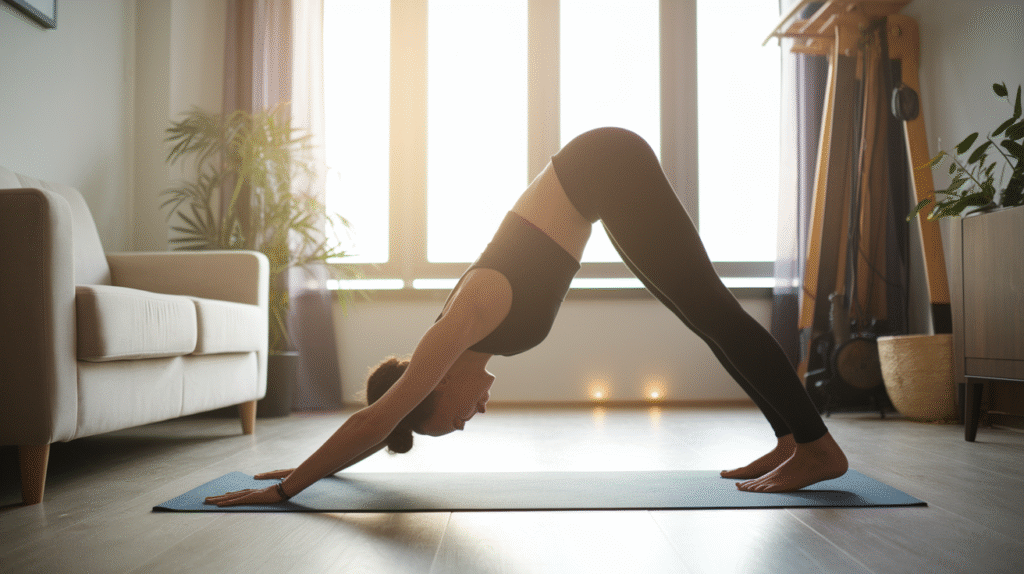
Starting your day with movement changes everything. A 15-20 minute yoga flow wakes up your nervous system, lubricates your joints, and sets a powerful tone for the hours ahead.
Sun Salutations – This flowing sequence connects breath with movement. Start standing, reach your arms overhead, fold forward, step or jump back to plank, lower to the ground, press up to upward-facing dog, then push back to downward-facing dog. Flow through 5-8 rounds, syncing each movement with an inhale or exhale. This sequence warms every muscle group and centers your mind.
Warrior Poses – Warrior I and Warrior II build lower body strength while opening your hips and chest. Hold each pose for 5-8 breaths per side. These standing poses improve balance and build the kind of functional strength that translates to every other workout and daily activity.
Balance Poses – Tree pose and dancer’s pose challenge your stability and activate deep core muscles. Don’t worry if you wobble—that’s your body learning and adapting. Use a wall for support if needed. Balance work improves body awareness and prevents falls and injuries.
Evening Wind-Down Routine
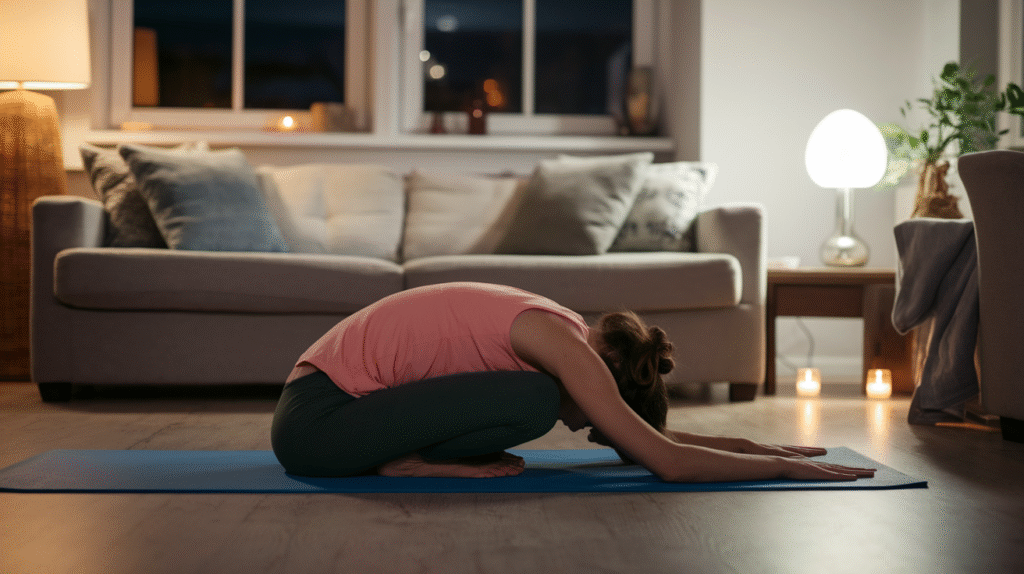
After a long day of sitting, working, or chasing kids, your body needs gentle movement to release accumulated tension.
Gentle Stretches – Start with neck rolls, shoulder circles, and gentle twists. These simple movements release the upper body tension from desk work and phone scrolling. Spend 2-3 minutes just checking in with your body and noticing where you hold stress.
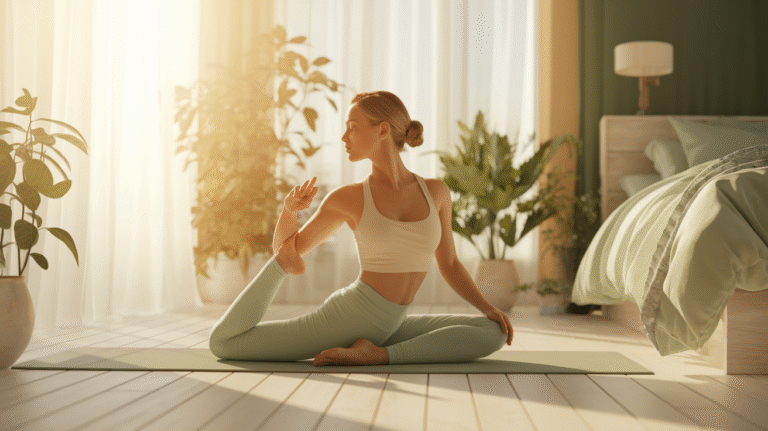
Hip Openers and Forward Folds – Pigeon pose, butterfly stretch, and seated forward folds target the hips and hamstrings—areas that tighten from sitting. Hold each stretch for 1-2 minutes, breathing deeply and allowing your body to gradually release. Don’t force anything; let gravity and time do the work.
Restorative Poses – Use couch cushions or pillows as props for supported child’s pose or legs-up-the-wall pose. These restorative positions activate your parasympathetic nervous system, signaling your body that it’s safe to rest and recover.
Deep Breathing – End with 5 minutes of focused breathing. Inhale for 4 counts, hold for 4 counts, exhale for 6 counts. This breathing pattern reduces cortisol, the stress hormone that can sabotage your fitness goals and disrupt sleep.
Flexibility Benefits Beyond the Mat
Improved range of motion isn’t just about touching your toes—it’s about injury prevention. Flexible muscles and mobile joints handle the demands of intense workouts better, reducing your risk of strains and tears.
Enhanced recovery between workouts happens faster when you incorporate regular stretching. Yoga increases blood flow to muscles, delivering nutrients and removing metabolic waste products. This means less soreness and faster adaptation.
The mental clarity and stress reduction are backed by substantial research. Studies show that regular yoga practice reduces anxiety, improves sleep quality, and enhances overall well-being. When your mind is calm and focused, you make better food choices and stay consistent with your training.
Workout #4: Core Crusher & Stability Builder
The Core Essentials Circuit
Your core is the foundation of every movement you make. A strong core improves your performance in every other workout, protects your lower back, and creates the visible definition most people want.
Bicycle Crunches – Lie on your back, hands behind your head, and bring opposite elbow to opposite knee while extending the other leg. This twisting motion targets your obliques—the muscles that create that coveted V-shape taper. Perform for 45 seconds, focusing on controlled movement rather than speed.
Dead Bugs – This exercise looks deceptively simple but activates deep core stabilizers. Lie on your back, arms extended toward the ceiling, knees bent at 90 degrees. Slowly lower opposite arm and leg while keeping your lower back pressed to the floor. This teaches your core to stabilize while your limbs move—exactly what it needs to do during daily activities.
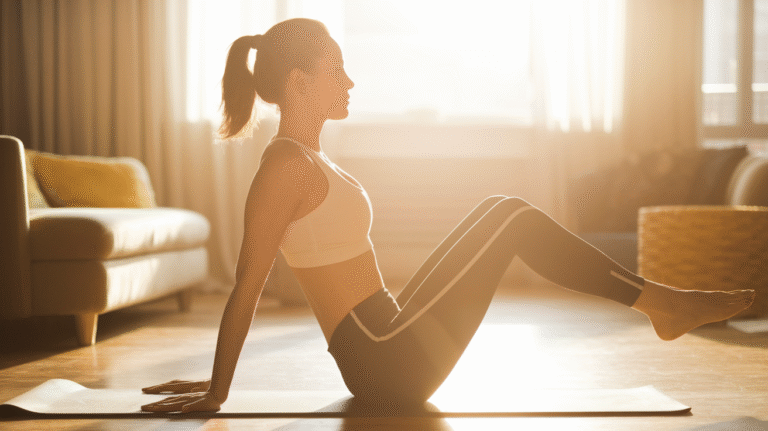
Russian Twists – Sit with knees bent, lean back slightly, and rotate your torso side to side. You can hold a water bottle or backpack for added resistance, or keep it bodyweight. This movement builds rotational strength and oblique definition. Perform for 45 seconds, maintaining a lifted chest throughout.
Leg Raises and Flutter Kicks – Lie on your back and raise your legs toward the ceiling, then lower them slowly without letting your lower back arch. Flutter kicks involve small, quick leg movements while hovering your feet off the ground. Both exercises intensely target your lower abs. Perform for 45 seconds each.
Complete 3 rounds of this circuit, resting 60 seconds between rounds. Your core will be on fire—embrace the burn as your abs sculpt and strengthen.
Stability & Balance Training
True core strength extends beyond crunches. Stability exercises teach your body to maintain control through complex movements.
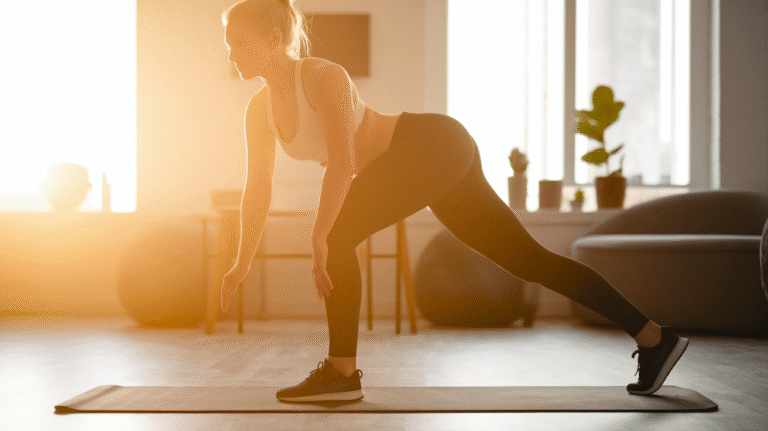
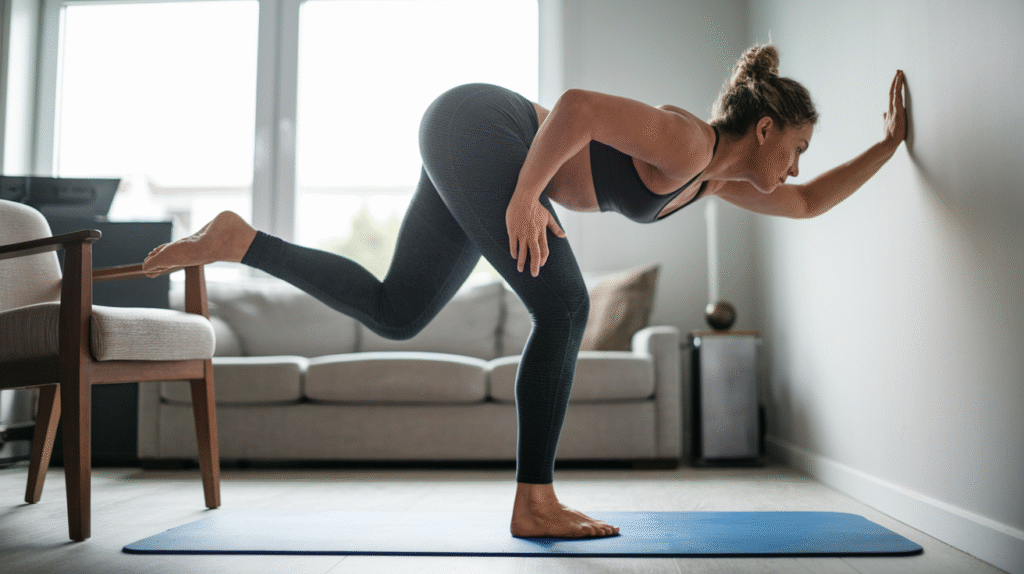
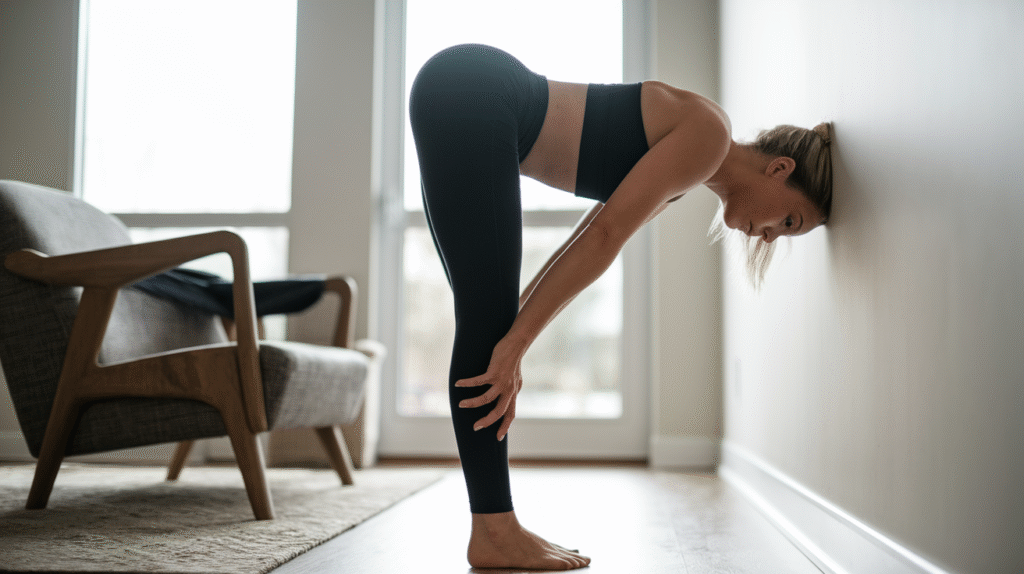
Single-Leg Deadlifts – Stand on one leg, hinge at your hip, and reach toward the floor while extending your other leg behind you. Use a wall for balance if needed. This exercise builds posterior chain strength, improves balance, and activates stabilizer muscles throughout your core and hips. Perform 10-12 reps per leg for 3 sets.
Bird Dogs – Start on hands and knees. Extend opposite arm and leg, hold for 2 seconds, then return to start. This anti-rotation exercise builds core stability and improves coordination. Focus on keeping your hips level—no twisting or tilting. Perform 10-12 reps per side for 3 sets.
Side Plank Variations – Hold a side plank for 30 seconds per side, then add hip dips for extra oblique work. Lower your hip toward the floor and raise it back up for 10-12 reps. This variation builds both endurance and strength in your lateral core muscles.
Standing Core Work – Standing knee drives and standing oblique crunches add variety while building functional strength. These movements mimic real-life activities and improve your ability to generate power from your core while standing.
Why Core Strength Changes Everything
Your core stabilizes every movement you make. A strong core improves your squat depth, increases your push-up count, and enhances your running efficiency. It’s the link between your upper and lower body—when it’s weak, power leaks out and performance suffers.
Improved posture from core training combats the effects of desk work. When your deep core muscles are strong, they support your spine naturally, reducing back pain and that hunched-over appearance that comes from hours of sitting.
Visible results build confidence. As your core strengthens and body fat decreases, you’ll notice more definition. But more importantly, you’ll feel more powerful in your body—standing taller, moving more confidently, and carrying yourself with strength.
Functional strength for daily activities means you can pick up your kids without straining your back, carry groceries with ease, and move through life with less pain and more capability. That’s the real transformation—not just looking better, but living better.
Your Small Space, Big Results Action Plan
You now have five proven workout routines that require nothing but a small patch of floor and your commitment. Each workout targets different aspects of fitness: explosive fat burn, total-body strength, flexibility and calm, and core stability. Together, they create a complete training program that builds the body you want.
No more excuses about space, time, or gym access. Your living room just became your personal fitness studio, open 24/7 and requiring zero membership fees.
Here’s your action plan: Choose one workout to try this week. Not all five—just one. Clear a small area in your living room tonight. Move the coffee table, roll out a mat if you have one, and set a realistic schedule. Three to four sessions per week is the sweet spot for most people—enough to drive adaptation without burning out.
Track your progress to stay motivated. Write down how many reps you complete, how long you hold that plank, or simply how you feel after each workout. Progress isn’t always linear, but documenting your journey helps you see how far you’ve come.
Remember: Results come from consistency, not perfection. You don’t need to execute every movement flawlessly or complete every single workout. You just need to show up more often than you skip. That’s the formula. That’s how transformation happens.
Your body doesn’t care where you train—it responds to progressive challenge and consistent effort. The person who works out in their living room three times per week will see better results than the person with a gym membership they use once per month.
Start where you are, use what you have, do what you can. Every fitness journey begins with a single workout. Every transformation starts with the decision to try.
Small spaces can absolutely deliver powerful transformations. I’ve seen it hundreds of times. Your apartment size doesn’t determine your potential—your commitment does.
Your challenge: Pick your first workout right now and commit to trying it tomorrow. Not “someday” or “when I have more time.” Tomorrow. Schedule it like you would any important appointment, because investing in your health is the most important appointment you have.
What’s your biggest small-space workout challenge? Drop a comment below and let’s problem-solve together. And if this guide helped you, share it with someone who’s been making excuses about not having enough space to get fit. Let’s build a community of people who refuse to let their circumstances limit their potential.
Your transformation starts today, right in your living room. Now go claim your space and show yourself what you’re capable of.