5 Gentle, Effective Workouts for Women with Osteoarthritis
If you’re a woman living with osteoarthritis, you’ve probably heard conflicting advice about exercise. Maybe you’ve been told to “stay active,” but every movement feels like it might make things worse. I get it—when your joints are already hurting, the last thing you want is to add more stress to them.
Here’s the truth: The right kind of exercise is one of the most powerful tools you have for managing osteoarthritis pain. Women are 40% more likely than men to develop osteoarthritis, particularly after menopause when hormonal changes affect joint health. But this isn’t a life sentence of constant pain and limited mobility.
These five proven low-impact workouts will help reduce stiffness, strengthen the muscles around your joints, and improve your daily mobility—without causing additional damage. Each workout I’m sharing is gentle, accessible, and specifically designed for osteoarthritis management. You won’t find any high-intensity jumping or joint-pounding movements here.
What you will find are effective exercises that lubricate your joints naturally, reduce inflammation, and help you reclaim activities you love. Whether you’re just starting your fitness journey or looking to adapt your current routine, these workouts meet you where you are. The goal isn’t to become an athlete overnight—it’s to move your body in ways that feel good and deliver real results.
Why Gentle Exercise Is Essential for Osteoarthritis Relief
Understanding the Exercise-Arthritis Connection
Your joints need movement the same way your lungs need air. When you move, your body produces synovial fluid—nature’s perfect joint lubricant. This fluid cushions your joints and reduces friction during movement. The catch? Your body only produces this fluid when you’re active.
Research shows that regular movement actually reduces inflammation rather than increasing it. When you exercise, your body releases natural anti-inflammatory compounds that help manage arthritis symptoms. Studies indicate that older women who engage in just one to two hours of moderately intense physical activity each week can prevent osteoarthritis pain from worsening.
Staying sedentary creates a vicious cycle. When you don’t move, the muscles supporting your joints weaken. These muscles act as shock absorbers, taking pressure off your joints during daily activities. Without them, every step, every reach, every movement places more stress directly on already-sensitive joints. The result? More pain, more stiffness, and less mobility.
The benefits of gentle exercise extend beyond just pain relief. You’ll experience improved flexibility, stronger supporting muscles, better weight management, enhanced balance, and reduced fall risk. Even better, exercise improves sleep quality and mood—two factors that significantly impact how you experience pain.
What Makes a Workout “Gentle” and Effective
Not all exercise is created equal when you have osteoarthritis. The difference between high-impact and low-impact exercises is simple but crucial. High-impact activities involve both feet leaving the ground simultaneously—think running or jumping. These movements create force that pounds your joints. Low-impact exercises keep at least one foot on the ground (or support your body weight through water or equipment), dramatically reducing joint stress.
Gentle workouts share key characteristics: minimal joint stress, controlled movements, and adaptable intensity. You should be able to modify any exercise based on how you’re feeling that day. The best workouts allow you to maintain proper form without forcing your body into uncomfortable positions.
Learning to listen to your body is essential. There’s a difference between “good” discomfort and harmful pain. Good discomfort feels like gentle stretching, mild muscle fatigue, or temporary stiffness that improves with movement. Harmful pain is sharp, sudden, localized to a specific joint, or pain that worsens during the activity. If you experience harmful pain, stop and modify the movement.
Getting Started Safely
Before beginning any workout, warm up properly. A good warm-up increases blood flow to your muscles and prepares your joints for movement. Spend five to ten minutes doing gentle movements like marching in place, shoulder rolls, or easy walking.
Start slowly and build gradually. If you haven’t exercised in a while, begin with just 10 minutes and increase by five minutes each week. Your body needs time to adapt. Pushing too hard, too fast leads to flare-ups that set you back.
Consult your doctor or physical therapist before starting a new exercise program, especially if you have severe osteoarthritis, other health conditions, or have recently experienced a joint injury. They can provide personalized guidance and help you identify which exercises are safest for your specific situation.
The 5 Best Gentle Workouts for Women with Osteoarthritis
1. Water Aerobics and Swimming: The Ultimate Joint-Friendly Exercise
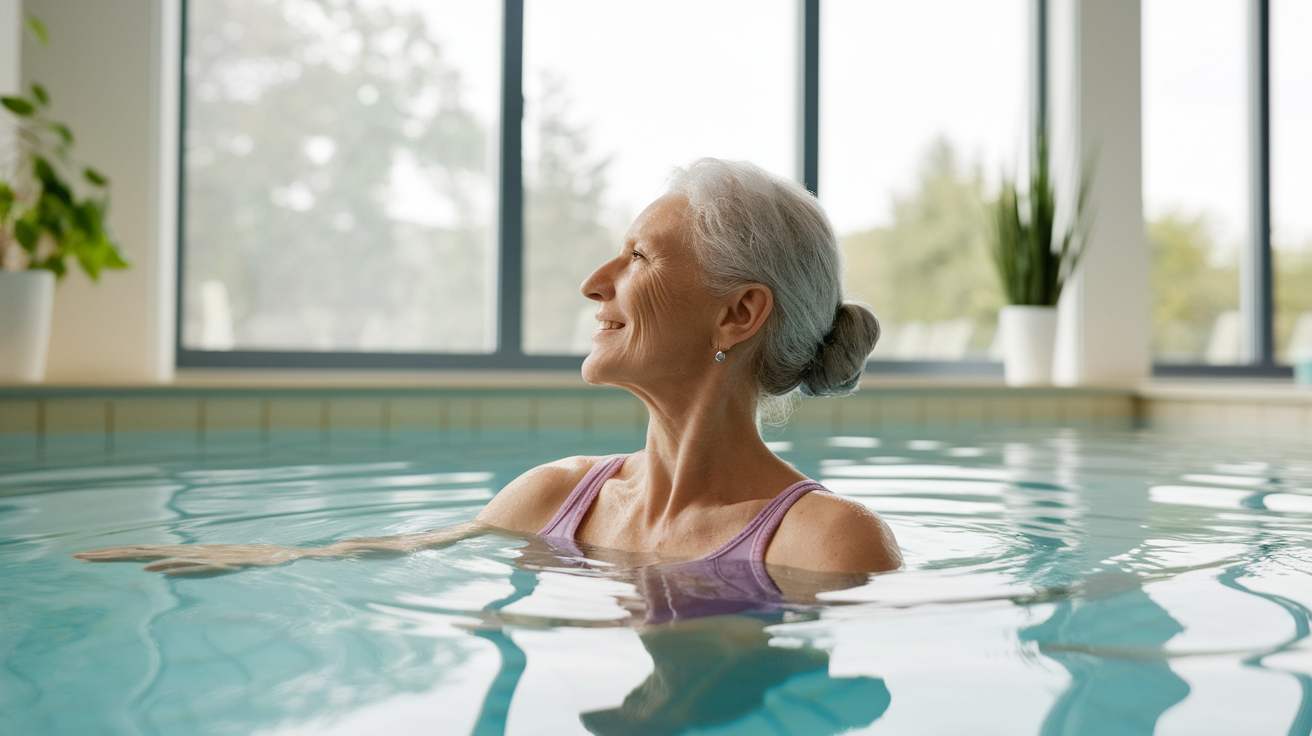
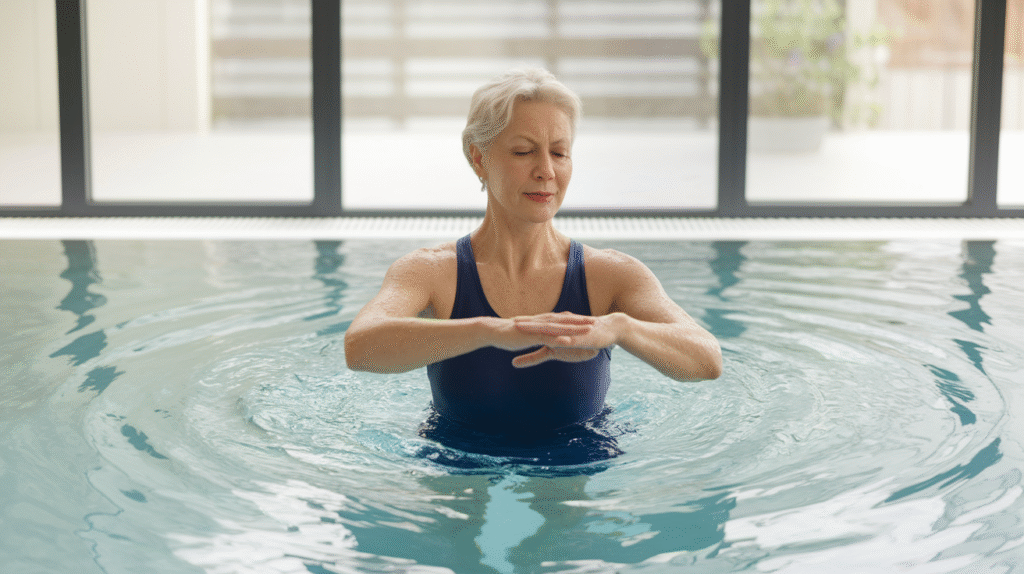
Water is your best friend when you have osteoarthritis. The buoyancy of water reduces stress on your joints by up to 90%, meaning you can move freely without the weight-bearing pressure that causes pain on land. Water also provides natural resistance, strengthening your muscles without requiring heavy weights or equipment.
Simple exercises to try in the water include water walking (walk forward, backward, and sideways across the pool), leg lifts (hold the pool edge and lift each leg forward, to the side, and back), arm circles (make circles with your arms underwater), and gentle kicks (hold the pool wall and practice flutter kicks).
The ideal water temperature for arthritis-friendly workouts is between 83-88°F. Warmer water helps relax muscles and reduces stiffness. Start with 20-30 minute sessions, two to three times per week. Many community pools offer water aerobics classes specifically designed for people with arthritis—these provide structure, social connection, and proper instruction.
What you’ll notice: Within a few weeks, you’ll experience improved range of motion, reduced morning stiffness, and the ability to move more freely during daily activities. Many women report that water exercise feels so good, they actually look forward to their workouts.
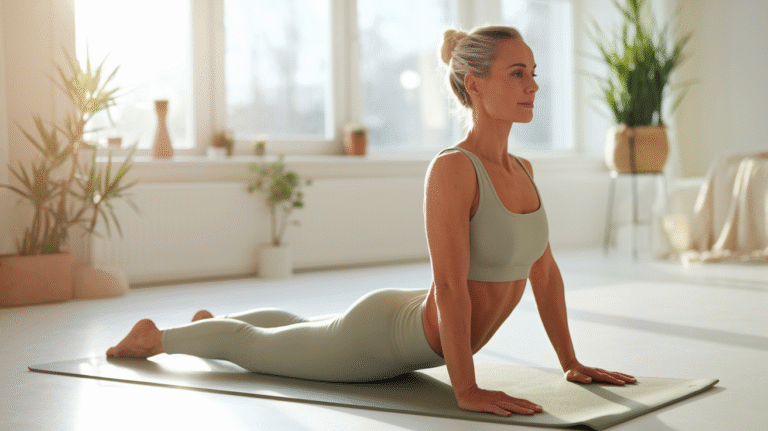
2. Yoga: Gentle Stretching for Flexibility and Strength
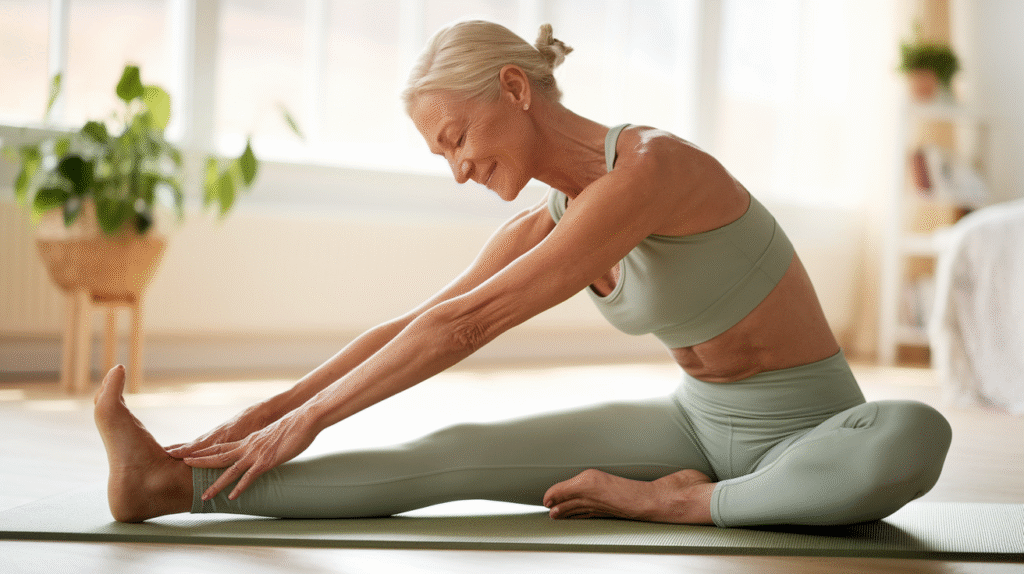
Yoga combines stretching, strengthening exercises, and deep breathing—a perfect trifecta for osteoarthritis management. The slow, controlled movements improve flexibility without forcing your joints beyond their comfortable range. The strengthening aspects build supportive muscles, while the breathing techniques reduce stress and help manage pain perception.
The best yoga styles for osteoarthritis include chair yoga (all poses done while seated or using a chair for support), gentle Hatha yoga (slow-paced with basic poses), and restorative yoga (uses props to support your body in relaxing poses). Avoid power yoga, hot yoga, or any fast-paced styles that might strain your joints.
Easy poses to start with include cat-cow (gentle spine flexion that lubricates spinal joints), child’s pose (a restful stretch for your back and hips), seated twists (improves spinal mobility), and mountain pose with arm raises (builds shoulder strength and improves posture). Each pose should feel like a gentle stretch, never painful.
Modifications make yoga accessible for everyone. Use yoga blocks to bring the floor closer to you, try a chair for balance support, place a folded blanket under your knees for cushioning, and skip any pose that doesn’t feel right for your body. A qualified yoga instructor experienced in working with arthritis can help you find the right modifications.
3. Tai Chi: Ancient Movement for Modern Joint Health
Tai chi is often called “meditation in motion,” and for good reason. This ancient Chinese practice involves slow, flowing movements that shift your weight gradually from one leg to another. The gentle nature of tai chi makes it perfect for osteoarthritis, while the balance component helps prevent falls—a major concern for women with joint problems.
Research proves tai chi’s effectiveness. Studies show that regular tai chi practice improves balance, coordination, flexibility, and strength while reducing pain and stiffness. One study found that women who practiced tai chi twice weekly for 12 weeks experienced significant improvements in knee osteoarthritis symptoms.
The slow, flowing movements strengthen your muscles without straining your joints. You’re constantly moving, which keeps your joints lubricated, but the controlled pace means you never put sudden stress on vulnerable areas. The weight-shifting movements particularly benefit your hips, knees, and ankles.
Finding beginner-friendly instruction is easier than ever. Many community centers, senior centers, and gyms offer tai chi classes. Look for classes specifically labeled “beginner” or “gentle.” Online tutorials are also excellent—search for “tai chi for arthritis” or “beginner tai chi” on YouTube. The Arthritis Foundation even offers a specific Tai Chi program designed for people with arthritis.
4. Walking: The Simple, Effective Daily Habit
Walking is one of the most accessible forms of exercise—no special equipment, no gym membership, no complicated techniques to learn. It’s a weight-bearing exercise that strengthens bones and muscles while being gentle enough for most people with osteoarthritis. The rhythmic motion helps lubricate your joints naturally.
Walking correctly protects your joints. Invest in proper footwear with good arch support and cushioning—this is not the place to skimp. Maintain good posture by keeping your head up, shoulders back, and core engaged. Start at a comfortable pace where you can still hold a conversation. Your goal is moderate intensity, not speed.
Build up gradually. If you’re new to walking, start with 10-15 minutes and increase by five minutes each week until you reach 30 minutes. You can break this into shorter sessions—three 10-minute walks deliver the same benefits as one 30-minute walk.
Make walking enjoyable by exploring nature trails (the uneven terrain provides additional balance training), finding a walking buddy for accountability and social connection, joining a mall walking group for climate-controlled exercise, or listening to audiobooks or podcasts to make time pass quickly. The more you enjoy it, the more likely you’ll stick with it.
5. Stationary Cycling: Low-Impact Cardio That Works
Cycling strengthens your leg muscles without the pounding impact of walking or running. The circular pedaling motion is particularly beneficial for knee joints—it improves flexibility and reduces stiffness without forcing your knees through extreme ranges of motion. The controlled environment of a stationary bike means you can adjust resistance and duration based on how you’re feeling.
Benefits extend beyond just your knees. Cycling provides cardiovascular exercise that improves heart health, burns calories for weight management (reducing stress on joints), and builds endurance for daily activities. The strengthened quadriceps and hamstrings better support your knee joints during walking and stair climbing.
Proper bike setup prevents strain. Adjust the seat height so your knee has a slight bend (about 25-30 degrees) when the pedal is at its lowest point. The handlebars should be at a comfortable height that doesn’t force you to hunch forward. Start with low resistance and focus on smooth, steady pedaling.
Recumbent bikes (where you sit back with legs extended forward) are often better for osteoarthritis than upright bikes. The recumbent position provides back support and distributes your weight more evenly, reducing pressure on your hips and knees. However, if you prefer upright bikes and they feel comfortable, they work perfectly well too.
Creating Your Perfect Gentle Exercise Routine
How Often Should You Exercise?
The complete guideline for osteoarthritis management is 150 minutes of moderate activity per week. This might sound overwhelming, but it breaks down to just 30 minutes, five days a week. You can divide this further into shorter sessions—two 15-minute walks deliver the same benefits as one 30-minute walk.
Consistency matters more than intensity. Five 20-minute sessions spread throughout the week are more effective than one 100-minute marathon session. Your joints need regular movement to stay lubricated and flexible. Think of exercise as a daily medication for your arthritis—you wouldn’t skip doses of medication, so don’t skip movement.
Rest days are essential for joint recovery. Your body repairs and strengthens itself during rest periods. Aim for at least one or two complete rest days per week. On rest days, you can still do gentle stretching or very light movement, but give your joints a break from structured exercise.
Listen to your body’s signals. If you’re experiencing a flare-up, reduce intensity but don’t stop moving completely. Gentle movement often helps reduce flare-up symptoms better than complete rest.
Mixing and Matching Workouts for Maximum Benefits
A balanced routine combines different types of exercise. Here’s a sample weekly schedule: Monday (30 minutes water aerobics), Tuesday (20 minutes gentle yoga), Wednesday (rest day with light stretching), Thursday (25 minutes walking), Friday (20 minutes stationary cycling), Saturday (30 minutes tai chi), and Sunday (rest day).
This schedule balances strengthening, flexibility, and cardiovascular activities. You’re working different muscle groups, preventing overuse of any single joint, and keeping your routine interesting. The variety also means that if one type of exercise feels uncomfortable on a particular day, you have alternatives.
Adjust based on your pain levels. If your knees are particularly sore, choose water aerobics or cycling instead of walking. If you’re feeling stiff, yoga or tai chi might be perfect. The flexibility to modify your routine based on daily needs is key to long-term success.
Essential Tips for Success
Start small and celebrate every achievement. Did you walk for 10 minutes today? That’s a victory. Did you try one yoga pose? Celebrate it. Progress isn’t always linear, and comparing yourself to others is counterproductive. Focus on being better than you were yesterday.
Use heat or cold therapy strategically. Apply heat before workouts to relax muscles and improve flexibility. A warm shower, heating pad, or warm towel for 15-20 minutes prepares your body for movement. After exercise, if you experience any inflammation, apply ice for 15 minutes to reduce swelling.
Stay consistent even on difficult days. On days when you don’t feel like exercising, commit to just five minutes. Often, once you start moving, you’ll feel better and continue. But even if you only do five minutes, that’s still beneficial movement.
Track your progress to stay motivated. Keep a simple journal noting what you did, how long you exercised, and how you felt afterward. Over time, you’ll see patterns and improvements that motivate you to continue.
Overcoming Common Challenges and Staying Motivated
Managing Flare-Ups Without Giving Up
Flare-ups happen, and they don’t mean you’ve failed or that exercise isn’t working. When pain increases, modify your routine—don’t abandon it completely. Switch to gentler activities like water exercise or seated yoga. Reduce duration and intensity, but maintain some movement.
Gentle stretches safe during flare-ups include seated neck rolls, shoulder shrugs, ankle circles (while seated), and gentle wrist and finger movements. These keep your joints mobile without adding stress. Even five minutes of gentle stretching maintains the exercise habit and provides some relief.
Returning to your routine after a setback requires patience. Start with 50% of what you were doing before the flare-up. If you were walking 30 minutes, begin with 15 minutes. Gradually increase over one to two weeks. Your body needs time to rebuild confidence and strength.
Finding Support and Accountability
Joining arthritis-friendly exercise classes provides multiple benefits. You’ll receive proper instruction, meet others who understand your challenges, and create accountability. Many hospitals, community centers, and YMCAs offer specialized arthritis exercise programs.
Online communities offer support and motivation. Facebook groups, online forums, and apps like MyFitnessPal connect you with women managing osteoarthritis through exercise. Sharing experiences, challenges, and victories with others who truly understand makes the journey less isolating.
Working with physical therapists provides personalized guidance. They can assess your specific joint issues, create customized exercise plans, teach you proper form, and help you progress safely. Many insurance plans cover physical therapy for osteoarthritis management.
Celebrating Your Progress
Non-scale victories often matter more than weight loss. Watch for these improvements: climbing stairs more easily, getting up from chairs without using your arms, reduced morning stiffness, better sleep quality, improved mood and energy, and less reliance on pain medication.
Small amounts of exercise make a real difference. Research shows that even modest increases in activity significantly improve osteoarthritis symptoms. You don’t need to become a fitness enthusiast—consistent, gentle movement is enough.
Stay positive and patient with your journey. Some days will feel harder than others. Some weeks you’ll see dramatic improvements; other weeks progress will seem invisible. Trust the process. Every woman who successfully manages osteoarthritis through exercise started exactly where you are now.
Take Your First Step Toward Better Joint Health Today
These five gentle workouts—water aerobics, yoga, tai chi, walking, and stationary cycling—offer proven, effective ways to manage osteoarthritis naturally. You don’t need expensive equipment, a gym membership, or hours of free time. You just need the commitment to move your body consistently in ways that support your joints rather than stress them.
You have the power to reduce pain and improve mobility. Osteoarthritis doesn’t have to dictate what you can and cannot do. While you can’t reverse joint damage, you can absolutely strengthen the muscles around your joints, improve flexibility, reduce inflammation, and reclaim activities you love.
Choose one exercise that appeals to you most and try it this week. Maybe the idea of moving in warm water sounds heavenly. Perhaps the flowing movements of tai chi intrigue you. Or maybe you just want to start with a simple walk around your neighborhood. There’s no wrong choice—the best exercise is the one you’ll actually do.
Remember: consistency matters more than intensity. Gentle, regular movement is the key to managing osteoarthritis effectively. Start where you are, use what you have, and do what you can. Your joints will thank you, your body will feel stronger, and you’ll discover that living well with osteoarthritis is absolutely possible.
What gentle workout will you try first? Your journey to better joint health starts with a single, simple movement.