30-Day Plank Challenge for beginners
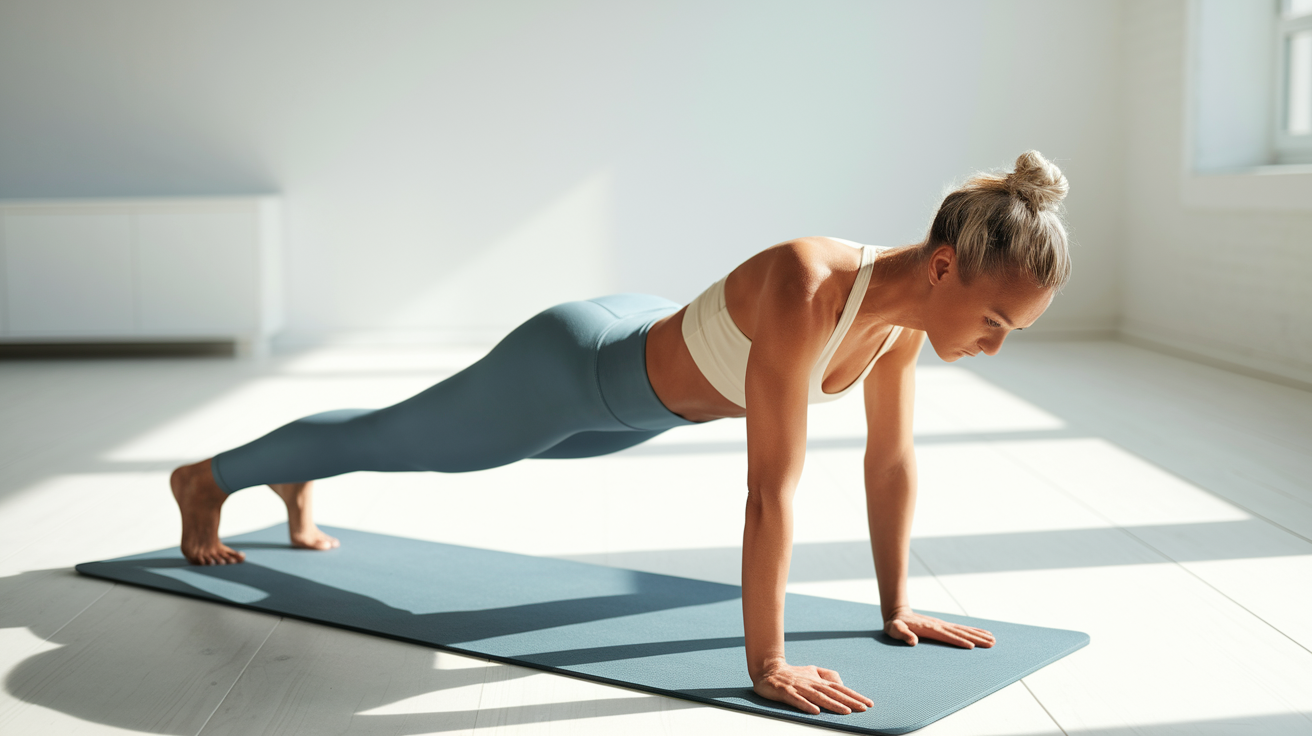
You’ve seen them everywhere—fitness enthusiasts holding perfect planks, making it look effortless. Meanwhile, you’re wondering if you can even hold one for 10 seconds without shaking like a leaf. Here’s the truth: planks are actually one of the most beginner-friendly exercises you can do, and you’re about to discover exactly how to master them.
This guide walks you through everything you need to know about starting a plank challenge, from perfecting your form to completing a proven 30-day program designed specifically for newcomers. You’ll learn simple modifications that make planks accessible right now, regardless of your current fitness level. Plus, you’ll get essential tracking tips that keep you motivated from day one through day thirty.
Ready to build a stronger core without spending hours at the gym? Let’s get started.
Why Planks Are Perfect for Beginners
Understanding the Benefits of Plank Exercises
Planks deliver results that crunches simply can’t match. When you hold a plank, you’re engaging your entire core—your rectus abdominis (those “six-pack” muscles), obliques (side muscles), transverse abdominis (deep stabilizing muscles), and even your lower back. This complete engagement creates functional strength that translates directly to everyday activities like carrying groceries, picking up kids, or maintaining good posture at your desk.
Here’s what makes this exciting: research shows that two minutes of planking can be more effective for core development than twenty minutes of traditional crunches. Why? Because planks work multiple muscle groups simultaneously while crunches isolate just one area. You’re getting better results in less time—something we can all appreciate.
The low-impact nature of planks makes them incredibly safe for beginners. Unlike exercises that involve repetitive spinal flexion (like sit-ups), planks maintain a neutral spine position throughout the movement. This protects your back and joints while building strength. If you’ve ever experienced lower back discomfort during floor exercises, planks offer a refreshing alternative that actually strengthens the muscles supporting your spine.
What Makes Planks Beginner-Friendly
You don’t need a gym membership, fancy equipment, or even workout clothes to start planking. All you need is enough floor space to lie down—that’s it. This simplicity removes the common barriers that prevent people from starting an exercise routine. You can plank in your living room before breakfast, in your bedroom before bed, or even in your office during a break.
The modification options make planks accessible to absolutely everyone. Can’t hold a full plank yet? Drop to your knees. Still challenging? Try a wall plank while standing. These adjustments let you start exactly where you are right now, then progress at your own pace. There’s no pressure to match anyone else’s performance.
Learning proper plank form takes minutes, not weeks. Unlike complex exercises that require coordination and technique practice, the basic plank position is straightforward. Once you understand the key alignment points, you can focus entirely on building endurance and strength.
Real Results You Can Expect
After completing a 30-day plank challenge, most beginners notice significant improvements in their posture. Those stronger core muscles naturally pull your shoulders back and align your spine properly. You’ll find yourself sitting and standing taller without consciously thinking about it.
Balance and stability improvements show up in unexpected ways. You’ll feel steadier climbing stairs, more confident during physical activities, and better able to catch yourself if you trip. These functional benefits matter more than aesthetic changes because they improve your quality of life daily.
Perhaps most importantly, planks create a foundation for other exercises. That core strength you’re building prepares your body for more advanced movements like push-ups, burpees, and weight training. You’re not just getting stronger—you’re opening doors to new fitness possibilities.
Mastering Proper Plank Form: Your Step-by-Step Guide
The Basic Forearm Plank Breakdown
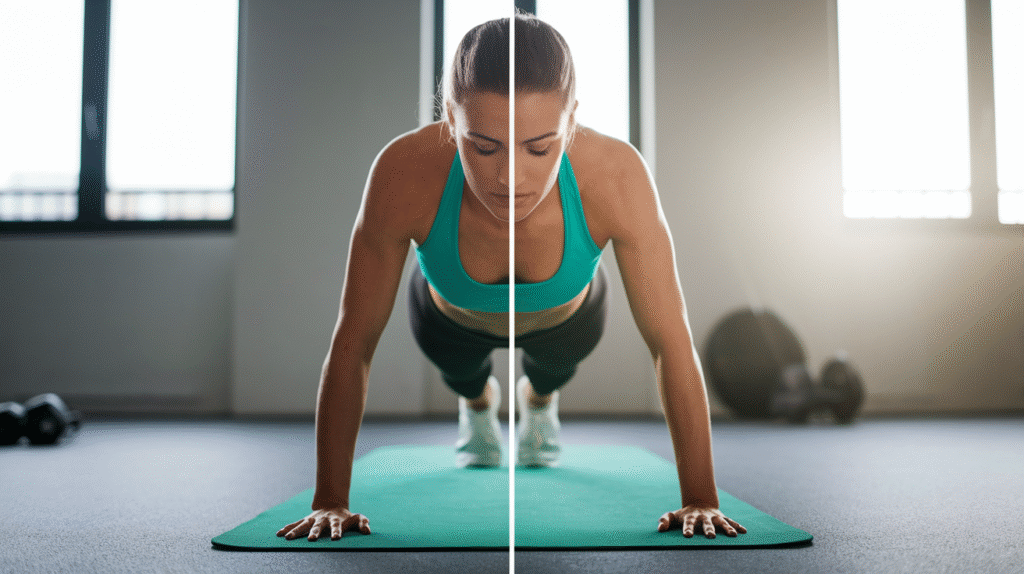
Start by positioning yourself face-down on your mat or floor. Place your forearms flat on the ground with your elbows directly beneath your shoulders—this alignment is crucial for protecting your joints and maximizing effectiveness. Your forearms should be parallel to each other, and you can either keep your hands flat or clasp them together, whichever feels more comfortable.
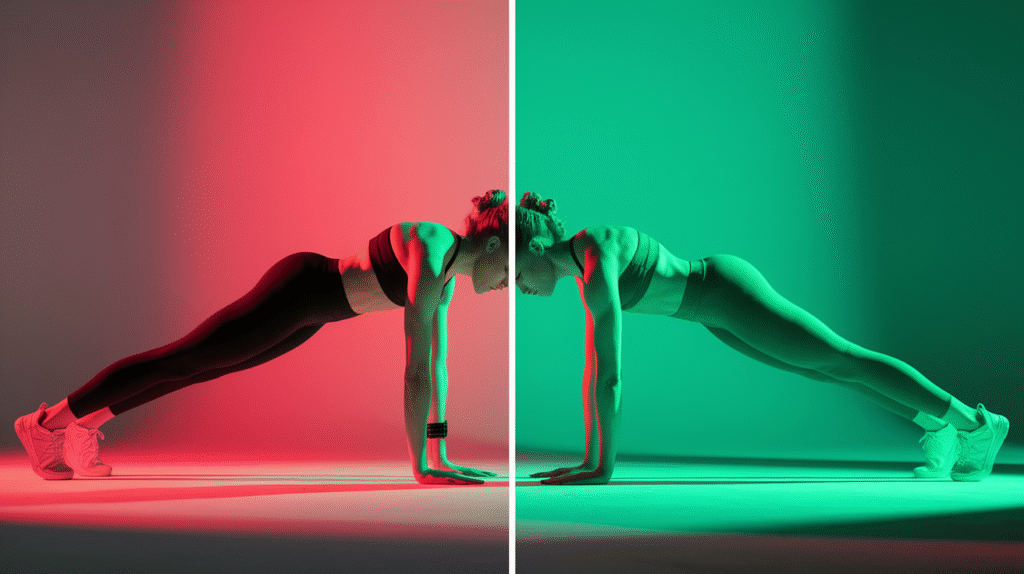
Lift your body off the ground, supporting your weight on your forearms and toes. Your body should form a straight line from the top of your head through your heels—imagine a wooden plank (that’s where the name comes from). Engage your core by pulling your belly button toward your spine, and squeeze your glutes to prevent your hips from sagging.
Keep your gaze directed at the floor about a foot in front of your hands. This neutral neck position prevents strain and maintains proper spinal alignment. Your shoulders should stay pulled back and down, away from your ears.
Breathing makes a massive difference in how long you can hold a plank. Many beginners hold their breath, which causes them to fatigue quickly. Instead, breathe naturally and steadily throughout the hold. Inhale through your nose for a count of three, exhale through your mouth for a count of three. This rhythmic breathing keeps oxygen flowing to your muscles and helps you maintain the position longer.
Common Mistakes to Avoid
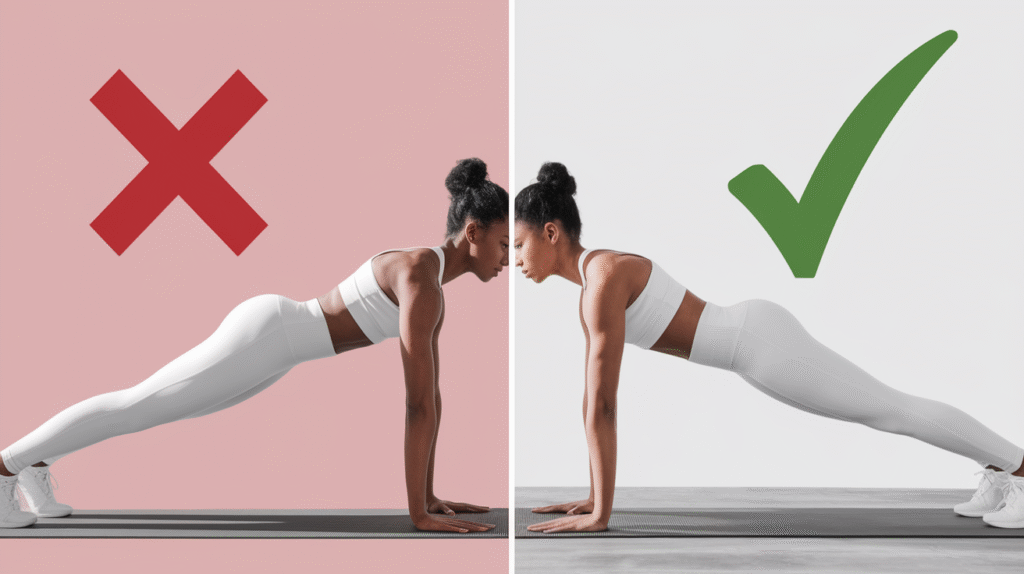
The sagging hips problem is the most frequent form error. When your hips drop toward the floor, you’re no longer engaging your core effectively, and you’re placing unnecessary stress on your lower back. To fix this, actively squeeze your glutes and think about tilting your pelvis slightly upward. If you’re unsure whether your hips are sagging, have someone take a side photo or position yourself near a mirror.
Head and neck alignment often gets overlooked, but improper positioning here causes neck pain and headaches. Avoid looking forward or up—this hyperextends your neck. Don’t let your head hang down either, as this creates the opposite problem. Keep your neck in line with your spine, as if you’re holding a tennis ball between your chin and chest.
Locked knees versus engaged legs makes a significant difference in form quality. Locking your knees shifts stress to your joints rather than keeping tension in your muscles. Instead, keep a micro-bend in your knees and actively engage your quadriceps (front thigh muscles). You should feel your entire leg working, not just balancing on locked joints.
Easy Modifications for True Beginners
The knee plank variation is your perfect starting point if a full plank feels too challenging. Simply drop your knees to the ground while maintaining the same upper body position and core engagement. This reduces the amount of body weight you’re supporting by approximately 50%, making the exercise much more manageable while still building the strength you need to progress.
Wall planks offer a standing modification for those with wrist, shoulder, or knee concerns. Stand facing a wall at arm’s length, place your forearms flat against the wall at shoulder height, and lean in while keeping your body straight. This version lets you work on core engagement and proper form without the full intensity of a floor plank.
Incline planks using furniture provide a middle ground between wall planks and floor planks. Place your forearms on a sturdy couch, coffee table, or bench and hold your plank position from this elevated angle. As you get stronger, you can progressively lower the height of your support surface until you’re ready for floor planks.
The Complete 30-Day Beginner Plank Challenge
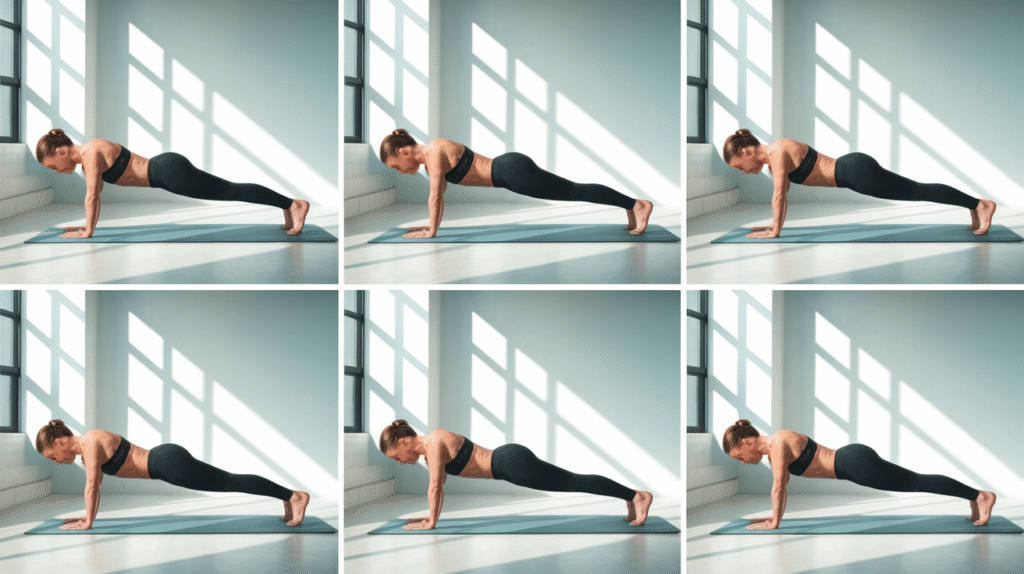
Week 1: Building Your Foundation (Days 1-7)
Your first week focuses entirely on establishing proper form and building initial endurance. Start with 10-15 second holds—yes, that’s all. This might feel surprisingly easy or surprisingly difficult depending on your starting fitness level, and both responses are completely normal.
Perform three sets of planks each day with 60-90 seconds of rest between each set. This frequency allows your muscles to work without overwhelming them. You’re teaching your body a new movement pattern, and repetition with adequate recovery creates the fastest learning curve.
Track your daily achievements using a simple method that works for you. Write down your hold times in a notebook, use your phone’s notes app, or print a challenge calendar and check off each completed day. This tracking serves two purposes: it shows your progress over time and creates accountability that keeps you showing up.
Pay attention to how your body feels during this first week. Some muscle soreness in your core, shoulders, and legs is expected—this is your body adapting to new demands. However, sharp pain or discomfort in your joints signals that something needs adjustment in your form.
Week 2: Increasing Endurance (Days 8-14)
Week two introduces gradual progression by adding 5-10 seconds to your hold time. By day 14, you should be comfortably holding planks for 25-30 seconds. This incremental increase feels manageable while consistently challenging your growing strength.
Add variety by introducing side planks for oblique engagement. Start with modified side planks (knees down) for 10-15 seconds per side. Lie on your side, prop yourself up on one forearm with your elbow beneath your shoulder, and lift your hips off the ground. This variation targets the muscles along your sides and improves overall core stability.
Managing muscle soreness becomes important during week two. Delayed onset muscle soreness (DOMS) typically peaks 24-48 hours after exercise, so you might feel more sore on day 9 than day 8. This is completely normal. Gentle movement, stretching, and adequate hydration help reduce soreness. If you’re extremely sore, take an extra rest day—building rest into your challenge prevents burnout and injury.
Week 3: Building Strength (Days 15-21)
Week three pushes you toward 45-60 second holds, a significant milestone that demonstrates real core strength. Mental techniques become as important as physical strength at this stage. When your muscles start shaking and your brain says “quit,” count down from ten, focus on your breathing, or visualize yourself successfully completing the hold.
Introduce plank variations to challenge your body in new ways. Try alternating leg lifts: while holding your plank, lift one foot a few inches off the ground for 2-3 seconds, return it, then lift the other. Or add shoulder taps: touch your right hand to your left shoulder, return it, then touch your left hand to your right shoulder. These dynamic movements increase difficulty while improving balance and coordination.
Plateaus happen when progress feels stuck. If you’re struggling to increase your hold time, that’s your signal to focus on form refinement rather than duration. Sometimes perfecting your alignment and core engagement actually makes the exercise feel harder temporarily, but this leads to better long-term results. Alternatively, try breaking your total plank time into multiple shorter sets—three 20-second planks can build the endurance needed for one 60-second hold.
Week 4: Finishing Strong (Days 22-30)
Your final week aims for that impressive 90-second hold. This goal might have seemed impossible on day one, but you’ve been systematically building the strength to achieve it. If 90 seconds still feels out of reach, aim for 60-75 seconds—that’s still remarkable progress worth celebrating.
Challenge completion strategies keep you motivated during the home stretch. Remind yourself that you’ve already completed three weeks of consistent work. Visualize how accomplished you’ll feel on day 30. Consider planning a small reward for finishing—maybe a massage, a new workout outfit, or simply a proud social media post sharing your achievement.
Beyond day 30, you have options for continuing your plank practice. Create a maintenance routine where you hold 60-90 second planks three times per week. Design your own advanced challenge incorporating plank variations you discovered. Or use your new core strength as a foundation for exploring other fitness goals like yoga, Pilates, or strength training.
Essential Tips for Plank Challenge Success
Creating Your Perfect Practice Space
Minimal equipment makes starting easy. A yoga mat provides cushioning for your elbows and prevents slipping, but you can absolutely use a folded towel or blanket instead. Some people prefer planking on carpet, while others like the stability of a hard floor—experiment to find your preference.
Timer solutions keep you honest about your hold times. Your smartphone’s built-in timer works perfectly, or download a dedicated interval timer app that announces time increments. Fitness watches with timer functions offer hands-free convenience. Choose whatever method you’ll actually use consistently.
Your environment setup matters more than you might think. Find a space with enough room to fully extend your body and where you won’t be disturbed for a few minutes. Some people prefer facing a wall to minimize distractions, while others like having a mirror nearby to check their form. Make this space inviting—you’re more likely to show up if your practice area feels good.
Staying Motivated Throughout Your Challenge
Tracking methods provide powerful motivation. Printable challenge calendars let you physically check off each completed day—there’s something satisfying about that visual progress. Apps like Streaks or Habitica gamify your challenge with rewards and streak counters. A simple journal where you record your daily hold times and how you felt creates a meaningful record of your journey.
Finding your why connects your challenge to bigger fitness goals. Are you building strength for an upcoming event? Improving your posture to reduce back pain? Proving to yourself that you can commit to a 30-day goal? Write down your reasons and review them whenever motivation dips.
The buddy system benefits are real. Share your challenge with a friend, family member, or online community. Having someone to check in with, share struggles and victories with, and celebrate milestones with dramatically increases your completion rate. Consider starting the challenge on the same day as a friend so you can support each other throughout.
Listening to Your Body
Recognizing good versus bad pain is crucial for safe progression. Good pain is muscle fatigue—that burning sensation in your abs and arms during a hold, or the soreness in your core the next day. This discomfort signals your muscles are working and adapting. Bad pain is sharp, sudden, or localized in joints. If something feels wrong beyond normal muscle fatigue, stop immediately and reassess your form or take an extra rest day.
Rest day importance cannot be overstated. Your muscles don’t get stronger during the plank itself—they get stronger during recovery when they repair and rebuild. Build at least one complete rest day into each week. If you feel excessively tired, notice your performance declining, or simply need a mental break, take an extra day off. Missing one day won’t derail your progress, but pushing through exhaustion can.
Modifications aren’t failure—they’re smart training. If you need to drop to your knees mid-plank, that’s perfectly acceptable. If you need to use a modification you thought you’d progressed beyond, that’s okay too. Your body’s needs vary day to day based on sleep, stress, nutrition, and dozens of other factors. Honoring those needs keeps you healthy and injury-free.
Quick Recovery and Care Tips
Effective stretches post-plank help prevent soreness and maintain flexibility. Try child’s pose (knees wide, sitting back on your heels with arms extended forward) to stretch your shoulders and lower back. Cat-cow stretches (alternating between arching and rounding your spine on hands and knees) mobilize your entire spine. A simple standing forward fold releases tension in your hamstrings and lower back.
Hydration and nutrition basics support your body during the challenge. Drink water consistently throughout the day—dehydration affects muscle function and recovery. Ensure you’re eating enough protein to support muscle repair, roughly 0.8 grams per kilogram of body weight daily. You don’t need special supplements or complicated meal plans, just consistent, balanced nutrition.
Sleep’s role in muscle building is often underestimated. Your body releases growth hormone during deep sleep, which facilitates muscle repair and strengthening. Aim for 7-9 hours of quality sleep per night, especially during your challenge. If you’re consistently getting less sleep, you might find your plank progress stalling regardless of your training effort.
Your Core Strength Journey Starts Now
You’ve just learned everything you need to successfully complete a beginner plank challenge. You understand why planks are the perfect starting point for building core strength, you know exactly how to perform them with proper form, and you have a complete 30-day progression plan designed specifically for newcomers.
Remember that every expert plank-holder started exactly where you are now—uncertain, maybe a bit intimidated, but willing to try. The difference between them and people who never build core strength isn’t natural ability or genetics. It’s simply showing up consistently and trusting the process.
Your 30-day challenge doesn’t require perfection. You’ll have days when planks feel harder than usual, days when you need modifications you thought you’d moved past, and possibly days when you miss your workout entirely. None of that matters as much as your commitment to keep going. Progress isn’t linear—it’s a messy, imperfect journey forward.
The strength you build during these 30 days extends far beyond your core muscles. You’re developing discipline, proving to yourself that you can commit to a goal, and creating momentum that carries into other areas of your life. These mental gains often matter more than the physical ones.
Start your challenge today—not tomorrow, not Monday, not after you buy the perfect yoga mat. Drop down right now and hold a plank for 10 seconds. That’s your day one. You’ve already begun, and that first step is always the hardest one. The next 29 days will fly by, and before you know it, you’ll be holding planks that seem impossible today.
Your stronger, more confident self is waiting on the other side of this challenge. Go meet them.