20 Minute Hip Thrust Workout For Women 40+
Let’s be honest—you’re busy. Between work, family, and everything else life throws at you, finding time for hour-long gym sessions feels impossible. But here’s what keeps you up at night: you want results. You want to feel strong, look amazing in your jeans, and move through your day without that nagging lower back pain.
I’m here to tell you that you don’t need endless hours at the gym. This 20-minute hip thrust workout is specifically designed for women over 40 who want visible results without sacrificing their entire day.
Here’s what makes this different: I’m addressing your body’s unique needs at this stage of life. After 40, your body experiences hormonal changes that make building muscle more challenging. You’re fighting natural muscle loss, concerned about bone density, and dealing with a metabolism that’s not what it used to be. This workout tackles all of it.
What you’ll get from these 20 minutes: stronger, lifted glutes that make you feel confident, improved posture that takes years off your appearance, reduced back pain that’s been holding you back, and enhanced daily movement that makes everything easier. You’ll climb stairs without thinking twice, get up from chairs with ease, and feel genuinely powerful in your body.
The best part? You’ll see changes faster than you expect. Hip thrusts deliver results that traditional exercises simply can’t match, and I’m going to show you exactly how to do them right.
Why Hip Thrusts Are Perfect For Women Over 40
The Science Behind Quick Results
Research proves that hip thrusts activate your glutes 20% more than squats and significantly more than lunges. This isn’t just gym talk—it’s backed by electromyography studies that measure actual muscle activation. For women over 40, this efficiency matters enormously.
Your body is experiencing age-related muscle loss called sarcopenia. After 40, you can lose 3-8% of your muscle mass per decade without resistance training. Hip thrusts directly combat this by targeting the largest muscle group in your body—your glutes. When you build and maintain this muscle, you’re not just shaping your backside; you’re preserving your metabolic health and bone density.
The hormonal changes you’re experiencing—declining estrogen and growth hormone—make muscle building more challenging than it was in your 30s. Hip thrusts work with your body, not against it. The movement pattern allows you to lift heavier weights safely, which triggers the muscle-building response your body needs at this stage.
Amazing Benefits Beyond A Better Backside
Yes, you’ll get that lifted, toned look you want. But the real magic happens in how you feel every single day.
Lower back pain affects 80% of adults at some point, and it becomes more common after 40. Weak glutes are often the culprit. When your glutes aren’t doing their job, your lower back compensates, leading to chronic pain and stiffness. Hip thrusts strengthen your glutes and teach them to activate properly, taking pressure off your back.
Your posture transforms when your glutes are strong. That forward lean, rounded shoulders, and “tech neck” you see in the mirror? Strong glutes help pull your pelvis into proper alignment, which cascades up your spine. You’ll stand taller, look more confident, and reduce neck and shoulder tension.
Daily movements become effortless. Getting up from the floor while playing with grandkids, carrying groceries upstairs, standing for long periods—all of these require strong glutes. This workout makes your body functional and capable for real life.
Why This Workout Is Different
Twenty minutes sounds too good to be true, but here’s why it works: hip thrusts are a compound movement that recruits multiple muscle groups simultaneously. You’re getting maximum muscle activation in minimum time.
The workout is joint-friendly, which matters more at 40+ than ever before. Unlike running or high-impact exercises that stress your knees and hips, hip thrusts are a controlled, supported movement. You’re building strength without breaking down your joints.
Most importantly, this workout scales perfectly to your fitness level. Starting from scratch? Begin with bodyweight and master the movement. Already active? Add weight progressively and watch your strength soar. The same 20-minute structure works whether you’re a beginner or advanced lifter.
Essential Setup: Getting Your Form Perfect
The Simple Foundation: Proper Positioning
Your setup determines everything. Get this right, and you’ll feel the exercise exactly where you should. Get it wrong, and you’ll wonder why your hamstrings are burning instead of your glutes.
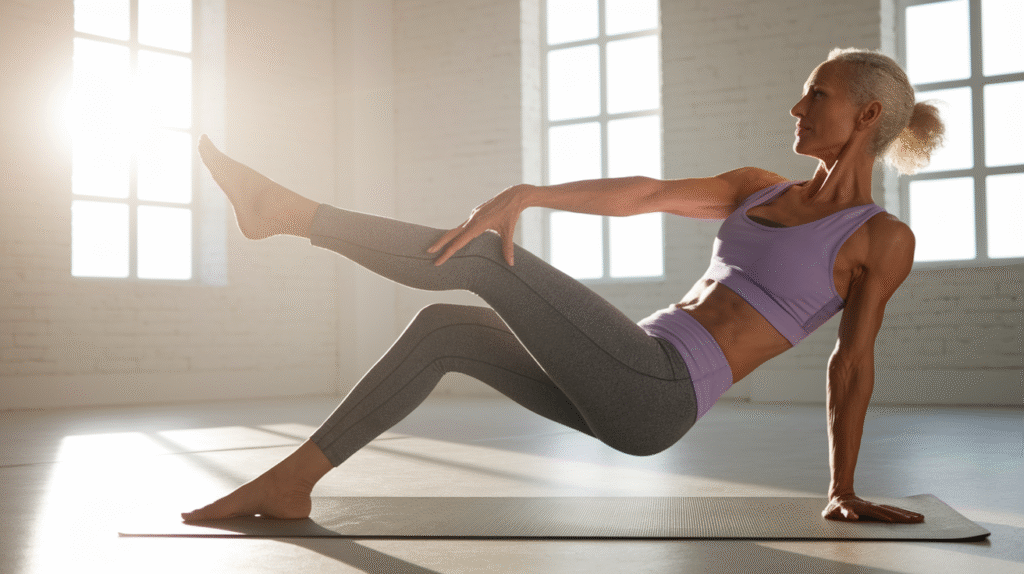
Start with your bench height. You want a bench, box, or couch edge that’s about 16-20 inches high. Too low and you’ll lose range of motion; too high and you’ll compromise stability. Your shoulder blades should rest comfortably on the edge when you’re in position.
Position yourself so when you thrust up, your shins are vertical. This is crucial. Sit on the floor with your back against the bench, then walk your feet forward until they’re about 12-15 inches from your glutes. When you lift into the top position, check that your shins are perpendicular to the floor.
Foot placement makes or breaks this exercise. Your feet should be hip-width apart or slightly wider, with toes pointing forward or turned out slightly (whatever feels natural for your hips). Your feet should be flat on the floor, weight distributed evenly.
For weight placement, start with bodyweight for your first week. Once you’re ready to add resistance, place a dumbbell or barbell across your hip crease—right where your thighs meet your torso. Use a pad or towel for comfort. The weight should sit securely without rolling.
Form Tips That Make All The Difference
Push through your heels. This single cue changes everything. When you drive through your heels rather than the balls of your feet, you automatically engage your glutes and hamstrings properly. If you can lift your toes slightly at the top, you’re doing it right.
Squeeze your glutes hard at the top of every single rep. I mean really squeeze—like you’re trying to crack a walnut between your cheeks. This conscious contraction is what builds that lifted, firm look you want. Hold for a full second at the top before lowering.
Keep your core engaged throughout the entire movement. Think about pulling your ribcage down toward your pelvis. This “crunching” action protects your lower back from excessive arching and ensures your glutes do the work, not your spine.
Your chin should stay neutral. Don’t look up at the ceiling or tuck your chin to your chest. Imagine holding an orange under your chin—that’s the position you want to maintain.
Common Mistakes To Avoid
Setting up too close to the bench means you’ll push more with your quads than your glutes. Too far away and you’ll lose stability and strain your hamstrings. That vertical shin position at the top is your checkpoint.
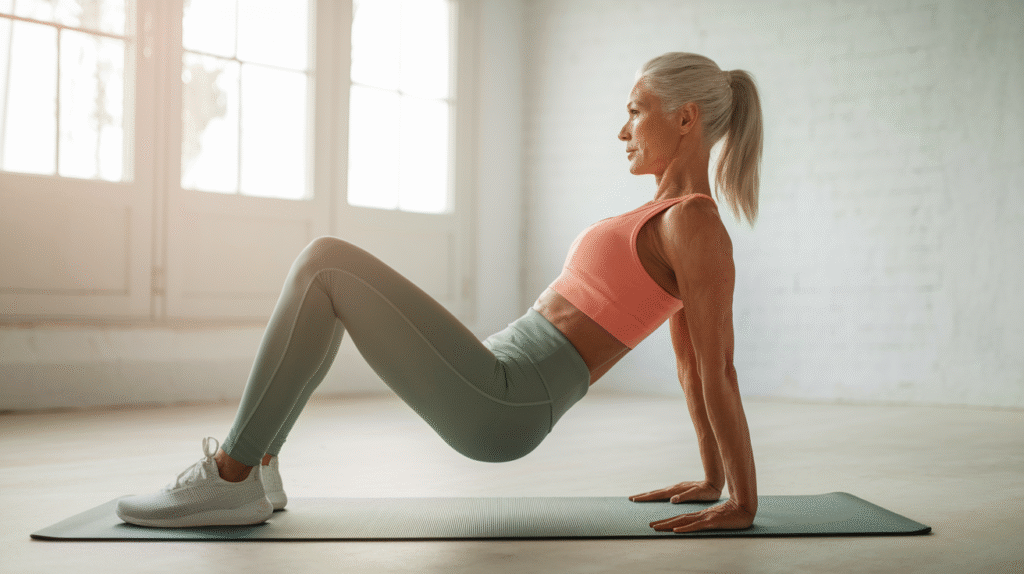
Not achieving full hip extension is like doing half the exercise. Your hips should rise until your body forms a straight line from knees to shoulders. Stopping short cheats your glutes out of the most effective part of the movement.
Rushing through reps kills results. This isn’t a cardio exercise. Each rep should take 3-4 seconds: one second up, one second squeeze at the top, two seconds down. Control and tension build muscle—speed doesn’t.
Excessive back arching is dangerous and ineffective. If your back is arching significantly, you’re either lifting too much weight or not engaging your core. Scale back and focus on that “crunch your abs” cue.
The Complete 20-Minute Hip Thrust Workout
Warm-Up (5 Minutes)
Never skip this. Your glutes need activation before you load them with weight, especially if you’ve been sitting all day.
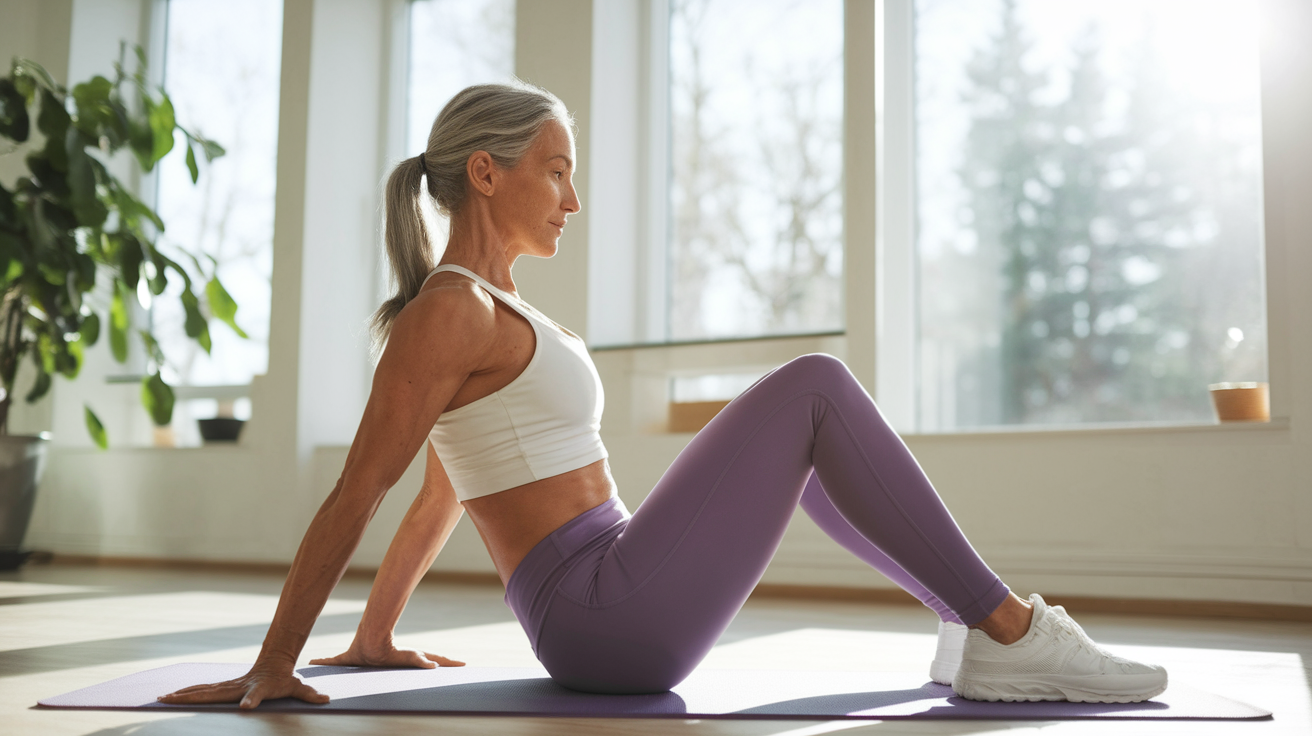
Glute Bridges: Lie on your back with knees bent and feet flat on the floor. Lift your hips, squeeze your glutes at the top, and lower with control. Do 2 sets of 15 reps. This wakes up your glutes and teaches the hip extension pattern you’ll use in hip thrusts.
Hip Circles: Stand with hands on hips and make large circles with your hips, 10 circles in each direction. This mobilizes your hip joints and prepares them for the loaded movement ahead.
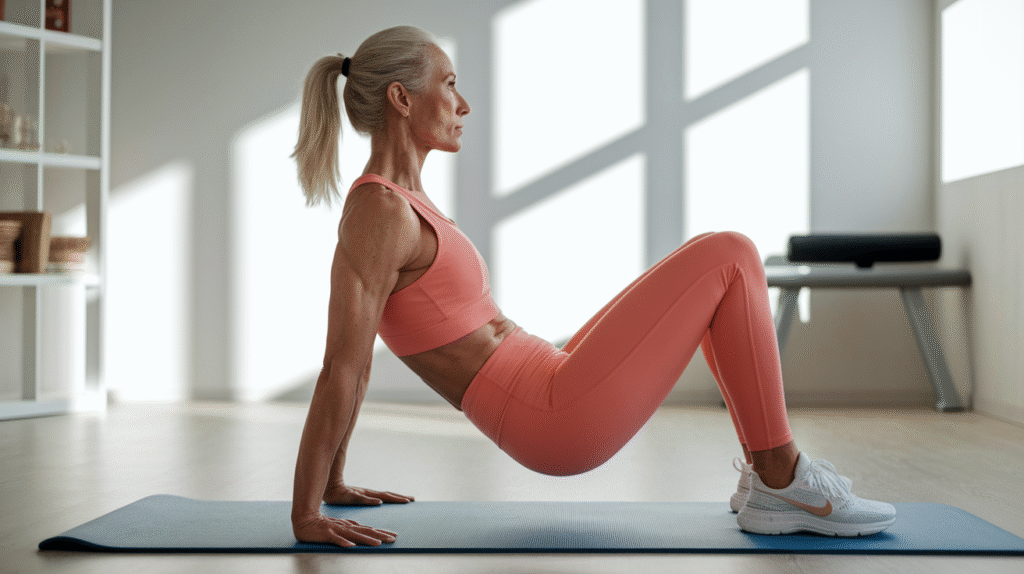
Bodyweight Hip Thrusts: Get into your hip thrust position without weight and perform 20 controlled reps. Focus entirely on form—this is your practice before the main event. Feel where you should be feeling it (glutes and upper hamstrings, not lower back).
Main Workout (12 Minutes)
Standard Hip Thrusts: 3 sets of 12-15 reps
This is your foundation exercise. Rest 60 seconds between sets.
For beginners, stick with bodyweight or hold a 10-15 pound dumbbell. Focus on perfect form and that glute squeeze at the top. If you can complete 15 reps with excellent form, you’re ready to add weight next session.
For intermediate lifters, use a 20-40 pound dumbbell or a barbell with 45-95 pounds. You should struggle on the last 2-3 reps of each set while maintaining form.
For advanced lifters, work up to 100+ pounds on the barbell. Your last few reps should be genuinely challenging, but never compromise form for weight.
Single-Leg Hip Thrusts: 2 sets of 10 reps per leg
This variation addresses muscle imbalances that every woman has. Your dominant leg is likely stronger, and single-leg work evens things out.
Set up exactly like a standard hip thrust, but extend one leg straight out in front of you. Keep that leg elevated throughout the movement. Push through the heel of your working leg and squeeze hard at the top.
Modification: If this feels too challenging, keep your non-working foot lightly touching the floor for balance. You’re still getting the unilateral benefit without the instability.
Hip Thrust Pulses: 2 sets of 20 pulses
This is where you’ll feel that amazing burn that signals real muscle work.
Thrust up to your full extension position and hold. From here, lower your hips just 2-3 inches and pulse back up. You’re staying in the top range of motion, maintaining constant tension on your glutes. These small movements create serious results.
Your glutes should be screaming by rep 15. That burning sensation means you’re recruiting every muscle fiber. Embrace it—this is what creates that lifted, firm look.
Cool-Down (3 Minutes)
Your muscles just worked hard. Give them the recovery they need to grow stronger.
Glute Stretches: Lie on your back, cross your right ankle over your left knee, and pull your left thigh toward your chest. Hold for 30 seconds, feeling the stretch in your right glute. Switch sides. This releases tension and improves flexibility.
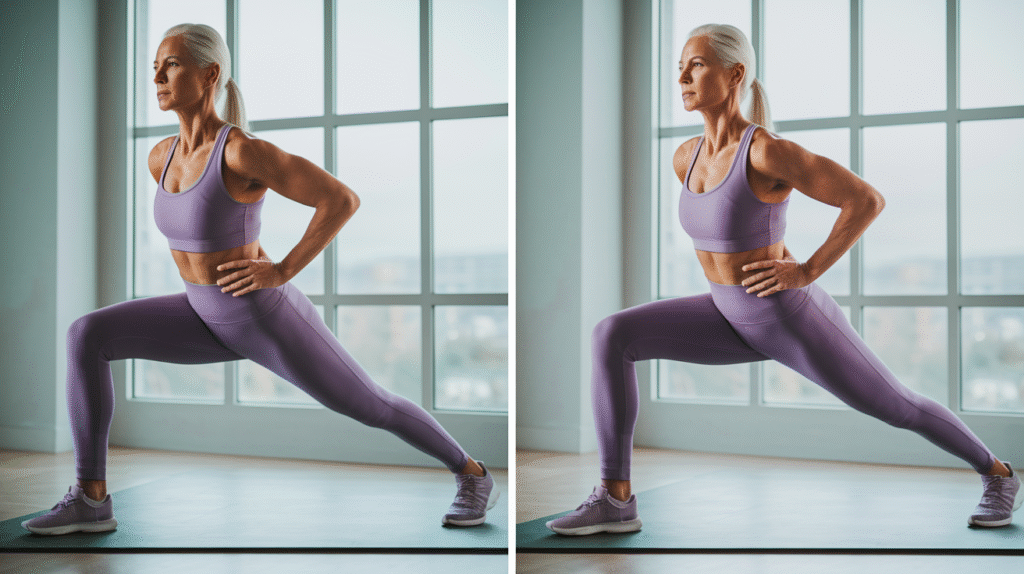
Hip Flexor Stretches: Kneel on your right knee with your left foot forward in a lunge position. Push your hips forward gently until you feel a stretch in the front of your right hip. Hold 30 seconds and switch. Tight hip flexors inhibit glute activation, so this stretch is essential.
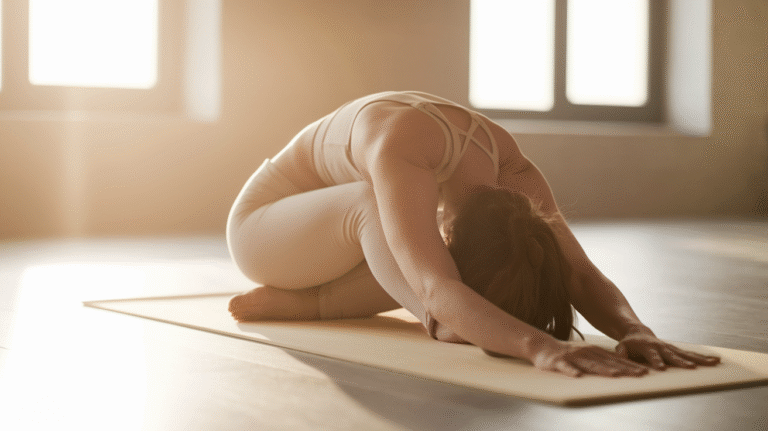
Child’s Pose: Sit back on your heels with arms extended forward on the floor. Hold for 60 seconds, breathing deeply. This releases your entire posterior chain and brings your heart rate down.
Maximizing Your Results: Pro Tips For Women 40+
Progressive Overload Made Easy
Results come from progressively challenging your muscles. Here’s your simple system: once you can complete all sets with perfect form and the last 2 reps feel manageable, it’s time to progress.
Add 5-10 pounds to your hip thrusts each week. This gradual increase keeps your muscles adapting without overwhelming your joints or risking injury. Track your weights in a simple notebook or phone app—what gets measured gets improved.
Alternatively, increase reps before adding weight. If you’re doing 12 reps per set, work up to 15 reps with the same weight. Once you hit 15 reps with good form, add weight and drop back to 12 reps.
For single-leg variations, master 10 perfect reps before adding any weight. Then start with a light dumbbell (5-10 pounds) held at your chest.
Nutrition Essentials For Quick Results
You can’t out-train a poor diet, especially after 40. Your nutrition needs have changed, and meeting them accelerates your results dramatically.
Protein is non-negotiable. Women over 40 need 1.2-1.6 grams of protein per kilogram of body weight daily to maintain and build muscle. For a 150-pound woman, that’s roughly 80-110 grams daily. Include protein at every meal: eggs at breakfast, chicken or fish at lunch, Greek yogurt as a snack, and lean meat or legumes at dinner.
Pre-workout fuel matters. Eat a small meal with protein and carbs 1-2 hours before your workout. A banana with almond butter or Greek yogurt with berries gives you sustained energy without feeling heavy.
Post-workout recovery starts with nutrition. Within an hour after your workout, consume protein and carbs. A protein shake with fruit, a turkey sandwich, or cottage cheese with crackers all work perfectly. This window is when your muscles are primed to absorb nutrients and begin repair.
Hydration affects everything—your energy, recovery, and even how sore you feel. Drink at least 8 glasses of water daily, more on workout days. Proper hydration reduces muscle soreness and helps flush metabolic waste from your tissues.
Recovery Strategies That Work
Rest days are when your muscles actually grow. You’re not being lazy—you’re being strategic. Schedule this workout three times per week with at least one rest day between sessions. Monday, Wednesday, Friday works perfectly for most women.
Active recovery on off days enhances results. Take a 20-minute walk, do gentle yoga, or swim leisurely. Light movement increases blood flow to your muscles, delivering nutrients and removing waste products without creating additional stress.
Manage soreness naturally with these proven methods: take a warm Epsom salt bath (the magnesium reduces inflammation), use a foam roller on your glutes and hamstrings for 5-10 minutes, and keep moving lightly rather than staying completely sedentary.
Sleep is your secret weapon. Aim for 7-9 hours nightly. Growth hormone, which helps build muscle and burn fat, releases primarily during deep sleep. Poor sleep sabotages your results no matter how perfect your workouts are.
Troubleshooting Common Challenges
Feeling it in your hamstrings more than glutes? Your feet are probably too far from your body. Adjust your setup so your shins are vertical at the top position. Also, focus on pushing through your heels and consciously squeezing your glutes at the top.
Knee or hip sensitivity requires modifications. For knee issues, adjust your foot position until you find a pain-free angle. For hip sensitivity, reduce your range of motion initially—don’t thrust up as high. As your strength improves, gradually increase your range.
Lower back concerns mean you need to emphasize core engagement. That “crunch your abs” cue is essential for you. Start with bodyweight only until you can complete all reps without any back discomfort. Consider adding dead bugs or planks to your routine to strengthen your core further.
Not feeling a glute pump? You might be rushing through reps. Slow down dramatically. Take 4-5 seconds per rep and really focus on the squeeze at the top. Also, try pre-activating your glutes with glute bridges or clamshells before your main workout.
Your Path Forward: Making This Workout Work For You
You now have everything you need to transform your body in just 20 minutes, three times per week. This workout delivers proven results because it’s based on science, designed specifically for women over 40, and focuses on the most effective glute-building exercise available.
Perfect form beats heavy weight every single time, especially when you’re starting out. Your first week should focus entirely on mastering the movement pattern. Feel where you should be feeling it. Build that mind-muscle connection. The weight will come naturally as your form improves.
Consistency is your superpower. Three 20-minute sessions per week will create more dramatic changes than sporadic hour-long workouts. Your body responds to regular stimulus. Mark your workout days on your calendar and treat them like important appointments—because they are.
Your body is capable of amazing transformations at any age. I’ve watched women in their 40s, 50s, and beyond build strength and confidence they never thought possible. The difference isn’t age—it’s approach. You’re using a smart, efficient, scientifically-backed method that works with your body’s current needs.
Take action this week. Start with bodyweight hip thrusts and focus on perfect form. Schedule three 20-minute sessions—Monday, Wednesday, and Friday work great. Take a “before” photo today. You’ll want to see how far you’ve come.
Your journey to stronger, more capable, more confident starts with one simple decision: choosing to invest 20 minutes in yourself. You’re worth it. Your body is ready. The only question is: are you ready to feel this amazing?
Let’s build something incredible together—one hip thrust at a time.