13 Essential Strength Exercises for Women Over 40

Let me clear something up right now: you’re not “too late” to start strength training after 40. That’s a myth that needs to die.
Here’s the truth—your forties are actually the perfect time to start lifting weights. Why? Because the benefits of strength training become absolutely critical during this decade.
We’re talking about building bone density when osteoporosis risk climbs, boosting metabolism when hormones shift, and maintaining muscle when your body naturally wants to lose it.
The 13 exercises I’m sharing today aren’t random movements I pulled from a fitness magazine. These are proven, essential exercises that deliver real results for women over 40.
They target the specific challenges you’re facing: hormonal changes, muscle loss, slowing metabolism, and decreased bone density.
The best part? You can do these at home with minimal equipment. No expensive gym membership required. No complicated machines to figure out. Just you, some dumbbets or resistance bands, and 20-30 minutes a few times per week.
I’m setting realistic expectations here: transformation doesn’t happen overnight. But with consistency—not perfection—you’ll notice changes in how you feel within two weeks, see visible changes in 4-6 weeks, and experience dramatic transformation in 8-12 weeks. You’re building strength that compounds over time, creating a stronger, more capable version of yourself with every single workout.
Why Strength Training is Non-Negotiable After 40

The Science Behind Strength Training for Women Over 40
After 40, your body starts losing muscle at an alarming rate. This process, called sarcopenia, means you lose 3-5% of your muscle mass per decade if you don’t actively fight back. That’s not just about aesthetics—it’s about your quality of life, independence, and longevity.
Strength training is the single most effective intervention against age-related muscle loss. Nothing else comes close. When you lift weights, you send a powerful signal to your body: “We need this muscle. Keep it. Build more.” Your body responds by maintaining and building muscle tissue, even as hormones shift and metabolism changes.
But here’s what really matters for women over 40: bone density. Your bones are living tissue that responds to stress. When you lift weights, you create micro-stress on your bones that triggers them to become denser and stronger. This is crucial because women lose bone density rapidly after menopause, increasing osteoporosis risk. Strength training protects your bones in a way that walking, yoga, or cardio simply cannot.
The Metabolic and Hormonal Benefits You Can’t Ignore
Muscle tissue is metabolically active—it burns calories even when you’re sitting on the couch. The more muscle you have, the higher your resting metabolic rate. This is why strength training sculpts your metabolism naturally, helping you maintain a healthy weight without extreme dieting.
As estrogen declines during perimenopause and menopause, your body becomes more resistant to insulin and more likely to store fat, especially around your midsection. Strength training improves insulin sensitivity, helping your body process carbohydrates more efficiently and reducing that stubborn belly fat accumulation.
The benefits extend beyond metabolism. Women who strength train regularly report better sleep quality, improved mood stability, reduced anxiety, and sharper mental clarity. The hormonal cascade triggered by resistance training supports overall hormonal balance during a time when everything feels out of whack.
Addressing Your Biggest Concerns Head-On
“Won’t lifting make me bulky?” No. Women have 10-30 times less testosterone than men, making it physiologically difficult to build large, bulky muscles. What you will build is lean, defined muscle that creates a toned, strong appearance. Those bodybuilders you’re picturing? They train for hours daily with specific nutrition protocols and often use performance-enhancing substances. That won’t happen from strength training 3-4 times per week.
“I have joint pain and old injuries.” Here’s the counterintuitive truth: proper strength training actually protects your joints. When you build muscle around your joints, you create natural support and stability that reduces pain and prevents further injury. The key is starting with appropriate weights and focusing on perfect form.
“I don’t have time or gym access.” You need 20-30 minutes, 3-4 times per week. That’s it. These 13 exercises can all be done at home with minimal equipment. You’re not too busy—you just haven’t made it a priority yet. And that’s okay. Today is the day that changes.
What You Need to Get Started (Spoiler: Not Much!)
Essential Equipment for Home Strength Training
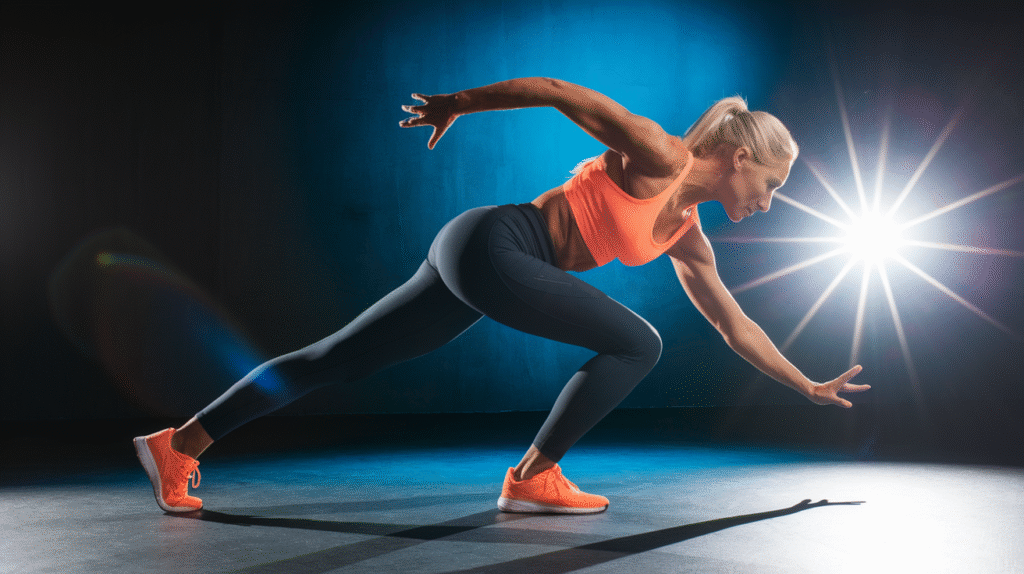
You don’t need a home gym or expensive equipment. Here’s what actually matters:
Dumbbells: Start with a set of 5-10 pound dumbbells if you’re a complete beginner, or 10-15 pounds if you have some fitness background. You’ll eventually want 2-3 different weight options as you get stronger, but one set is enough to start. Adjustable dumbbells are a space-saving option worth considering.
Resistance bands: These are incredibly versatile and joint-friendly alternatives to weights. Get a set with varying resistance levels (light, medium, heavy). They’re perfect for travel and take up almost no space. Many exercises can be done with either dumbbells or bands—choose based on what feels better for your body.
Optional but helpful: A yoga mat provides cushioning for floor exercises. A stability ball adds variety and challenges your core. An adjustable bench opens up more exercise variations, but you can also use a sturdy chair or coffee table.
That’s it. You can build serious strength with just dumbbells or bands and your body weight.
Setting Up Your Space and Mindset
You don’t need a dedicated home gym—just a small corner where you can move freely. Clear enough space to extend your arms in all directions and lie down. This could be your living room, bedroom, or even garage.
Embrace the “something is better than nothing” philosophy. Can’t do 30 minutes? Do 15. Can’t do all 13 exercises? Pick 5. Missed a workout? Do the next one. Perfection is the enemy of progress. Consistency beats intensity every single time.
Track progress beyond the scale. Yes, you might lose weight, but that’s not the only measure of success. Track how many reps you can do, how much weight you can lift, how your clothes fit, your energy levels, and how you feel. These non-scale victories often appear before the scale budges and they’re far more meaningful.
Proper Form Fundamentals to Prevent Injury
After 40, form matters more than the weight you’re lifting or how many reps you complete. Poor form with heavy weight creates injury. Perfect form with moderate weight builds strength safely.
Focus on controlled movements through a full range of motion. Don’t rush. Don’t bounce. Don’t use momentum. Each rep should be deliberate—2-3 seconds lifting, pause, 2-3 seconds lowering.
Know the difference between good discomfort and pain. Muscle burn and fatigue? That’s good—you’re working. Sharp pain, joint pain, or pain that doesn’t resolve quickly? That’s your body telling you to stop and reassess your form or weight selection.
The 13 Essential Strength Exercises (Detailed Breakdown)
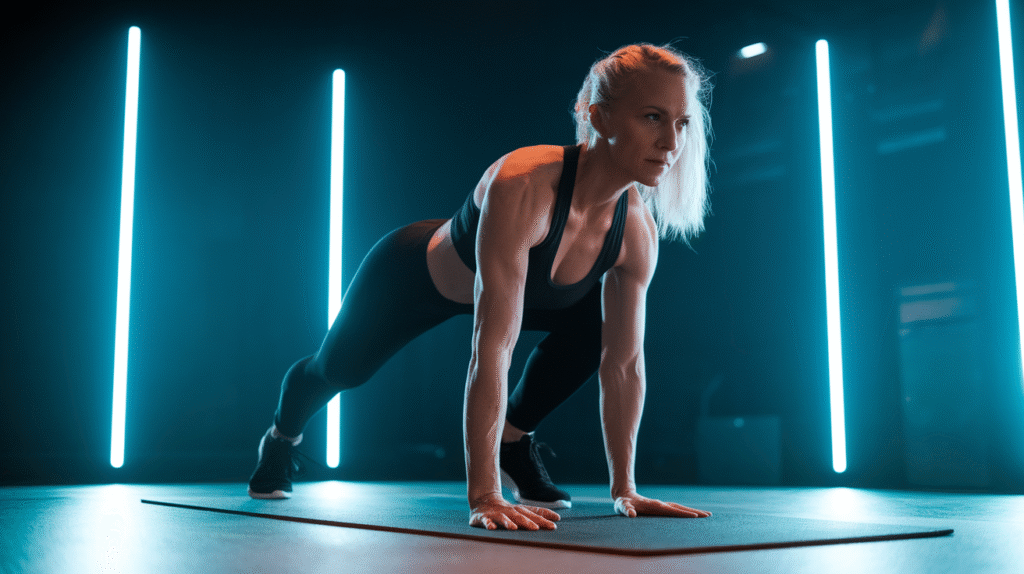
Lower Body Powerhouses (Exercises 1-5)
1. Squats: The Foundation of Lower Body Strength
Squats build leg strength, improve mobility, and burn maximum calories because they engage your largest muscle groups. This is the single most effective lower body exercise you can do.
How to perform: Stand with feet hip-to-shoulder width apart, toes slightly turned out. Keep your chest up and core engaged. Push your hips back like you’re sitting in a chair, lowering until your thighs are parallel to the ground (or as low as comfortable). Drive through your heels to stand back up.
Modifications: If you’re a beginner, start with chair squats—lower until you lightly touch a chair behind you, then stand. As you progress, hold dumbbells at your shoulders or sides to increase intensity.
2. Deadlifts: Build Your Posterior Chain
This exercise targets your hamstrings, glutes, lower back, and core—collectively called your posterior chain. A strong posterior chain is crucial for posture, preventing back pain, and functional strength.
How to perform: Stand with feet hip-width apart, dumbbells in front of your thighs. Keeping your back flat and core tight, hinge at your hips (not your waist) and push your hips back, lowering the weights along your legs. Feel the stretch in your hamstrings. Drive through your heels and squeeze your glutes to return to standing.
The hip hinge is the key technique here. You’re not bending forward—you’re pushing your hips back while maintaining a neutral spine. This protects your lower back while effectively working the target muscles.
3. Lunges: Unilateral Strength and Balance
Lunges build balance, work each leg independently (preventing strength imbalances), and sculpt your legs and glutes beautifully.
How to perform: Step forward with your right foot, lowering your hips until both knees are bent at 90 degrees. Your front knee should stay directly above your ankle, never extending past your toes. Push through your front heel to return to starting position. Alternate legs.
Form cues to protect your knees: Keep your front knee tracking in line with your toes, don’t let it collapse inward. Keep your torso upright. If lunges bother your knees, try reverse lunges (stepping backward instead) or split squats with your back foot elevated.
4. Glute Bridges: Activate and Build Your Glutes
This exercise specifically targets your glutes while protecting your lower back. Strong glutes improve posture, reduce back pain, and support hip stability.
How to perform: Lie on your back with knees bent, feet flat on the floor hip-width apart. Press through your heels and squeeze your glutes to lift your hips toward the ceiling, creating a straight line from knees to shoulders. Hold for 2 seconds at the top, then lower with control.
Make it more challenging: Try single-leg bridges, add a dumbbell across your hips, or hold the top position for longer.
5. Step-Ups: Functional Lower Body Power
This movement mimics climbing stairs and getting up from seated positions—activities you do every day. It builds unilateral leg strength and improves balance.
How to perform: Using a sturdy bench or step (12-20 inches high), step up with your right foot, driving through your heel to lift your body up. Bring your left foot to meet your right, then step back down with control. Complete all reps on one leg before switching.
Progress by holding dumbbells at your sides or increasing the height of your step.
Upper Body Strength Builders (Exercises 6-9)
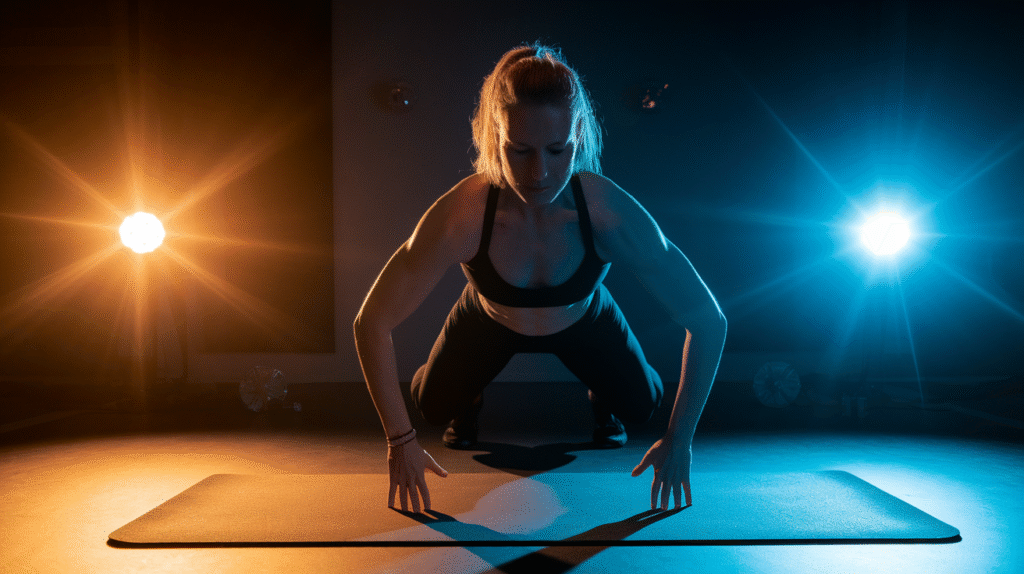
6. Push-Ups: Upper Body Essential
Push-ups engage your chest, shoulders, triceps, and core simultaneously. They’re one of the most effective upper body exercises you can do, and they require zero equipment.
Modification ladder: Start where you are right now. Wall push-ups (hands on wall) → incline push-ups (hands on counter or bench) → knee push-ups → standard push-ups → decline push-ups (feet elevated). Progress gradually as you build strength.
How to perform standard push-ups: Start in a plank position with hands slightly wider than shoulder-width. Lower your body until your chest nearly touches the floor, keeping your core tight and body in a straight line. Push back up. Quality over quantity—5 perfect push-ups beat 20 sloppy ones.
7. Bent-Over Rows: Build Your Back
This exercise builds back strength, improves posture, and counteracts the rounded shoulders many of us develop from desk work and phone use.
How to perform: Hold dumbbells with arms extended. Hinge at your hips (like a deadlift), keeping your back flat and core engaged. Pull the dumbbells toward your ribcage, squeezing your shoulder blades together at the top. Lower with control.
Focus on engaging your lats (the muscles along the sides of your back) rather than just moving your arms. Think about pulling your elbows back, not just lifting the weights up.
8. Overhead Press: Shoulder Strength and Stability
Strong shoulders are essential for reaching, lifting, and maintaining independence as you age. This exercise builds functional shoulder strength.
How to perform: Stand with feet hip-width apart, holding dumbbells at shoulder height with palms facing forward. Press the weights straight overhead until your arms are fully extended, then lower with control.
Common mistakes: Don’t arch your back excessively—keep your core engaged. Don’t let the weights drift forward—press them straight up. If you have shoulder issues, try a neutral grip (palms facing each other) which is often more comfortable.
9. Tricep Dips: Upper Body Pushing Power
This exercise targets the backs of your arms (triceps) and builds pushing strength. You don’t need a bench—a sturdy chair works perfectly.
How to perform: Sit on the edge of a chair or bench, hands gripping the edge beside your hips. Slide your hips forward off the edge, supporting yourself with your arms. Lower your body by bending your elbows to 90 degrees, then press back up. Keep your shoulders down and back throughout the movement.
Easier modification: Keep your feet closer to the chair. Harder modification: Extend your legs straight or elevate your feet.
Core and Full-Body Exercises (Exercises 10-13)
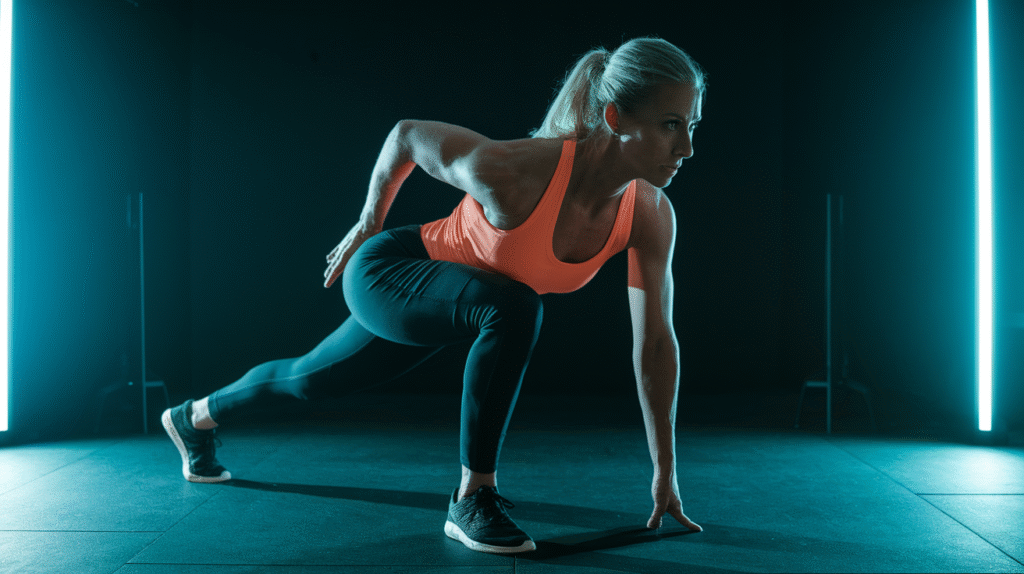
10. Planks: Core Stability That Protects Your Back
Planks build the deep core stability that protects your spine and supports every movement you make. They’re more effective than crunches for functional core strength.
How to perform: Start on your forearms and toes, body in a straight line from head to heels. Keep your core engaged, hips level (don’t let them sag or pike up), and breathe normally. Hold for 20-60 seconds.
Progression: Start on your knees if needed. As you get stronger, try standard planks, then side planks, then add movement like shoulder taps or leg lifts.
11. Bird Dogs: Coordination and Deep Core Activation
This low-impact exercise challenges your balance, coordination, and deep core muscles. It’s perfect for all fitness levels and incredibly effective.
How to perform: Start on hands and knees, wrists under shoulders, knees under hips. Extend your right arm forward and left leg back simultaneously, creating a straight line. Hold for 2-3 seconds, return to start, then switch sides.
Focus on keeping your hips level and core engaged throughout. Move slowly and with control—this isn’t about speed.
12. Thrusters: Full-Body Efficiency
This compound movement combines a squat and overhead press, working your entire body in one efficient exercise. It’s perfect for busy schedules because you get maximum results in minimum time.
How to perform: Hold dumbbells at shoulder height. Perform a squat, then as you drive up through your heels, use that momentum to press the weights overhead. Lower the weights back to shoulders as you descend into the next squat.
This exercise elevates your heart rate while building strength, giving you conditioning and strength training benefits simultaneously.
13. Farmer’s Carries: Practical, Total-Body Strength
This simple exercise builds grip strength, core stability, and practical strength you use every day when carrying groceries, luggage, or grandchildren.
How to perform: Hold a dumbbell in each hand at your sides with good posture—shoulders back, chest up, core engaged. Walk forward for 30-60 seconds, maintaining perfect posture. Turn around and walk back.
Don’t underestimate this exercise because it looks simple. Farmer’s carries build real-world strength and challenge your entire body to work as an integrated unit.
Putting It All Together: Your Action Plan
Sample Weekly Workout Schedule
3-Day Full-Body Split (Perfect for Beginners):
- Monday: Squats, push-ups, bent-over rows, planks, glute bridges
- Wednesday: Deadlifts, overhead press, lunges, bird dogs, farmer’s carries
- Friday: Step-ups, tricep dips, thrusters, side planks, glute bridges
4-Day Upper/Lower Split (For Intermediate):
- Monday (Lower): Squats, deadlifts, lunges, glute bridges, farmer’s carries
- Tuesday (Upper): Push-ups, bent-over rows, overhead press, tricep dips, planks
- Thursday (Lower): Step-ups, single-leg deadlifts, walking lunges, glute bridges
- Friday (Upper): Incline push-ups, rows, thrusters, bird dogs, planks
Rest days are not optional—they’re when your muscles actually grow and strengthen. Take at least one full rest day between workouts, and include 2-3 rest days per week.
Sets, Reps, and Progression Guidelines
Start with 2-3 sets of 8-12 reps for most exercises. This rep range is ideal for building both strength and muscle. For planks and carries, start with 20-30 seconds and work up to 60 seconds.
Use the “2-rep rule” to know when to increase weight: If you can complete 2 more reps than your target on the last set with good form, increase the weight by 2.5-5 pounds next time.
Listen to your body and understand the difference between good discomfort and pain signals. Muscle fatigue, burning sensation, and feeling challenged? That’s good—you’re working. Sharp pain, joint pain, or pain that persists after the workout? That’s your body telling you to modify the exercise or reduce weight.
Tracking Your Transformation
Keep a simple workout log. Write down the date, exercises performed, sets, reps, and weight used. This takes 2 minutes after each workout but provides invaluable data. You’ll be amazed when you look back and see that you’ve doubled your strength.
Take progress photos every 4 weeks in the same lighting and clothing. The mirror you see every day doesn’t show gradual changes, but photos reveal your transformation clearly.
Celebrate non-scale victories: You have more energy throughout the day. You’re sleeping better. You carried all the groceries in one trip. You played with your kids or grandkids without getting winded. Your clothes fit better. You feel confident and strong. These victories matter more than any number on a scale.
Realistic timeline: You’ll feel different within 2 weeks—more energy, better sleep, improved mood. You’ll see subtle changes in 4-6 weeks—clothes fitting differently, slight muscle definition. You’ll see dramatic results in 8-12 weeks—visible muscle tone, significant strength gains, body composition changes. Transformation takes time, but every single workout is moving you forward.
Conclusion
These 13 exercises are your blueprint to build strength, burn fat, and feel powerful after 40. They’re not random movements—they’re carefully selected exercises that address the specific challenges women face during this decade of life.
You don’t need to be perfect. You don’t need to do all 13 exercises every workout. You don’t need expensive equipment or hours of free time. You just need to start and stay consistent.
The compound effect is real: small, consistent efforts create dramatic transformations. Each workout builds on the last. Each rep is an investment in your future strength, independence, and quality of life. Six months from now, you’ll wish you started today.
Here’s your truth: You’re not “too old” or “too late.” You’re not starting from behind. You’re exactly where you need to be, and you have everything you need to transform your body and life through strength training.
Your Action Steps This Week:
Choose 3-5 exercises from this list that feel doable right now. Don’t overthink it—just pick exercises that target different body parts. Commit to 2-3 workout sessions this week, even if they’re just 15-20 minutes. Put them in your calendar like any other important appointment.
Track what you do—write down your exercises, reps, and how you felt. Notice your progress. Pay attention to how your energy improves and how your body feels stronger.
Remember this: Every rep is an investment in your future strength and independence. You’re not just building muscle—you’re building confidence, energy, and a body that supports you in everything you want to do. The best time to start was years ago. The second best time is right now.
You’ve got this. Now go lift something heavy.