12 Body Awareness Yoga Poses for Beginners: Reconnect With Your Body
Have you ever caught yourself slouching at your desk, completely unaware of the tension building in your shoulders? Or walked through your entire day without noticing how your body actually feels?
You’re not alone. Most of us spend so much time in our heads that we’ve lost touch with the physical sensations that keep us grounded and healthy.
That’s where body awareness yoga comes in—and it’s a game-changer.
This guide walks you through 12 easy-to-follow poses specifically designed to cultivate deep body awareness. You won’t need fancy equipment, years of flexibility, or even much time.
What you will discover are simple techniques to reconnect with physical sensations, quick tips for proper alignment and breathing, and practical ways to incorporate these poses into your daily routine.
Whether you’re brand new to yoga or returning after a break, these poses will help you tune back into your body’s wisdom. Let’s get started on this journey of reconnection.
Understanding Body Awareness: Why These Poses Matter
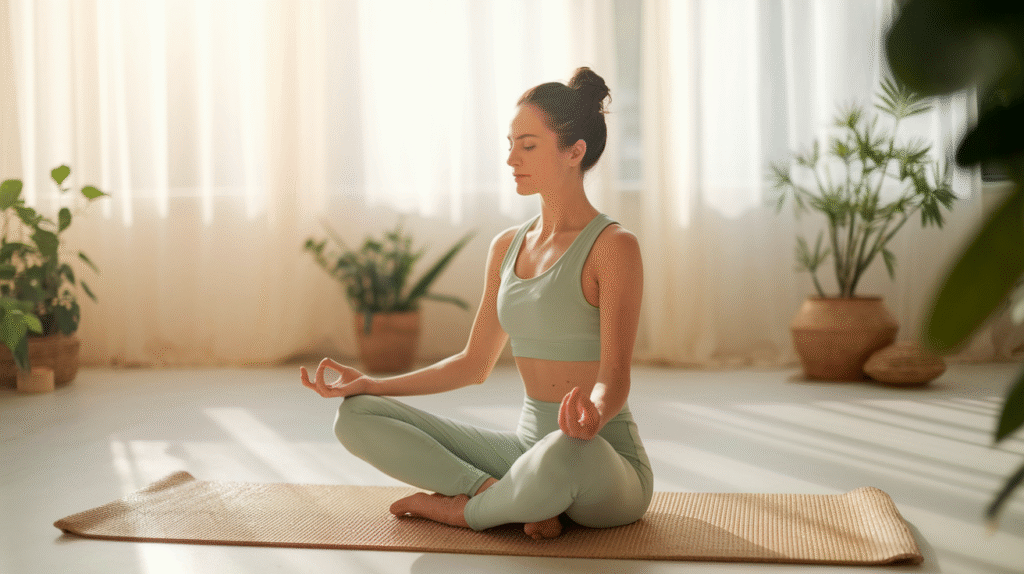
What is Body Awareness in Yoga?
Body awareness is your ability to sense where your body is in space and how it feels in any given moment. It’s the mind-body connection explained in simple terms: you’re not just moving through poses mechanically, you’re actively noticing what’s happening inside.
When you practice yoga with body awareness, you recognize tension before it becomes chronic pain. You feel when your alignment is off before you strain a muscle.
You notice your breath becoming shallow when stress creeps in. This awareness is the ultimate foundation for any yoga practice because it keeps you safe, engaged, and progressing.
Think of it this way: you can perform a perfect-looking pose while being completely disconnected from your body. Or you can do a modified version while being fully present with every sensation. The second option delivers far better results for your physical and mental health.
The Amazing Benefits of Body Awareness Poses
The research backs up what experienced yogis have known for centuries: body awareness practices transform how you move through life.
You’ll experience improved posture and reduced chronic pain as you learn to recognize and release tension patterns. That nagging lower back discomfort? Often it stems from holding stress in ways you don’t even notice. Body awareness helps you catch these patterns early.
Enhanced balance and coordination naturally follow. When you know where your body is in space, you move with more confidence and grace. You’re less likely to trip, stumble, or injure yourself during daily activities.
Better stress management through mindful movement is perhaps the most powerful benefit. By tuning into physical sensations, you create a direct pathway out of anxious thoughts and into the present moment. Your body becomes an anchor when your mind feels chaotic.
Finally, you’ll develop increased confidence in how you move through daily life. You’ll trust your body more, push it less, and respect its signals. This confidence extends beyond the yoga mat into everything you do.
What Makes These 12 Poses Perfect for Beginners
I chose these specific poses because they’re gentle, accessible movements anyone can do. You don’t need to touch your toes or balance on one foot for minutes at a time. Each pose meets you where you are.
These poses focus on sensation over perfection. There’s no “ideal” way your body should look in any position. What matters is what you feel and notice. This approach removes the pressure and comparison that often discourage beginners.
Every pose includes built-in modifications for every body type. Tight hamstrings? No problem. Sensitive knees? We’ve got you covered. The variations ensure you can practice safely and comfortably.
Most importantly, these poses create an effective foundation for advancing your practice. Master these fundamentals, and you’ll have the body awareness to explore more challenging poses safely when you’re ready.
Grounding Poses: Connect With Your Foundation (Poses 1-4)
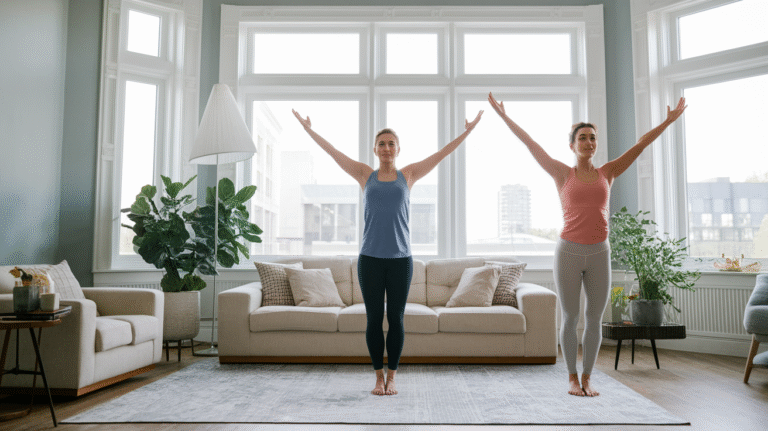
Pose 1: Mountain Pose (Tadasana)
Why it’s essential: Mountain Pose is the ultimate starting point for body awareness. It looks deceptively simple—you’re just standing there, right? Wrong.
This pose teaches you how to stand with intention, distributing your weight evenly and aligning your entire body from the ground up.
How to do it: Stand with your feet hip-width apart (or together if that’s comfortable). Spread your toes wide and press down through all four corners of each foot.
Engage your thighs slightly, lengthen your tailbone toward the floor, and lift through the crown of your head. Let your arms hang naturally by your sides with palms facing forward. Relax your shoulders away from your ears.
What to notice: Feel the grounding through your feet—are you leaning forward onto your toes or back into your heels? Notice the natural curves of your spine without exaggerating them. Sense how your weight distributes between your left and right feet. Is one side carrying more weight?
Quick tip: Use this pose as a check-in throughout your day. Waiting for coffee to brew? Stand in Mountain Pose for 30 seconds and notice how your body feels.
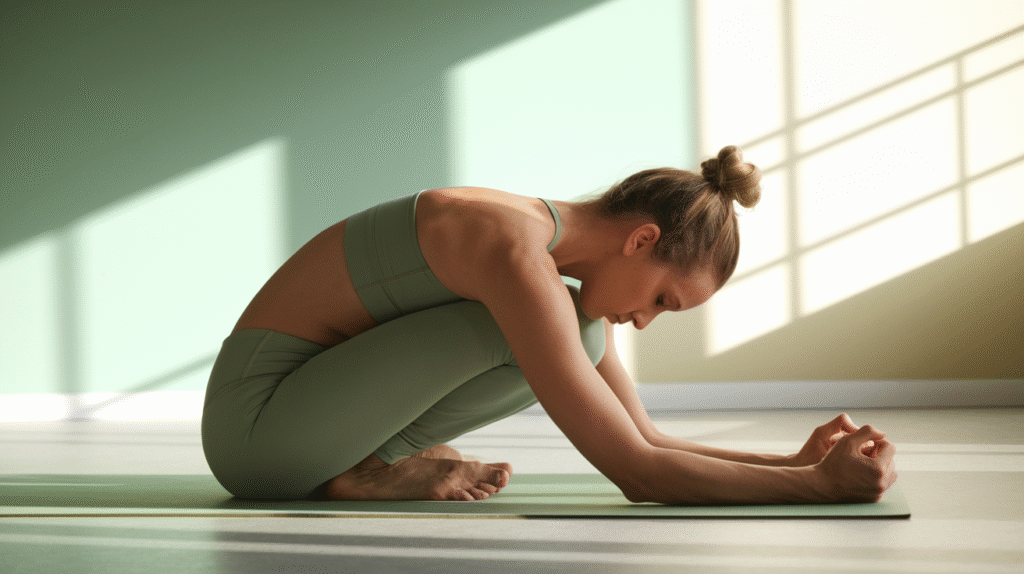
Pose 2: Child’s Pose (Balasana)
Why it’s essential: Child’s Pose offers a safe space to turn inward and breathe. It’s your reset button during practice and a powerful tool for connecting with your body when life feels overwhelming.
How to do it: Kneel on your mat and bring your big toes together, separating your knees as wide as comfortable. Sit your hips back toward your heels and fold forward, extending your arms in front of you or resting them alongside your body. Rest your forehead on the mat (or on a block or folded blanket).
For tight hips or knees, place a folded blanket between your hips and heels for support. If your forehead doesn’t reach the floor comfortably, stack blocks or blankets underneath.
What to notice: Feel your breath moving through your back body, expanding your ribs with each inhale. Notice the gentle stretch in your hips and the release in your lower back. Observe any areas of resistance without trying to force them to relax.
Quick tip: This pose is perfect for when you need a moment to reset during a stressful day. Even 60 seconds in Child’s Pose can completely shift your nervous system.
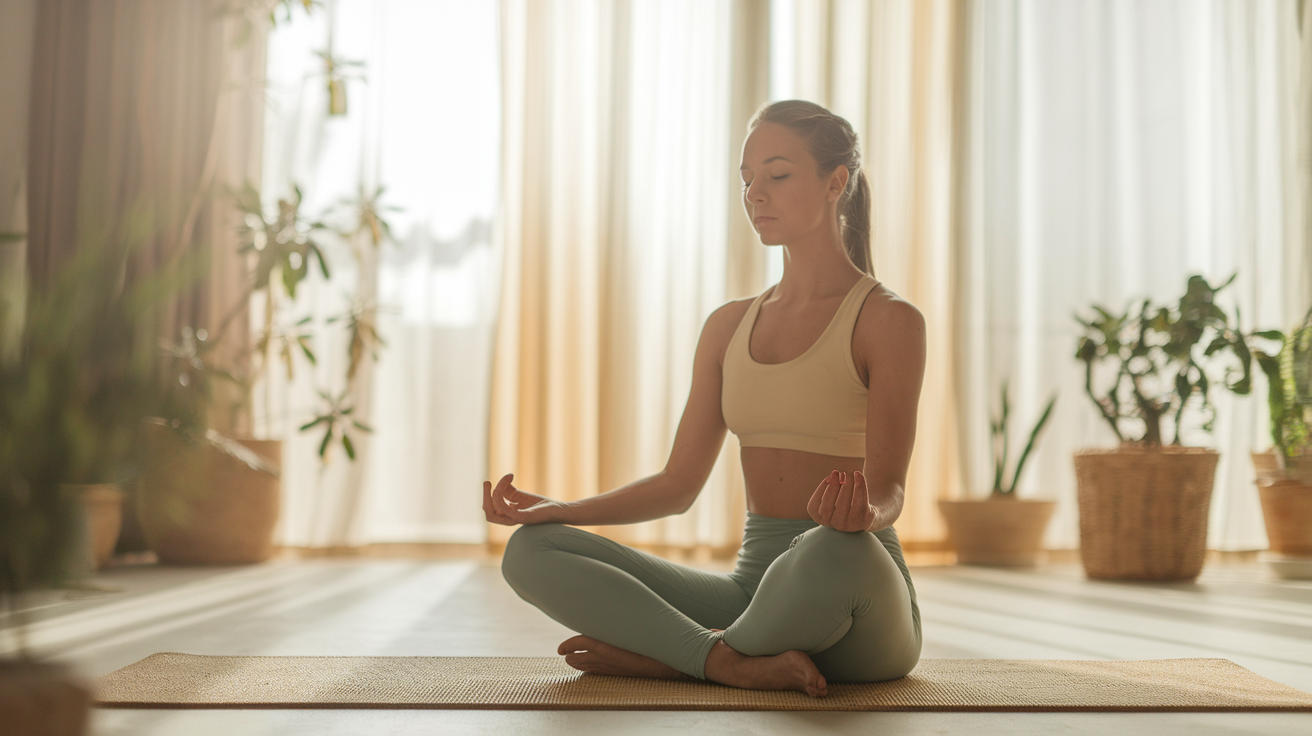
Pose 3: Easy Seated Pose (Sukhasana)
Why it’s essential: Easy Seated Pose cultivates stillness and spinal awareness. It’s the foundation for meditation and breathing practices, teaching you to sit comfortably with an aligned spine.
How to do it: Sit cross-legged on your mat with your hips elevated on a cushion or folded blanket (this is crucial for most beginners). Place your hands on your knees or in your lap. Lengthen your spine from your tailbone through the crown of your head. Relax your shoulders and soften your jaw.
What to notice: Feel the natural curves of your spine without forcing them. Notice where you’re grounding through your sit bones—are you rocking forward or backward? Observe any areas of tension in your hips, knees, or lower back.
Quick tip: Add cushions liberally for comfortable, sustainable sitting. The goal is to maintain the pose without strain, not to sit directly on the floor if that creates discomfort.
Pose 4: Standing Forward Fold (Uttanasana)
Why it’s essential: Standing Forward Fold releases tension while building body awareness throughout your entire posterior chain—your back, hamstrings, and calves.
How to do it: Stand in Mountain Pose, then hinge at your hips to fold forward. Let your upper body hang heavy, bending your knees generously. You can hold opposite elbows or let your hands rest on blocks, your shins, or the floor—wherever they comfortably reach.
What to notice: Feel the sensations in your hamstrings without labeling them as “good” or “bad.” Notice how your spine releases as you breathe. Observe the weight shifting in your feet and the complete relaxation of your head and neck.
Quick tip: Let gravity do the work—no forcing needed. Bent knees are not “cheating”; they’re smart yoga that protects your hamstrings and lower back while still delivering all the benefits.
Core Awareness Poses: Strengthen Your Center (Poses 5-8)
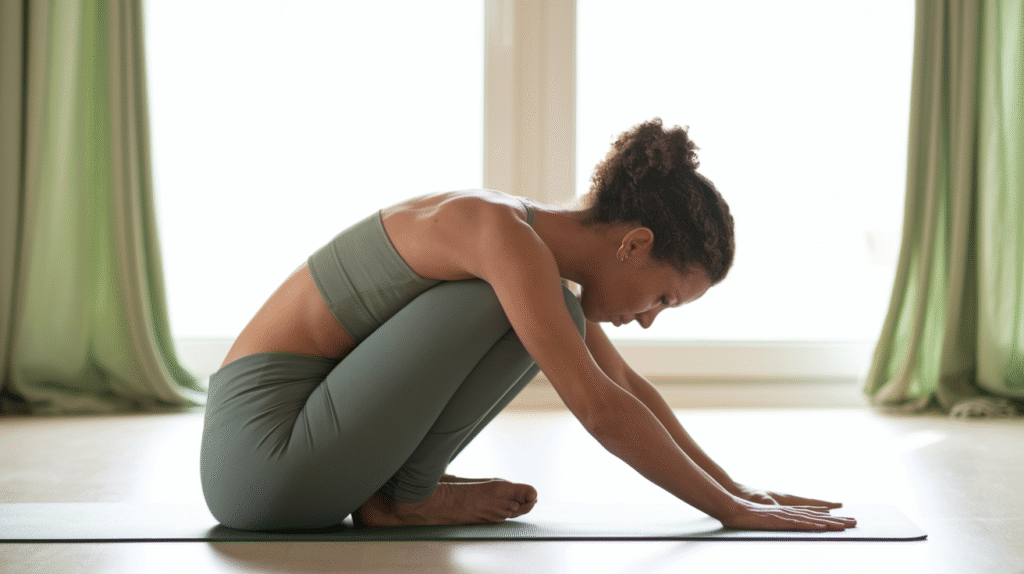
Pose 5: Cat-Cow Pose (Marjaryasana-Bitilasana)
Why it’s essential: Cat-Cow is the complete spinal awareness sequence. This flowing movement teaches you to isolate spinal movement, coordinate breath with motion, and notice how your entire torso responds to gentle flexion and extension.
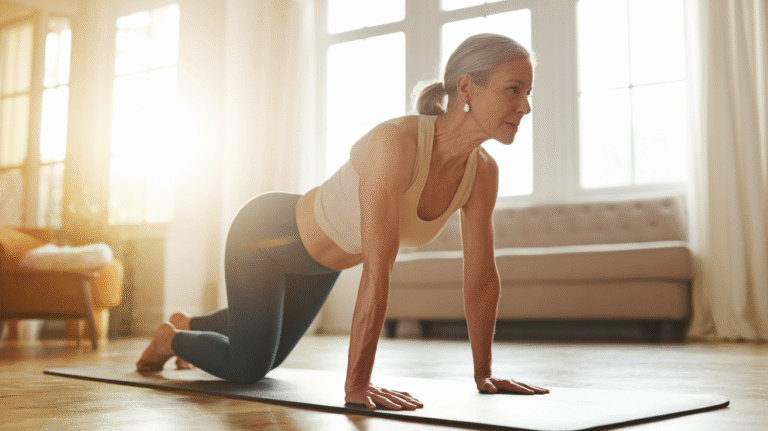
How to do it: Start on hands and knees with wrists under shoulders and knees under hips. On an inhale, drop your belly, lift your chest and tailbone (Cow Pose). On an exhale, round your spine, tucking your tailbone and chin (Cat Pose). Move slowly between these positions for 8-10 breaths.
What to notice: Feel each vertebra moving as you transition between poses. Notice how your belly engages in Cat Pose and releases in Cow. Observe your shoulder blades moving on your back and the quality of your breath throughout the movement.
Quick tip: Move at your own pace—this isn’t a race. Some days your spine will feel fluid and mobile; other days it might feel stiff. Both experiences are valuable information about your body.
Pose 6: Downward-Facing Dog (Adho Mukha Svanasana)
Why it’s essential: Downward Dog delivers full-body awareness in one proven pose. It strengthens your arms and shoulders, stretches your hamstrings and calves, and teaches you how to distribute weight effectively between your hands and feet.
How to do it: From hands and knees, tuck your toes and lift your hips up and back, forming an inverted V-shape. Press firmly through your hands, especially your index fingers and thumbs. Bend your knees generously and focus on lengthening your spine rather than straightening your legs.
What to notice: Feel how your weight distributes between hands and feet. Notice your core engaging to support the pose. Observe your breath—is it flowing freely or are you holding tension somewhere?
Quick tip: Bend your knees generously when starting out. A long spine with bent knees delivers more benefits than a rounded back with straight legs. You can always straighten your legs as your hamstrings open over time.
Pose 7: Plank Pose
Why it’s essential: Plank builds core strength and total body awareness. It teaches you what true core engagement feels like and shows you how your entire body works as an integrated unit.
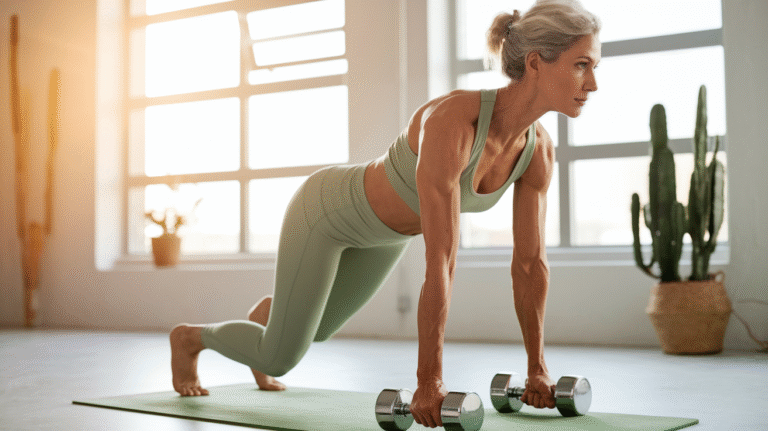
How to do it: From Downward Dog, shift forward until your shoulders are over your wrists. Your body should form one straight line from head to heels. Engage your core by drawing your navel toward your spine. Press firmly through your hands and reach back through your heels.
For a modification, lower your knees to the mat while maintaining a straight line from knees to head.
What to notice: Feel your core activation—it should be strong but not strained. Notice your shoulder stability and whether you’re sinking between your shoulder blades or actively pressing away from the floor. Observe your breathing patterns—can you breathe smoothly or are you holding your breath?
Quick tip: Start with knee-down modifications for sustainable practice. Hold for just 10-15 seconds initially, building up gradually. Quality beats duration every time.
Pose 8: Bridge Pose (Setu Bandhasana)
Why it’s essential: Bridge opens the front body while strengthening the back. It’s a powerful pose for counteracting the effects of sitting and slouching, teaching you to engage your glutes and support your spine.
How to do it: Lie on your back with knees bent and feet hip-width apart, heels close to your sit bones. Press down through your feet and lift your hips toward the ceiling. Keep your arms alongside your body or clasp your hands beneath you. Your knees should stay aligned over your ankles.
What to notice: Feel the grounding through your feet and shoulders. Notice your glutes activating to support the lift. Observe the opening across your chest and the engagement along your spine.
Quick tip: Keep your knees aligned with your hips throughout the pose. If they splay out or knock in, you’re losing the core engagement that makes this pose so effective.
Balance and Opening Poses: Expand Your Awareness (Poses 9-12)
Pose 9: Tree Pose (Vrksasana)
Why it’s essential: Tree Pose is the perfect balance challenge for beginners. It teaches you to find your center, engage your core, and maintain focus—all essential skills for body awareness.
How to do it: Start in Mountain Pose. Shift your weight onto your left foot and place your right foot on your inner left ankle, calf, or thigh (never directly on the knee). Bring your hands to your heart or extend them overhead. Find a focal point to help you balance. Hold for 5-10 breaths, then switch sides.
Three levels of foot placement: ankle (easiest), calf (intermediate), or inner thigh (most challenging). Choose the option that lets you balance with steady breath.
What to notice: Feel your weight shifting constantly in your standing foot—this is normal and healthy. Notice your core engaging to keep you upright. Observe how your focus point helps stabilize the pose.
Quick tip: Wobbling is normal—it means you’re building awareness and strengthening the small stabilizing muscles in your foot and ankle. Embrace the wobble rather than fighting it.
Pose 10: Warrior I (Virabhadrasana I)
Why it’s essential: Warrior I combines powerful grounding through your legs with upper body opening. It builds strength, stability, and confidence while teaching you to maintain awareness in a more complex pose.
How to do it: From Mountain Pose, step your left foot back about 3-4 feet. Turn your back foot out about 45 degrees. Bend your front knee over your ankle while keeping your back leg strong. Reach your arms overhead and lift your chest. Square your hips toward the front of your mat as much as possible.
What to notice: Feel the strength in your legs, especially your front thigh. Notice the sensation in your hips as you work to square them forward. Observe your arm extension and the opening across your chest.
Quick tip: Keep your front knee aligned over your ankle, not pushing past it. If squaring your hips feels impossible, let your back foot turn out more—honoring your body’s current range of motion is smart yoga.
Pose 11: Supine Twist (Supta Matsyendrasana)
Why it’s essential: Supine Twist offers gentle spinal mobility with deep body awareness. It releases tension in your back, massages your internal organs, and teaches you to notice subtle sensations along your spine.
How to do it: Lie on your back and hug your right knee into your chest. Extend your right arm out to the side and use your left hand to guide your right knee across your body to the left. Keep both shoulders grounded. Turn your head to the right if comfortable. Hold for 8-10 breaths, then switch sides.
What to notice: Feel the rotation in your spine, starting from your lower back. Notice how your shoulders want to lift—can you keep them grounded while still allowing the twist? Observe how your breath expands your ribcage in this position.
Quick tip: Use props to support your knees if they don’t reach the floor comfortably. A block or folded blanket under your knee allows you to relax completely into the twist.
Pose 12: Corpse Pose (Savasana)
Why it’s essential: Savasana is the most important pose for integration. It allows your nervous system to absorb the benefits of your practice and teaches you the essential skill of conscious relaxation.
How to do it: Lie on your back with your legs extended and arms by your sides, palms facing up. Let your feet fall open naturally. Close your eyes and allow your entire body to release into the floor. Stay here for at least 5 minutes, scanning through your body from toes to head.
What to notice: Feel every part of your body releasing into the floor—your heels, calves, thighs, hips, back, shoulders, arms, and head. Notice your breath becoming natural and effortless. Observe any remaining areas of tension without trying to fix them.
Quick tip: This isn’t nap time—stay aware while completely relaxed. If you find yourself drifting off, try keeping your eyes slightly open with a soft gaze. The goal is conscious relaxation, not sleep.
Bringing It All Together: Your Body Awareness Practice
Now you have 12 proven poses that will transform your relationship with your body. But knowing the poses is just the beginning—the real magic happens when you practice them consistently.
Body awareness is a skill anyone can develop with consistent practice. You don’t need to be naturally flexible, balanced, or coordinated. You just need to show up and pay attention. These beginner-friendly poses are effective for all fitness levels because they meet you exactly where you are.
Start with just 10-15 minutes daily for quick, noticeable results. You don’t need an hour-long practice to experience benefits. Choose 3-4 poses that feel most relevant to your body today. Maybe you’re feeling tense in your shoulders—try Mountain Pose, Cat-Cow, and Child’s Pose. Experiencing lower back discomfort? Bridge Pose, Supine Twist, and Child’s Pose might be your perfect combination.
Progress happens when you focus on sensation, not perfection. Your body doesn’t need to look like anyone else’s in these poses. What matters is what you notice, what you feel, and how you respond to those sensations with kindness and curiosity.
Set a simple reminder to check in with your body throughout the day. Every time you wash your hands, take three deep breaths and notice where you’re holding tension. When you’re stuck in traffic, practice the body awareness you’ve cultivated in Mountain Pose while sitting in your car.
Be patient with yourself—body awareness deepens over time. Some days you’ll feel incredibly connected to your body. Other days, your mind will wander constantly. Both experiences are part of the journey. The practice isn’t about achieving a permanent state of perfect awareness; it’s about returning to your body again and again with compassion.
Consider keeping a journal to track what you notice in each pose. Write down one or two observations after each practice session. Over weeks and months, you’ll see patterns emerge that reveal valuable insights about your body, your stress responses, and your growth.
Your body has been waiting for you to come home to it. These 12 poses are your invitation to reconnect, to listen, and to honor the wisdom that lives in your muscles, bones, and breath. Start today with just one pose. Notice what happens. Then come back tomorrow and notice again.
Your journey to deeper body awareness begins